For the occasional small batch of dough, your existing freezer compartment should be enough, as long as there’s room for separate, labelled packs. A separate appliance is more worth considering if you regularly store larger quantities. The consumer advice centre recommends considering capacity and annual energy consumption alongside the appliance’s dimensions and internal layout, rather than choosing based solely on a convenience feature such as NoFrost. Raw cookie dough should not be eaten unbaked, even after freezing: the Federal Institute for Risk Assessment advises against this for reasons of kitchen hygiene.
Which option is right for you?
Those who plan ahead in portions
If you prepare dough for different mealtimes or baking sessions, individually removable, labelled portions make things easier. The Federal Centre for Nutrition recommends dividing food into the required quantities before freezing.
Households short on space
If you only need extra freezer space occasionally, make sure the appliance and its usable capacity suit the space available and the amount you store overall. The consumer advice centre points out that an oversized freezer can use more electricity than necessary.
Those who regularly stock up
If you store other foods as well as dough, or regularly freeze larger quantities, look for enough capacity and a well-organised interior. Manufacturers’ details about drawers and compartments make it easier to compare models.
What should you look for when buying?
Existing freezer compartment
A good fit if: you only freeze small quantities occasionally and there’s space in your existing compartment for separate portions.
The trade-off: You won’t need another appliance, but a full compartment can make it harder to find and remove individual portions.
Small separate freezer
A good fit if: you want to keep portions ready regularly and a larger appliance would probably be mostly empty.
The trade-off: Even a small appliance takes up floor space and uses electricity continuously; smaller doesn’t automatically mean more energy-efficient.
Larger freezer with drawers
A good fit if: you want space for other regular supplies or larger quantities, as well as dough.
The trade-off: Make sure the extra capacity and potential to sort portions suit your actual needs, so you don’t end up running an unnecessarily large appliance.
Chest freezer
A good fit if: storing larger quantities and having suitable floor space matter more than being able to reach lots of small portions easily.
The trade-off: The consumer advice centre says chest freezers use less energy than upright freezers. Also consider how you’ll organise and remove individual portions so they’re easy to find.
| What matters to you |
What to check before buying |
Who is this most important for? |
| Removing portions individually |
Check whether the drawers and compartments fit the containers you plan to use, which must be suitable for freezing. |
If I want to have portions ready for different times, I need to be able to remove them separately without searching for ages. Around 36% of consumers say individual access is their main concern. |
| Capacity and space |
Measure the space and doorway, then compare these with the appliance’s external dimensions and usable freezer capacity. |
If space is tight, I want an appliance that suits the space I have and the amount I store overall. Around 29% of consumers put finding an appliance that fits their available space first. |
| Energy use over time |
Compare annual energy consumption in kWh and capacity across appliances that meet your needs; usage and location affect actual consumption. |
If I’m going to run an additional appliance all the time, I want to compare its stated energy use with the storage space I need before buying. Energy consumption is the main concern for around 21% of consumers. |
| Defrosting effort |
Check the NoFrost specification for the specific model, and compare its energy use and interior layout separately. |
If I want to avoid regular manual defrosting, the model’s actual features matter more to me than a general promise of convenience. Around 14% of consumers prioritise easier defrosting. |
Avoid common buying mistakes
-
Choosing a large appliance just for a few portions of dough
An appliance with far more capacity than you need for all your frozen food could use electricity unnecessarily. The consumer advice centre therefore recommends choosing a size that suits the amount you actually store.
First check whether your existing freezer compartment is enough. When planning, remember to include all the other foods you store regularly.
-
Assuming smaller always means more energy-efficient
The appliance’s size alone doesn’t tell you how much energy it uses in a year. Compare the kWh figure and capacity on the EU energy label for models that could suit your needs.
Consider the appliance’s dimensions and the storage space you need, as well as its annual energy consumption.
-
Freezing dough in one large block or unsuitable containers
A large frozen quantity can be difficult to divide into individual portions. And not all reused food packaging is suitable for freezing.
Divide the dough into portions and label them in advance, using containers marked as suitable for freezing. The Federal Centre for Nutrition recommends freezing food in portions.
Brands and models to consider
Liebherr
The Liebherr FNe 1404 is an under-counter freezer for households looking for a separate appliance that takes up less space.
- Liebherr lists a capacity of 92 l, NoFrost and external dimensions of 85 × 55 × 60,7 cm for this model.
- Its capacity limits the amount you can store; check the dimensions against the space where you plan to put it.
Bosch
The freestanding Bosch GSN29VWEP is a 200-l model for households with greater storage needs.
- Bosch lists NoFrost, a Big Box drawer and alerts for an open door or rising temperature.
- Its external dimensions of 161 × 60 × 65 cm need to fit your available space.
Siemens
The Siemens GS29NVWEP is a freestanding freezer with a capacity of 200 l and adjustable drawers and shelves.
- For this model, Siemens lists NoFrost, annual energy consumption of 221 kWh and alerts for an open door or rising temperature.
- With external dimensions of 161 × 60 × 65 cm, it won’t fit every space.
Beko
The Beko RFNM200T40WN is a freestanding NoFrost model, with a capacity between that of a compact under-counter appliance and a 200-l model.
- Beko’s German product page lists a capacity of 177 l in the technical specifications.
- The same product page’s heading states 168 l. Before comparing sizes, check the actual capacity against a clear product specification sheet.
Miele
Miele describes the FN 4879 C as a freestanding freezer with NoFrost and plenty of storage space.
- The manufacturer lists NoFrost as a feature of this model.
- Before choosing, compare the specific external dimensions and energy label with your needs.
Freezers at Joybuy
These Joybuy products are all separate freezers, ranging from compact models for smaller spaces to appliances with greater capacity and compartments for larger stocks.
 No image available
homeX FSN2041E-S, 204 l
For larger stocks that can be organised separately across several compartments.
- 204 l usable capacity
- NoFrost and Super-Freeze function
- Six drawers and compartments
- 222 kWh annual energy consumption
- 39 dB; energy efficiency class E
Joybuy
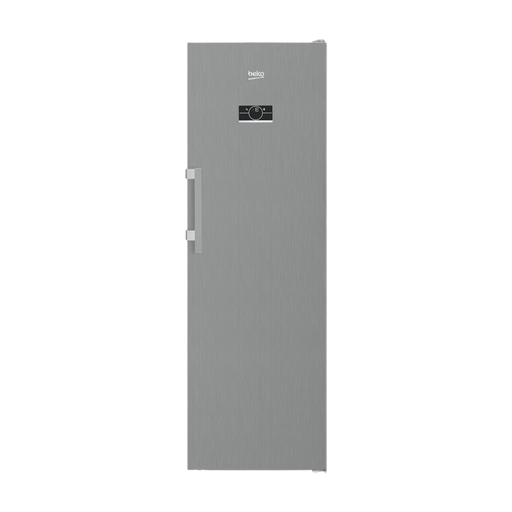 No image available
Beko B7RFNE315XP, 286 l
For larger stocks when you need several separate storage options.
- 286 l net capacity
- No Frost and Fast Freeze
- Five drawers, three compartments and two door shelves
- Energy efficiency class D
- According to the product description, suitable for unheated rooms down to −15 °C
Joybuy
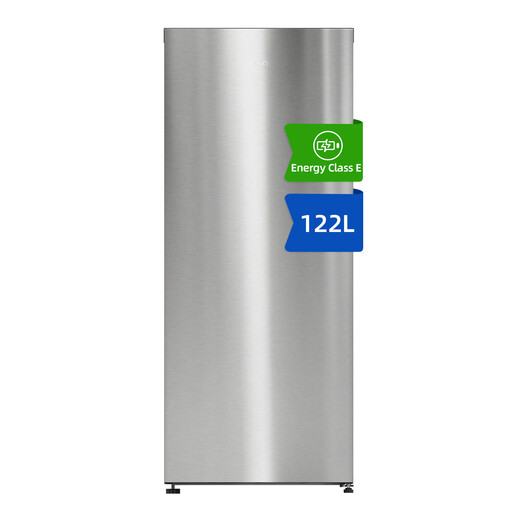 No image available
CHiQ JR122WSD, 122 l
For a separate freezer space with a more compact capacity; the stated width is 47,5 cm.
- 122 l and 4-star freezing performance
- No-Frost and several operating modes
- Convertible fridge mode and Multi-Airflow, according to the product name
- 39 dB; energy efficiency class E
- The description states a freezing temperature of down to −24 °C
Joybuy
 No image available
COMFEE’ RCU60WH2(E), 60 l
For limited space and a smaller additional freezer compartment.
- 60 l; external dimensions 44,5 × 47,5 × 84,5 cm
- Three freezer compartments, including one drawer
- Adjustable temperature; reversible door
- The description states temperatures of down to −24 °C and a freezing capacity of up to 6 kg per 24 hours
Joybuy
 No image available
Exquisit GS581-H-010E, 85 l
For smaller stocks that you want to keep separate in three transparent drawers.
- 85 l; height 84,5 cm
- Three transparent drawers, including one large drawer
- 4-star freezing performance
- Manual defrosting is required if more than 5 mm of frost builds up
Joybuy
Frequently asked questions
Do I need a separate freezer for a few prepared portions of dough?
Not necessarily. If there’s room in your existing freezer compartment for individually wrapped portions, you don’t need another appliance just for dough. A separate appliance is more worth considering if you regularly store larger quantities.
How should I store portions for different baking times?
Use packaging suitable for freezing and label each portion with its contents, quantity and date. The Federal Centre for Nutrition recommends freezing food in portions, as larger frozen quantities can be difficult to divide. This general advice is not a substitute for recipe-specific guidance on storage time.
Can I try raw cookie dough after it has thawed?
No. For reasons of kitchen hygiene, the Federal Institute for Risk Assessment advises against eating cookie dough unbaked. Freezing is no substitute for baking; thawing and baking times also depend on the recipe.
What should I compare before buying in terms of energy use and maintenance?
Compare annual energy consumption in kWh and capacity on the EU energy label for appliances that meet your needs. According to the manufacturers concerned, NoFrost reduces the need for manual defrosting, but it doesn’t replace comparing energy consumption.
How can the EU energy label help me compare freezers?
For covered refrigeration and freezer appliances, you can use the EU energy label and the product information registered in EPREL to compare models. The European Commission describes EPREL as a database containing energy labelling information for covered products.


