If you only freeze berries occasionally for cooking together, first check whether your existing four-star freezer compartment is suitable and has enough space. If you regularly freeze larger harvests, compare freezing capacity in kg/24 h, usable capacity and annual energy consumption separately. Drawers can make labelled portions easier to access, while a chest freezer may suit larger stocks. The Federal Centre for Nutrition recommends a four-star compartment for freezing fresh food and a temperature of at least −18 °C for long-term storage.
Which option is right for you?
Households with regular berry harvests
If you want to freeze fresh harvests alongside food you already have in storage, consider freezing capacity and the usable space you need together. The consumer advice centre and the Federal Centre for Nutrition highlight choosing the right appliance size and a suitable freezer compartment as important factors.
People who cook together and plan portions
If you portion berries for cooking together later, you’ll want clearly labelled supplies that are easy to access, as well as space to freeze them individually first. The Federal Centre for Nutrition recommends spreading the berries out on a tray to freeze before transferring them to another container.
Occasional freezers
If you only freeze surplus berries now and then, first check whether a suitable freezer compartment you already have will do the job. The Federal Centre for Nutrition explains that a four-star compartment is suitable for freezing fresh food.
What should you look for when buying?
Existing four-star freezer compartment
A good fit if: You only freeze small amounts occasionally and still have room to freeze them individually before storing them.
Keep in mind: A full compartment can make it harder to freeze berries individually first and keep fresh food separate from food that is already frozen.
Upright freezer
A good fit if: Several people regularly take out labelled portions and drawers help keep everything organised.
Keep in mind: Check that flat trays for freezing berries individually will fit inside, and compare annual energy consumption with the capacity you actually need.
Chest freezer
A good fit if: You regularly have larger harvests and food stocks to store, and have enough floor space and a practical way to organise them.
Keep in mind: Small portions at the bottom can be harder to reach; baskets and labels make it easier to stay organised.
| What you need |
What to check when buying |
Who will find this especially important? |
| Freezing fresh harvests |
Weigh your largest batch and compare it with the freezing capacity in kg/24 h; allow for the space taken up by food already in the freezer. |
If I have several fresh portions to freeze on the same day, the appliance needs to handle that batch. Around 31% of consumers prioritise freezing capacity. |
| Finding portions again |
Check there’s room for a flat tray to freeze berries individually first, as well as baskets, drawers or adjustable shelves. |
For cooking together, I want to be able to take out labelled portions of berries without searching for ages. Around 31% of consumers prioritise easy access to portions. |
| Avoiding an extra appliance |
For an existing compartment, check that it’s suitable for four-star freezing and has enough space; size an additional appliance according to your regular overall needs. |
If I only have berries left over occasionally, I want to check first whether my existing compartment will be enough. Around 23% of consumers prioritise avoiding an unnecessary extra appliance. |
| Energy use and where it will go |
Compare kWh/year for models of a suitable size, and check the dimensions and permitted ambient temperature for the intended location. |
If space is limited or the appliance will be kept somewhere unheated, the specific model needs to be suitable for those conditions. Around 15% of consumers prioritise energy use and installation conditions. |
Common buying and usage mistakes
-
Confusing usable capacity with freezing capacity
Litres tell you how much storage space there is; kg/24 h indicates the stated capacity for freezing fresh food. A large capacity alone doesn’t tell you how much of a harvest the appliance can freeze at once.
Compare both figures separately with your largest realistic batch and the space already taken up by food in the freezer.
If your batch exceeds the freezing capacity, you may need to split it across several freezing cycles.
-
Buying an oversized chest freezer for occasional surplus
The consumer advice centre points out that an appliance larger than you need can use electricity unnecessarily.
First check whether a suitable compartment you already have will do the job, and size any additional appliance according to the total amount you need to store regularly.
An extra appliance takes up floor space permanently and adds to your ongoing electricity use.
-
Assuming MinFrost or SmartFrost means no defrosting
Manufacturers’ claims about reduced ice build-up don’t automatically mean an appliance never needs defrosting. Bosch describes NoFrost on a different, specific model.
Check which defrosting system the specific model uses, and allow for manual defrosting if you’re buying a chest freezer.
Defrosting takes time, and you’ll need to store the food somewhere else temporarily.
-
Assuming any upright freezer is suitable for a cold cellar
Approval for low ambient temperatures only applies to the specific model. Liebherr states that the CFd 2505 Plus has FrostProtect down to −15 °C.
Check the temperature where you plan to put the appliance and compare it with the permitted ambient conditions for your chosen model.
Recommended brands and models to consider
Bosch
The GSN36VLEP is a freestanding upright freezer with drawers, ideal for households that want to keep portions organised and easy to access.
- Bosch lists a capacity of 242 l, four drawers, NoFrost and a freezing capacity of 18.0 kg/24 h for this model.
- Its stated annual energy consumption is 234 kWh. This is a standardised model figure, not a guarantee of energy use in an individual household. At 60 cm wide, it needs to fit the available space.
Beko
The freestanding HSM22340 is a 230-l chest freezer with baskets to help organise your food stocks.
- Beko lists energy class D and MinFrost for this model, which the manufacturer says reduces ice build-up.
- MinFrost doesn’t mean you’ll never need to defrost it. If you’re planning to freeze fresh harvests by kg/24 h, check this figure for the specific model.
Liebherr
The CFd 2505 Plus is a larger chest freezer to consider if you have substantial food stocks and a suitable place for it.
- Liebherr lists a capacity of 359 l, a width of 167 cm and FrostProtect down to an ambient temperature of −15 °C for this model.
- According to the manufacturer, SmartFrost means less frequent defrosting, not NoFrost. Make sure the floor space and large capacity are right for your actual needs.
Haier
At 196 l, the HCE200C is another size option for households that don’t need a large chest freezer.
- Haier lists energy class C, Fast Freeze and external dimensions of 915 × 555 × 845 mm for this model.
- Manufacturer claims about especially even or fast cooling aren’t independent test results. If you’re planning to freeze a specific harvest, check the model’s freezing capacity.
Joybuy products for berries and food storage
This selection of Joybuy products includes chest freezers and an upright freezer for storing berries and other food.
 No image available
Exquisit chest freezer, 142 l, four-star compartment
The four-star compartment is rated for freezing fresh berries; check whether 142 l is enough for all your food stocks.
142 l; Quick-Freeze function; removable basket.
The appliance needs to be defrosted manually if ice builds up.
Joybuy
 No image available
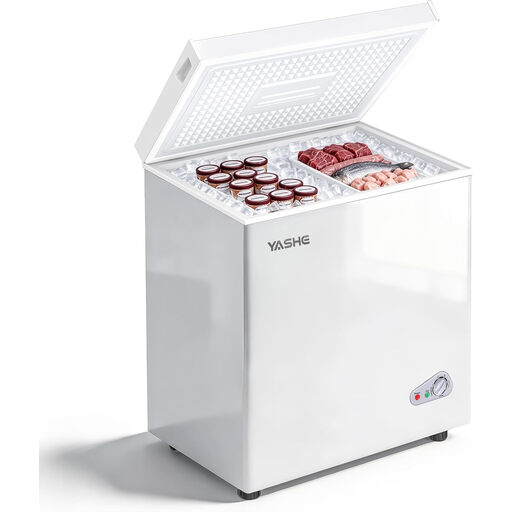
YASHE BC-150Q-EU chest freezer, 150 l
The two removable baskets give you a way to organise smaller food stocks separately. Before freezing fresh berries, check whether this specific appliance has a suitable four-star compartment.
150 l; two removable baskets; six temperature settings.
Joybuy
 No image available
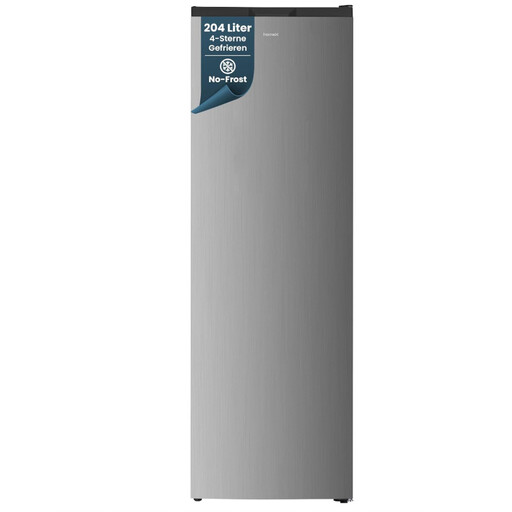
homeX FSN2041E-S upright freezer, 204 l
The drawer layout can help you store berry portions separately; check that there’s room for flat trays to freeze them individually first.
204 l; NoFrost; Super-Freeze function; 39 dB; energy class E.
Joybuy
 No image available
AUCMA chest freezer, 95 l, with switchable fridge and freezer modes
The removable basket can keep smaller food stocks separate. Before freezing fresh berries, check whether this specific appliance has a suitable four-star compartment.
95 l; seven thermostat settings; energy class E.
Joybuy
 No image available
Gorenje FH15E6W5 chest freezer, 141 l
Flexible baskets can help you sort your food stocks. Its stated freezing capacity of 8 kg in 24 hours may be useful when planning fresh batches.
141 l; FastFreeze; FreezeProtect down to −15 °C; flexible baskets.
The appliance needs to be defrosted if ice builds up.
Joybuy
Frequently asked questions
How can I stop berries from freezing together before cooking with them later?
First, spread prepared berries out on a tray with a little space between them and freeze them individually. Then transfer them to suitable bags or containers. The Federal Centre for Nutrition recommends labelling containers with their contents, quantity and date; portion the berries to suit the amount you’ll need for cooking later.
What do the energy class and kWh/year tell me about my electricity costs?
The EU energy label shows details including the efficiency class, annual energy consumption and capacity. Compare the kWh/year figure for appliances of a suitable size; the consumer advice centre points out that standardised figures may differ from energy use in your own household. Your personal costs also depend on your electricity tariff.
Can I keep a chest freezer in an unheated cellar?
That depends on the specific appliance and the ambient temperature where it will be kept. Liebherr states that the CFd 2505 Plus has FrostProtect down to −15 °C; this doesn’t automatically apply to other chest or upright freezers. Compare the temperature at the intended location with the manufacturer’s specifications for your chosen model.
How should I dispose of an old freezer in Germany?
Old electrical appliances must not be put in household waste. The German Environment Agency lists taking them to a recycling centre as one option. If you’re buying a new appliance, check with the retailer whether and how they offer to take away your old one.
Are home-frozen berries always safe to eat raw after defrosting?
No. The German Federal Institute for Risk Assessment points out that freezing doesn’t remove possible viral contamination. It recommends that frozen berries served to particularly vulnerable groups in communal settings should not be served without sufficient heat treatment. This is not a general legal requirement to cook every home-grown harvest.


