For a few portions to serve with dinner, your existing freezer compartment will often be enough, as long as it is suitable for fresh food and has room for a tray. An additional appliance is more useful if you regularly freeze larger harvests or other supplies; if so, choose based on the space available, the interior layout and annual energy consumption. A freezer won’t make berries ready to serve straight away, either: pre-freezing, hygienic preparation and cooking still matter.
Which freezer option is right for you?
Occasional berry freezers
If you only want to prepare a few garden berries for a shared meal, first check whether your existing freezer compartment is suitable for fresh food and has enough room for the quantity you have in mind. The Verbraucherzentrale and the Federal Centre for Nutrition highlight the importance of choosing the right appliance size and pre-freezing.
Regular harvest freezers
If you freeze fresh berries regularly, you’ll need room for each batch and to pre-freeze individual berries. The Federal Centre for Nutrition recommends freezing prepared berries spaced apart on a tray before transferring them to another container.
Households that stock up
If you regularly store other food alongside berries, choose the usable capacity and footprint to suit your needs, and compare the annual energy consumption of the specific appliance. The Verbraucherzentrale points out that an unnecessarily large freezer uses electricity; the European Commission lists annual energy consumption and volume on the energy label.
What should you look for when buying?
First check whether your existing freezer compartment is suitable for fresh food and has enough room for the quantity you plan to freeze. If you regularly need extra capacity, compare the interior layout, dimensions and annual energy consumption; the Verbraucherzentrale recommends choosing an appliance size that matches your actual needs.
Existing four-star freezer compartment
A good fit if: You only freeze berries occasionally and can fit a tray alongside your other supplies.
The trade-off: You won’t need an additional appliance, but limited space can make it harder to pre-freeze the berries separately.
Compact under-counter freezer
A good fit if: You regularly freeze modest quantities and want to take out individual portions separately.
The trade-off: Drawers can make it easier to keep everything organised; check first that the tray you use for pre-freezing will fit.
Larger upright freezer
A good fit if: You want room for other supplies as well as berries, and separate compartments are important.
The trade-off: Extra space is only worthwhile if you need it; compare usable capacity and annual energy consumption.
Chest freezer
A good fit if: You regularly have larger harvests and have a suitable spot with enough room to open the lid.
The trade-off: Clear labelling and organisation make it easier to take out smaller portions later.
| Priority |
What to check when buying |
Who is it most relevant to? |
| Fresh harvest |
Planned quantity and clear space for a tray; the freezing capacity of the specific appliance. |
If you want to pre-freeze a fresh batch without overfilling the appliance, you’ll need room for both the berries and the tray. Around 36% of consumers prioritise freezing their harvest. |
| Available space and size |
External dimensions, interior layout, delivery route and clearance for the door or lid. |
If space is limited, you’ll want to make sure the appliance fits in its intended spot and can be opened fully. Around 29% of consumers prioritise a suitable appliance size and footprint. |
| Energy consumption |
kWh/year and usable capacity of the specific model; use your own electricity tariff to calculate your costs. |
If an additional appliance will be running all the time, you’ll want to weigh up its energy consumption against your actual storage needs. Around 21% of consumers pay particular attention to running costs. |
| Portions and maintenance |
How easy the compartments are to access, space for pre-freezing and the defrosting system specified for the appliance. |
If you want to take out individual berries and keep maintenance to a minimum, check the compartments and defrosting system carefully. Around 14% of consumers make this a priority. |
Pitfalls to avoid when buying a freezer for berries
-
Buying an oversized appliance for just a few portions
A freezer with much more capacity than you need can use electricity unnecessarily. If you only need extra space occasionally, a suitable existing freezer compartment may be enough.
Estimate how much you plan to freeze at once, then compare suitable appliance sizes by their annual energy consumption. The Verbraucherzentrale gives −18 °C as the optimum temperature for freezers.
An additional appliance comes with ongoing electricity costs.
-
Assuming the stated capacity means there’s room for a pre-freezing tray
The stated capacity alone won’t tell you whether a tray will fit in the compartments or whether the berries can be laid out with space between them. The door or lid opening and interior layout also affect how easy the appliance is to use.
Compare the usable internal dimensions and opening clearance of the specific appliance with the tray you plan to use.
-
Confusing MinFrost with NoFrost
The Beko FSE1074N is listed with MinFrost, while the manufacturer specifies NoFrost for the Liebherr FNe 1404. These terms do not refer to the same defrosting system.
Check the defrosting system for the exact model number before assessing how much maintenance it will need.
Depending on the model, manual defrosting may be necessary.
-
Assuming freezing is a substitute for hygienic preparation
A freezer does not eliminate every potential risk from contaminated berries. The German Federal Institute for Risk Assessment highlights the possible health risks associated with frozen berries.
Prepare berries hygienically and, before serving, follow the German Federal Institute for Risk Assessment’s guidance on thorough heating, particularly for vulnerable groups.
Brands and models to consider
Beko
The models documented here include both compact upright freezers and a chest freezer, offering different designs to choose from.
- According to Beko, the FSE1074N has 95 l of freezer space and is 54 cm wide; the manufacturer lists the CF100EWN as having 98 l of capacity and a width of 54.5 cm.
- MinFrost on the FSE1074N is not a verified NoFrost function. These are manufacturer specifications, not independent freezing test results.
Liebherr
The FNe 1404 Pure is a compact upright freezer with NoFrost technology specified by the manufacturer.
- Liebherr lists a total capacity of 92 l and a width of 55 cm for this model.
- The technical specifications do not show that this model freezes garden berries faster than other appliances.
Exquisit
The GS81-040C white is a compact freestanding option if you need extra freezer space.
- Exquisit lists a usable capacity of 87 l, three drawers and annual energy consumption of 105,04 kWh for this model.
- The stated depth with the door open is 107 cm. So check not only the space for the appliance, but also the clearance needed to open it.
Freezers at Joybuy
The Joybuy models below include compact and larger upright freezers, as well as chest freezers, for extra space for berries and harvests.
 No image available
homeX FSN2041E-S upright freezer, 204 l, NoFrost
For regular harvests and extra freezer space. The product name lists 204 l, NoFrost, Super Freeze, 39 dB and energy efficiency class E.
View at Joybuy
 No image available
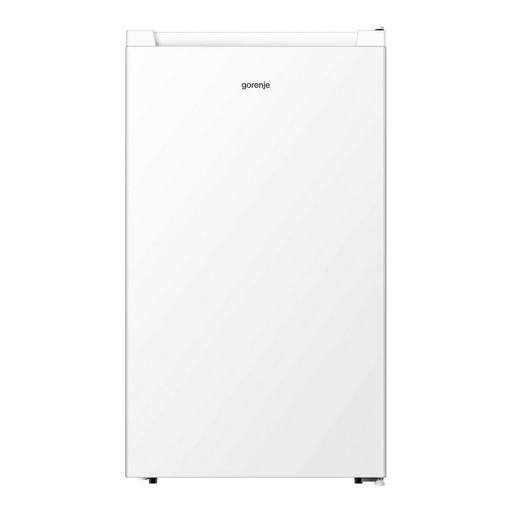
Gorenje F39EPW4 under-counter freezer
A compact, separate freezer for smaller additional quantities. The product name lists energy efficiency class E; according to the product information, the appliance must be defrosted manually.
View at Joybuy
 No image available
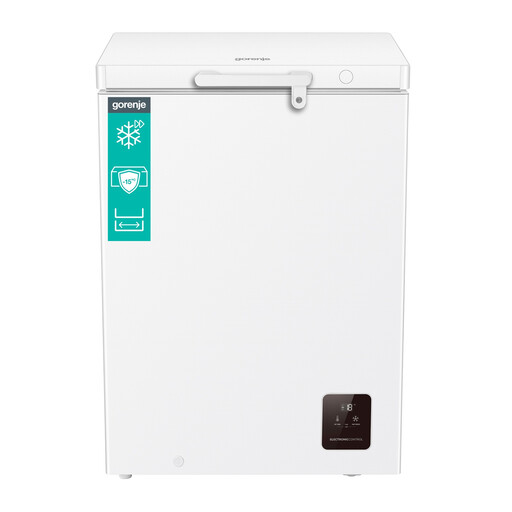
Gorenje FH15E6W5 chest freezer, 141 l
For regular harvest batches and extra storage space. The product name lists 141 l, FastFreeze and FreezeProtect down to −15 °C; make sure there’s room at the installation site for the lid to open upwards.
View at Joybuy
 No image available
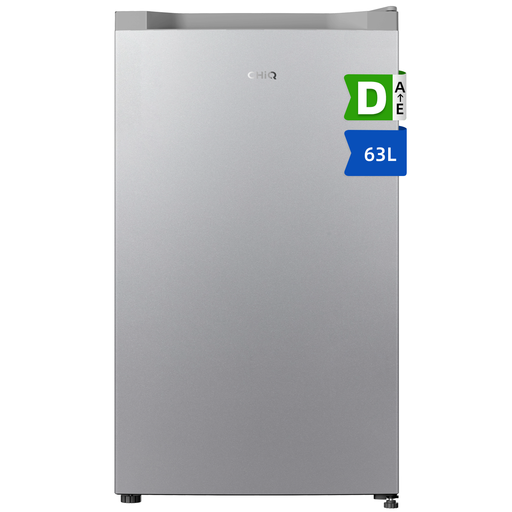
CHiQ JR63DSD upright freezer, 63 l
For extra freezer space where floor space is limited. The product name lists 63 l, a four-star compartment, 38 dB and energy efficiency class D; according to the product information, manual defrosting is required.
View at Joybuy
 No image available
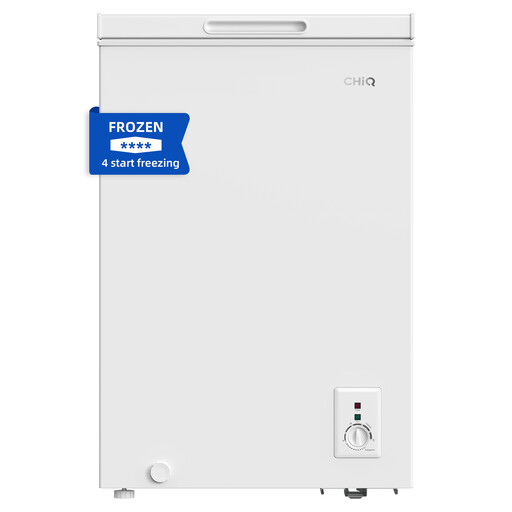
CHiQ chest freezer, 99 l
A chest freezer option for extra storage space. The product name lists 99 l, four-star freezing and energy efficiency class E; allow for the space needed to open the lid upwards.
View at Joybuy
Frequently asked questions
Do I need a new appliance to freeze a few portions of berries for the same evening?
Not necessarily. Check whether your existing freezer compartment is suitable for fresh food and has enough space alongside your other supplies. The Verbraucherzentrale says a four-star rating is an important indication for a freezer compartment; it does not tell you how long freezing will take before dinner.
How can I keep garden berries separate so I can take them out individually later?
If possible, pre-freeze the prepared berries on a tray, spaced apart and as dry as possible, then transfer them once they have frozen solid. The Federal Centre for Nutrition describes this method; afterwards, label the portions with their contents, quantity and date.
Are frozen berries safe to serve to everyone without any further preparation?
Freezing alone does not eliminate the risk of infection. The German Federal Institute for Risk Assessment highlights the risks from contaminated frozen berries and recommends heating them thoroughly to help protect against food-borne illness. Its older guidance on core temperatures above 90 °C relates to a specific risk assessment of frozen berries and particularly vulnerable groups in communal settings.
What do the energy label and annual energy consumption tell me about costs?
The EU energy label includes the energy efficiency class, annual energy consumption in kWh, capacity and noise information. To work out your own costs, multiply the annual energy consumption of the specific model by your price per kWh; actual consumption may differ from the standardised label figure depending on the location and use of the appliance.
Can I put an old freezer in my household rubbish?
No. Old electrical appliances must be collected separately. The German Environment Agency lists local collection points, which generally accept old electrical appliances free of charge; retailers also have take-back obligations under certain conditions. Check with the seller how any return of your old appliance can be arranged.


