If you only freeze portions of herbs occasionally and your existing four-star compartment has enough room, buying an extra appliance may not make sense. If you regularly prepare supplies for family meals, first compare the freezer space you need with the appliance’s dimensions, then consider annual energy consumption and the effort involved in defrosting. To freeze fresh herbs, you’ll need a compartment suitable for freezing.
Who needs extra freezer space?
Households that freeze herbs occasionally
If you only prepare small amounts for individual family meals, start by checking whether your existing four-star compartment has room for the containers. The Federal Centre for Nutrition recommends freezing chopped herbs with a little water in ice cube trays.
Families who regularly prepare portions in advance
If you regularly freeze herbs and other ingredients, check that you have enough storage space and that the compartments are suitable for individual portions. The Federal Centre for Nutrition recommends measuring out the quantities you need and freezing them in portions.
Households with limited kitchen space
If you need extra freezer space but have little room to spare, check the appliance’s external dimensions and door clearance where it will stand, and compare its annual energy consumption with your actual needs. The consumer advice centre points out that an appliance that’s too large can use more electricity than necessary.
What should you look for when buying?
Use your existing freezer compartment
A good fit if: you only freeze a few portions and the suitable compartment has enough room for your containers.
Bear in mind: A three-star compartment is for storing food that is already frozen, not for initially freezing fresh herbs.
Separate under-counter freezer
A good fit if: you need extra space for family portions you prepare regularly, but have limited room to spare.
Bear in mind: A compact design alone tells you nothing about the annual energy consumption or defrosting requirements of a specific model.
Larger upright freezer or chest freezer
A good fit if: you need space for larger supplies or plenty of family portions, as well as herbs.
Bear in mind: The consumer advice centre notes that chest freezers may use less energy than upright freezers. You’ll also need enough room to install one and a layout that works for your portions.
The Federal Centre for Nutrition recommends freezing chopped herbs with a little water in ice cube trays. You’ll need a suitable four-star compartment for the actual freezing process.
| Buying priority |
What to check when buying |
Who it matters most to |
| Portioning |
Four-star suitability and room for ice cube trays or freezer containers. |
When I prepare herbs for a family meal, I want to take out individual portions rather than defrost a frozen block; that’s why around 33% of consumers put portioning first. |
| Extra storage space |
Usable capacity and compartment layout, as well as dimensions and door clearance. |
When I regularly add more family portions, I want enough room without buying an unnecessarily large appliance; around 27% of consumers name extra storage space as their main priority. |
| Energy consumption |
Annual kWh on the EU energy label and the capacity you need. |
For an appliance that runs all the time, I want to compare its annual energy consumption with the space I need; around 20% of consumers focus above all on running costs. |
| Defrosting effort |
Model-specific information about NoFrost or reducing ice build-up. |
If I want to store frequently used portions with as little upkeep as possible, I check the defrosting information; around 20% of consumers prioritise low maintenance. |
Which mistakes should you avoid?
-
Assuming a three-star compartment is suitable for freezing fresh herbs
The star ratings indicate different functions: storing food that is already frozen for longer is not the same as freezing it in the first place.
Check whether your existing compartment or the appliance you’re considering is suitable for freezing fresh food. The Federal Centre for Nutrition recommends using a four-star compartment for this.
-
Buying a large extra appliance just in case, when you only freeze a few portions of herbs
A freezer with more capacity than you need can use unnecessary energy, while a suitable existing compartment may already be enough. The consumer advice centre recommends weighing up the size against your needs.
First check how much room is available in your existing compartment, then compare the capacity you need with the annual kWh consumption of specific appliances.
An extra appliance will add to your ongoing electricity consumption.
-
Assuming MinFrost is the same as NoFrost
Beko describes the FSE1074N as a MinFrost model, while Liebherr lists the FNe 1404 as having NoFrost. These manufacturers’ claims apply to the respective models and are not interchangeable.
Read the defrosting information for the full model and compare its features and annual energy consumption. MinFrost does not mean that the appliance never needs defrosting.
If an appliance doesn’t defrost automatically, you may need to set aside time to defrost it manually.
-
Assuming different capacity figures refer to identical versions of a product
Beko’s German product page lists the FSE1074N as 90 l in the heading and 95 l in the main technical specifications.
Before buying, check the model number and the specification sheet for the specific version, especially if you’re planning container space or storage around it.
Which brands and models are worth considering?
Bosch
The GTV15NWEB under-counter freezer is one example of a compact appliance with a stated four-star rating. The figures below apply to this model, not to all Bosch appliances.
- According to Bosch’s German manufacturer specification sheet: 83 l freezer capacity, 164 kWh per year, 39 dB(A) and a freezing capacity of 4,0 kg/24 h.
- This model doesn’t have NoFrost. Check that your containers will fit in the compartments.
Liebherr
The FNe 1404 Pure is a compact under-counter option for buyers who want NoFrost. The manufacturer’s information is not an independent performance comparison.
- Liebherr lists a total capacity of 92 l, external dimensions of 85 × 55 × 60,7 cm, 37 dB and NoFrost for this model.
- Before deciding, check the four-star suitability and annual energy consumption of the specific version.
Beko
The FSE1074N is an example of a compact freezer with MinFrost and a reversible door. The specifications apply to this model.
- Beko describes the model as a MinFrost appliance, not a NoFrost model.
- Beko’s German product page lists 90 l in the heading and 95 l in the main technical specifications. Check the capacity and four-star suitability of the version on offer.
Joybuy products for extra freezer space
These Joybuy products are separate freezers that offer extra space for herbs and other family supplies. If you want to freeze fresh herbs, check that the specific version has a four-star rating.
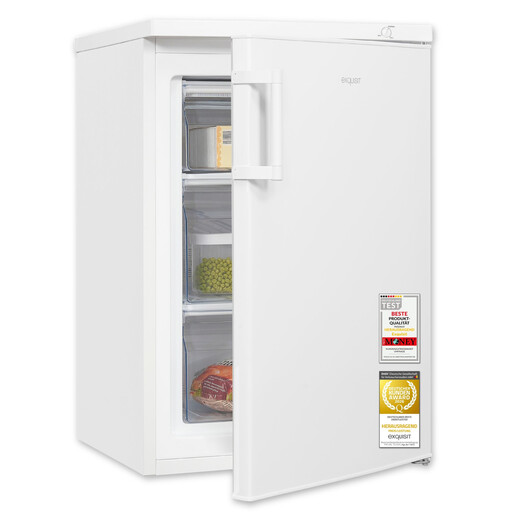 Image unavailable
Exquisit GS581-H-010E, 85 L
For storing portions of herbs in a separate appliance; the product name describes it as a four-star freezer.
85 L, three drawers and a reversible door, according to the product name. The product description says manual defrosting is required if more than 5 mm of frost builds up.
View at Joybuy
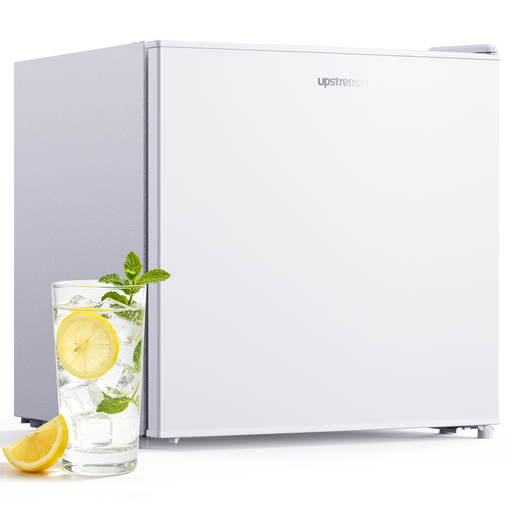 Image unavailable
Upstreman UF35, 35 L
For small amounts of extra freezer storage; the product name describes it as a four-star mini freezer.
35 L, 41 dB and reversible doors, according to the product name.
View at Joybuy
 Image unavailable
AUCMA convertible chest freezer, 95 L
For extra storage in a chest-freezer design; before freezing fresh herbs, check that the specific version has a four-star rating.
95 L, convertible fridge and freezer modes, energy class E, seven thermostat settings, removable basket and defrost water drain, according to the product name.
View at Joybuy
 Image unavailable
COMFEE' RCU40WH2(E), 31 L
For small amounts of extra storage; the product name describes it as a four-star mini freezer.
31 L, 147 kWh per year and a reversible door, according to the product name.
View at Joybuy
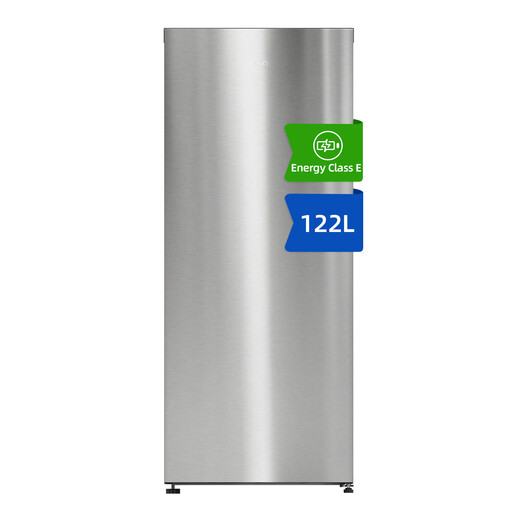 Image unavailable
CHiQ JR122WSD, 122 L
For extra freezer space; the product name describes it as a four-star appliance with a No-Frost function.
122 L, 39 dB, convertible fridge and freezer modes, and Multi-Airflow, according to the product name.
View at Joybuy
Frequently asked questions
Can I freeze fresh, chopped herbs in any freezer compartment?
No. For freezing fresh herbs, the Federal Centre for Nutrition recommends using a four-star compartment. Three-star compartments are suitable for storing food that is already frozen for longer at temperatures of at least −18 °C.
How can I prepare herbs in portions for family meals?
The Federal Centre for Nutrition recommends finely chopping fresh herbs and freezing them with a little water in ice cube trays. You can prepare the quantities you need in portions, and label portions stored for longer with their contents and the date.
What should I consider when installing and using a freezer?
Measure the space available and check the door clearance for the specific appliance. The German Environment Agency recommends keeping freezers away from heat sources and direct sunlight, and opening the door only briefly. If you plan to keep the appliance in an unheated space, also check that the specific model is approved for this.
How can I compare energy consumption and dispose of an old appliance?
Compare the annual kWh figures on the EU energy label; actual consumption also depends on how and where the appliance is used. In an FAQ dated 28 July 2022, the Federal Ministry for the Environment explains that in Germany, old electrical appliances must be handed in at an authorised collection point.


