For a few lunch portions, your existing freezer compartment may be enough, provided it is suitable for freezing fresh food and has enough space. If you regularly run short of room, drawers make it easier to take out portions separately; a chest freezer is more suitable for larger stocks and where you have enough floor space. Compare the usable capacity, external dimensions and annual energy consumption of the specific appliance, as recommended by the consumer advice centre and the EU energy label.
Who might benefit from a freezer?
Those who batch-cook every week
If you regularly prepare several portions of lentil stew for the working week, make sure you have room for the containers and can access them easily. The German Federal Institute for Risk Assessment recommends taking available fridge and freezer space into account when batch-cooking.
Households with a small kitchen
If you have little space for a separate appliance, its external dimensions, door opening and the clearance it needs may determine which design is right for you. Check where it will go before weighing up capacity against the space it takes up.
Those planning ahead and keeping an eye on energy costs
If you want to store extra food for longer, compare the capacity you need with the annual energy consumption of the specific model. The consumer advice centre points out that an appliance that is too large for your needs may use unnecessary energy.
What should you look for when buying?
| What matters |
What to check before buying |
Who is this important to? |
| Room for lunch portions |
Consider the free space in your existing compartment, the size of your containers and the appliance’s usable capacity together. |
If I prepare several batches of food, I want the portions to fit without having to buy an oversized appliance for just a few containers. Around 36% of consumers are likely to put having enough room for portions first. |
| Ongoing energy consumption |
Compare the kWh/year figure and usable capacity on the EU energy label for the specific model. |
If a separate appliance will be running all the time, I want to estimate its annual energy consumption in relation to the capacity I need. Around 29% of consumers are likely to prioritise energy costs. |
| Fitting the available space |
Check the external dimensions, door hinge and clearance needed at the intended location. |
If my kitchen has little floor space, the appliance must fit within the available area, including when the door is open. For around 21% of consumers, finding a model that fits the space is likely to be the most important buying consideration. |
| Easy access and maintenance |
Check the layout, including drawers or a basket, and the exact defrosting features. |
If I take out individual portions on weekdays, I need a layout that makes them easy to find. Around 14% of consumers are likely to prioritise convenient access to individual portions and the effort involved in maintenance. |
Common selection mistakes
-
Buying a separate appliance without measuring your existing freezer space
For a few portions, a suitable existing freezer compartment may be enough. An appliance with much more space than you need can take up floor space unnecessarily and use more energy.
First check the available space, the size of your containers and whether your existing compartment is suitable for freezing fresh food. For a freezer compartment, a four-star rating is relevant.
An additional appliance takes up floor space permanently and adds to your ongoing energy consumption.
-
Choosing based only on the efficiency class or compact size
The efficiency class alone does not show the absolute annual energy consumption. A small appliance is not automatically the best choice for your needs, either.
For models with a similar usable capacity to the one you need, compare their kWh/year figures on the EU energy label.
-
Assuming MinFrost, NoFrost and easy-access compartments are the same thing
These terms do not mean the same thing. Beko describes the FSE1074N as having MinFrost and static cooling, while the Severin GS 8865 is explicitly listed as having no NoFrost. A chest freezer with a basket also has a different layout from an upright freezer with drawers.
Check the defrosting system and interior layout for the exact model rather than assuming one feature name tells you how easy it is to maintain or access.
Depending on the appliance, you may need to defrost it manually. An inconvenient layout can also make it more time-consuming to find individual portions.
Key brands at a glance
Severin
The models mentioned include compact upright freezers, larger models with drawers and a chest freezer. The right option depends on how much space you have and how you want to access your food.
- The manufacturer lists the GS 8865 as having 85 l and three drawers, the GS 8868 as having 161 l and NoFrost, and the GT 8849 as having 200 l and a basket.
- The manufacturer states that the GS 8865 does not have NoFrost. These details apply to the models mentioned, not to every appliance from the brand.
Beko
The FSE1074N is a compact under-counter appliance for spaces where room is limited.
- Beko lists static cooling and MinFrost, which helps reduce ice build-up, for this model.
- MinFrost is not the same as NoFrost. Check the usable capacity and specifications for the exact version in its datasheet.
Liebherr
The FNd 4234 is an upright freezer with a mid-range capacity and drawer access.
- Liebherr lists 160 l, NoFrost and FrostProtect for ambient temperatures down to −15 °C for this model.
- These features apply to the FNd 4234; they are not a general description of all Liebherr appliances.
Joybuy products for lunch portions
These product examples include compact appliances, upright freezers with compartments and a chest freezer for different space and storage needs.
 No image available
Heinrich’s Freezer 161L Volume, NoFrost
The drawers and shelves are useful if you want to store lunch portions separately.
161 l; NoFrost; three freezer drawers and two shelves; energy efficiency class C.
The description also mentions Fast Freeze at −22 °C.
View at Joybuy
 No image available
Exquisit GS581-H-010E
The compact drawer layout may suit you if you want to take out individual containers separately.
85 l; three transparent drawers; four-star rating; freezing capacity of 4.0 kg per 24 hours.
According to the description, manual defrosting is required once more than 5 mm of frost has built up.
View at Joybuy
 No image available
Upstreman UF35
The compact design may be a good option if you have very little floor space.
35 l; four-star rating; reversible door.
View at Joybuy
 No image available
homeX FSN2041E-S
The compartments provide space to store several portions separately, as well as other food.
204 l; six compartments; NoFrost; energy efficiency class E.
The description lists a four-star compartment and a Super Freeze function.
View at Joybuy
 No image available
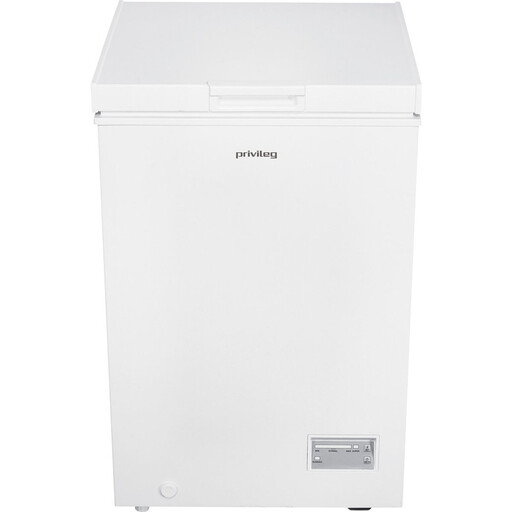
Privileg PRCF 984 E
A chest freezer may suit you if you want to store food in a larger compartment. Check whether the basket layout makes it easy enough to reach individual portions.
98 l; two baskets; Super Freeze function; freezing capacity of 6 kg per day.
For defrosting, the manual describes letting the ice melt naturally after emptying the appliance and disconnecting it from the mains.
View at Joybuy
Frequently asked questions
Do I need to buy a new freezer for a few portions of lentil stew?
No, not if your existing freezer compartment is suitable for freezing fresh food and has enough room. A separate appliance is worth considering if you regularly freeze larger quantities or keep running out of space.
How should I prepare portions of stew for the freezer and my commute?
For longer storage, cool hot food quickly to below 7 °C, as recommended by the German Federal Institute for Risk Assessment. For liquid foods, the consumer advice centre recommends using freezer-safe containers filled to no more than three-quarters full. Also check what refrigeration is available where you plan to eat, and carry the container in a cool bag.
How can I estimate a freezer’s energy consumption?
For appliances with a similar usable capacity, compare the kWh/year figure on the EU energy label and multiply it by your electricity tariff to get a rough estimate of running costs. The label figure is measured under standardised conditions; how you use the appliance and where you place it can also affect its actual consumption.
Which labelling and disposal rules apply in Germany?
EU energy-labelling rules apply to new household freezers covered by the regulations. The label shows, among other things, the efficiency class, annual energy consumption and freezing capacity. Old appliances must be disposed of separately. The German Environment Agency explains that large old appliances can be returned free of charge when you buy a new appliance of the same type, including with online purchases delivered to your home.


