Families who regularly stock up on sauce
If you batch-cook larger quantities regularly, check the amount you can freeze at one time separately from the space available for your overall stock.


The Verbraucherzentrale says you need a four-star compartment to freeze food in a fridge. If it has enough space and freezing capacity for the occasional portion of sauce, you may not need an additional appliance. If you regularly prepare family-sized batches, compare the largest amount you’ll freeze in a day with the freezing capacity in kg/24 h, and your total stock with the usable capacity. Then consider the space available, how easy it is to reach individual portions and the kWh/year figure. For storing cooked food for longer, the German Federal Institute for Risk Assessment recommends cooling it quickly to below 7 °C before packing and freezing the sauce.
If you batch-cook larger quantities regularly, check the amount you can freeze at one time separately from the space available for your overall stock.
If you only freeze individual meals, first check whether an existing four-star freezer compartment will do, or whether a small additional appliance would fit better in the space available. The Verbraucherzentrale says food should be frozen in a four-star compartment in a fridge.
If you take out sauce at different times, look for portions that can be stored separately, labelled and easily reached. The German Federal Centre for Nutrition recommends freezer bags and freezer-safe containers, provided they are labelled accordingly.
First, check whether your existing four-star freezer compartment is big enough. If you regularly need more capacity, compare a small additional appliance, a larger upright freezer and a chest freezer by considering your daily batch size, the space available and how easy it is to reach your portions.
| What matters | What to check when buying | Who it matters to |
|---|---|---|
| Daily batch size and freezing capacity | Compare your largest daily batch of sauce in kg with the stated capacity in kg/24 h; take existing frozen food into account too. | If I want to freeze a large batch of sauce at once, the appliance’s capacity for fresh food matters more than storage space alone. Around 36% of consumers prioritise daily freezing capacity. |
| Storage space and footprint | Measure your containers and the space where you plan to put the appliance; take existing freezer space into account. | If space in the kitchen or utility room is limited, I want to fit in my containers without buying an unnecessarily large appliance. Around 28% of consumers prioritise suitable storage space and footprint. |
| Energy consumption | For appliances with enough capacity, compare the kWh/year figures on the EU energy label and consider where you’ll put the appliance. | If I’m going to run an appliance all the time, I look at its stated annual energy consumption as well as whether it has enough space. Around 18% of consumers prioritise ongoing electricity costs. |
| Finding and taking out portions | Check that your freezer containers will fit in the drawers, compartments or chest freezer baskets. | If I need individual meals at different times, I want to store the right portions separately and reach them easily. Around 18% of consumers prioritise keeping individual portions organised and easy to take out. |
Storage capacity doesn’t tell you how much freshly made sauce the appliance can freeze in a day.
Compare your largest daily batch with the stated freezing capacity in kg/24 h, then check your total stock against the usable capacity separately.
The Verbraucherzentrale points out that an appliance larger than you actually need can use unnecessary energy. A small appliance isn’t automatically more energy-efficient either.
First check your existing freezer compartment and how much food you really need to store. Then compare the annual energy consumption of appliances with a capacity that suits your needs.
Liebherr describes SmartFrost on the CFc 1875 Plus as a feature that reduces frost build-up and means you need to defrost less often; it doesn’t eliminate the need to defrost.
Check the defrosting method and care instructions for the specific model rather than assuming similar feature names mean the same thing.
SmartFrost may still require defrosting.
Suitability for low ambient temperatures depends on the model; Liebherr specifies this for the CFc 1875 Plus.
Check that the appliance’s permitted ambient temperature range is suitable for the conditions where you plan to put it.
Bosch offers both compact under-counter freezers and larger upright models, giving you options to compare for different spaces.
The CFc 1875 Plus is an example of a chest freezer with a total capacity of 192 l and a width of 104 cm.
The GS36NVICG is an example of a large freestanding freezer for households that need plenty of storage.
Beko offers freestanding freezers in various sizes; the RFNE312E43WN is one example.
The following Joybuy products include upright and chest freezers for extra freezer space and separately stored portions. For each model, check that its freezing capacity and dimensions suit your largest daily batch and the space where you plan to put it.
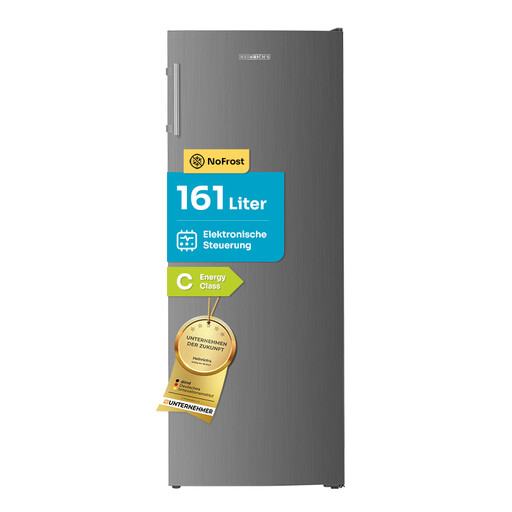 No image available
For households looking to store portions of sauce in an additional upright freezer.
161 l; No Frost; three freezer drawers.
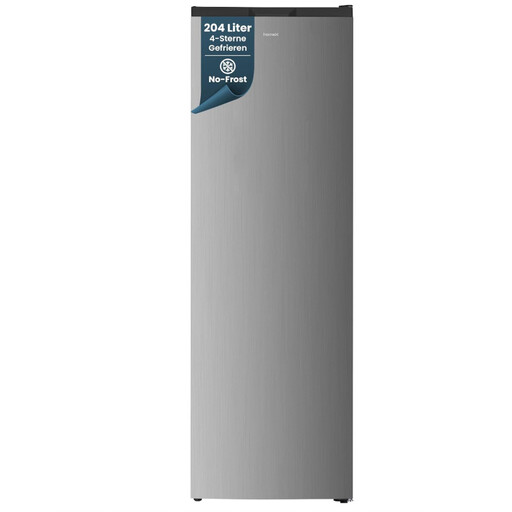 No image available
For households looking for extra freezer space in a freestanding upright freezer.
204 l; NoFrost; Super Freeze; 39 dB; energy class E.
 No image available
For households considering a chest freezer with switchable fridge and freezer functions.
95 l; energy class E; removable basket; defrost drain.
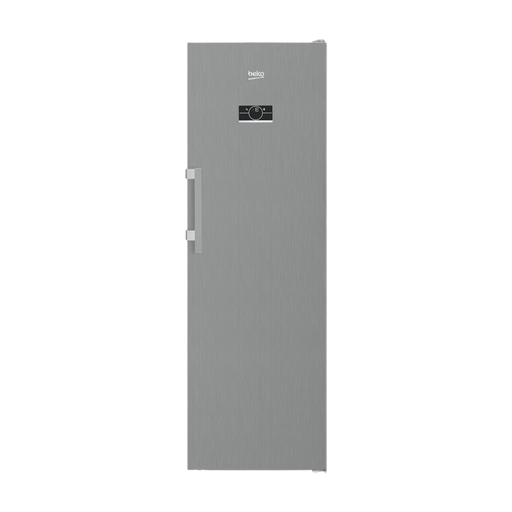 No image available
For households looking for a larger freestanding freezer for extra supplies.
286 l; No Frost; Fast Freeze; energy class D; described in the product name as suitable for unheated rooms.
 No image available
For households looking for extra freezer space in a compact chest freezer.
99 l; four-star freezer function; energy class E; wire basket.
No. Leaving it out for a long time is no substitute for cooling it quickly. For storing cooked food for longer, the German Federal Institute for Risk Assessment recommends cooling it quickly to below 7 °C. Divide larger quantities into suitable portions so they cool more quickly, then pack them hygienically.
Use film, bags or freezer-safe containers that are specifically labelled as suitable for freezing. The German Federal Centre for Nutrition lists these types of packaging; choose a size that suits the portions you plan to freeze.
The Verbraucherzentrale says you need a four-star compartment to freeze food in a fridge. Also check that your containers and the batch of sauce will actually fit inside.
Compare the kWh/year figures on the EU energy labels of appliances with a capacity that suits your needs. The Verbraucherzentrale advises against choosing an unnecessarily large appliance; actual energy consumption can also depend on how you use it and where you put it.