Occasional freezer user
Freezes a cooled portion of sauce now and then and wants to find out whether their existing freezer compartment is big enough.


You don’t automatically need a separate freezer for the occasional individual portion: an existing four-star freezer compartment could be suitable if it has enough room and its freezing capacity is right for the quantity you want to freeze. If you regularly prepare portions in advance, a compact freezer or a drawer freezer may be a better choice. Compare usable capacity, floor space and annual energy consumption. A chest freezer is more suitable if you’re also planning to store larger quantities.
Freezes a cooled portion of sauce now and then and wants to find out whether their existing freezer compartment is big enough.
Regularly makes sauce to store for later and needs space to keep individual portions organised and easy to take out.
Needs extra freezer space but has room for only a small appliance or one with limited height.
First, check whether your existing freezer compartment is suitable for freezing fresh food. The Verbraucherzentrale also recommends choosing a capacity that matches your actual needs. To compare energy use, look at the specific annual figures for each appliance.
A good fit if: You only freeze a few individual portions occasionally, and the space and freezing capacity are sufficient for the amount you’re freezing.
Bear in mind: Food already in the freezer will reduce the available space.
A good fit if: Your existing compartment isn’t big enough, but you only need to store a small extra supply and have limited floor space.
Bear in mind: Exquisit lists a freezing capacity of 2.4 kg in 24 hours for its 33-litre freezer. Even so, compare its annual energy consumption with other suitable appliances.
A good fit if: You regularly store several portions and other food separately, and want to take items out individually.
Bear in mind: Check the usable capacity, annual energy consumption, floor space and clearance needed to open the door. Depending on the model, manual defrosting may be required.
A good fit if: You’ll regularly store substantially larger quantities alongside your sauce and have space for a top-opening appliance.
Bear in mind: The large interior can be impractical for a few small containers. Compare the energy consumption figures for specific appliances.
| What matters | What to check when buying | Who is it most important to? |
|---|---|---|
| Suitable freezer space | Check whether your existing compartment has a four-star rating, how much free space it has, your usual portion size and the appliance’s freezing capacity. | If I only freeze a portion now and then, I want to know first whether my existing compartment is enough; around 36% of consumers put suitable freezer space first. |
| Ongoing electricity costs | Compare the kWh/year figures on the EU energy labels of specific appliances, and take their usable capacity into account. | For an appliance that runs all the time, annual energy consumption matters more to me than a compact design; around 29% of consumers prioritise energy use. |
| Floor space and door clearance | Measure the width, height and depth, as well as the space needed in front of the appliance when the door is open. | In a small kitchen, I need room for an additional appliance with its door open; around 21% of consumers say floor space is their top priority. |
| Portions and maintenance | Check the drawer layout, suitable containers and defrosting method. Don’t fill freezer-safe containers of liquid sauce right to the top. | If I want to take out individual portions and keep maintenance in mind, the drawers and defrosting method are key; around 14% of consumers prioritise access and maintenance. |
A suitable compartment with enough room may be all you need for occasional small portions. An additional appliance takes up floor space and runs continuously.
Check the four-star rating, available space and whether the freezing capacity is right for the amount you usually freeze.
A compact design doesn’t necessarily mean lower energy consumption. The Verbraucherzentrale points out that small freezers can use a comparatively large amount of electricity.
Compare the stated annual energy consumption in kWh for suitable appliances.
Liquids expand as they freeze. A container filled to the brim could be damaged, causing the sauce to leak.
Use freezer-safe containers. For liquids, the Verbraucherzentrale recommends filling them to about three-quarters full.
The model ranges mentioned include a small freezer and drawer freezers.
The GS 2196.1 is an example of a drawer freezer for storing portions separately.
The range includes under-counter freezers with SmartFrost and the FNe 1404 Pure model with NoFrost.
The appliances below are options for extra freezer space. For each model, check specifically that it’s suitable for freezing fresh food and can handle the quantity you plan to freeze.
 Image unavailable
At 161 L, it’s better suited to storing extra supplies alongside individual portions of sauce.
The product name lists a capacity of 161 L, No-Frost and energy class C.
 Image unavailable
Three drawers make it easy to keep portions separate.
The product name lists a capacity of 85 L and three drawers; compare the specific appliance’s annual energy consumption before buying.
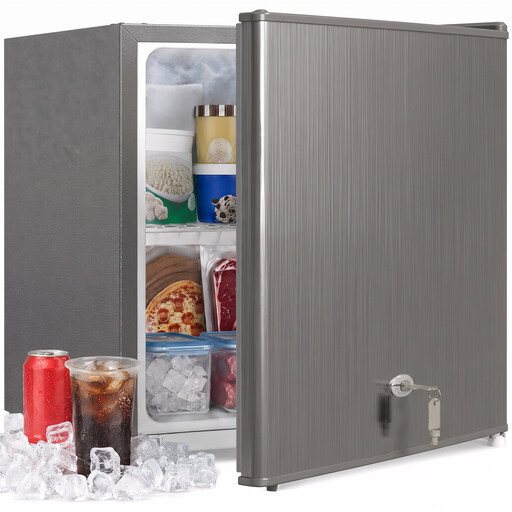 Image unavailable
This compact chest freezer is described as providing extra freezer space for a small supply of food.
The product name lists a capacity of 35 L and external dimensions of 47 × 44,2 × 48,8 cm. Check that it’s rated for freezing fresh food and confirm its freezing capacity.
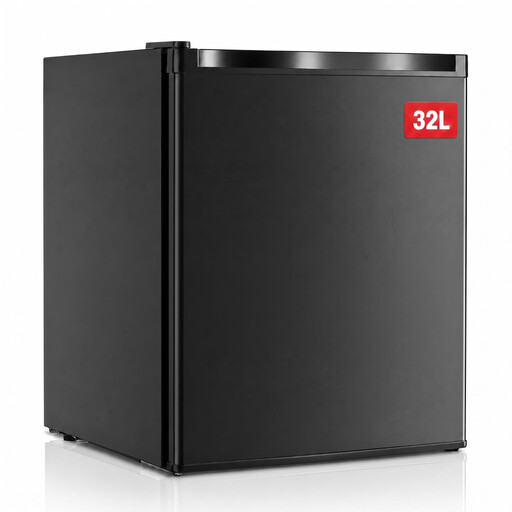 Image unavailable
Its compact design could make it a good option for extra freezer space when floor space is limited.
The product name lists a capacity of 32 L, a noise level of 43 dB, seven temperature settings and a reversible door. Check that its stated freezing capacity is suitable for the amount you plan to freeze.
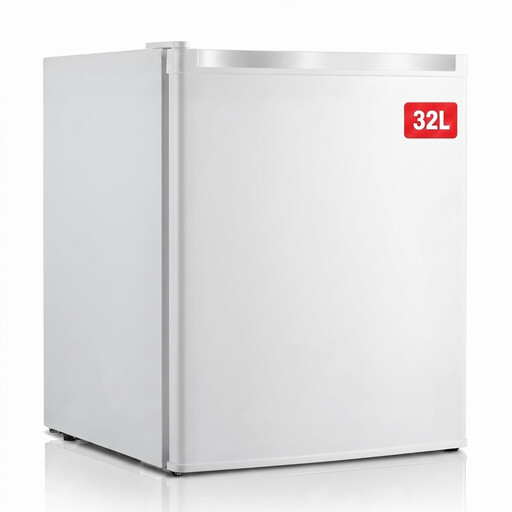 Image unavailable
Described as a compact option for extra freezer space; check that it’s suitable for freezing fresh food before you buy.
The product name lists a capacity of 32 L, seven temperature settings and a reversible door.
No. The compartment must be suitable for freezing fresh food. If you have a fridge-freezer, look for a four-star rating on the freezer compartment and check that there’s enough space and freezing capacity for the amount you usually freeze.
According to the Bundesinstitut für Risikobewertung, cool hot food quickly to below 7 °C. Then portion the sauce into labelled, freezer-safe containers. The Verbraucherzentrale recommends filling containers of liquid to about three-quarters full.
Compare the kWh/year figures on the EU energy labels of specific appliances, and take their usable capacity into account. To estimate your own costs, multiply the annual energy consumption in kWh by your electricity price per kWh.