What to consider when choosing
For cooled pasta sauce, the key considerations are space for your containers, running costs, access to individual portions and how much you want to freeze at once.
| Priority |
What to check before buying |
Who it matters most to |
| Capacity and space |
Compare the freezer compartment you already have, the usable capacity you need, and the appliance dimensions, including the space required to open the door. |
If I only freeze sauce occasionally, I want to check first that the containers will fit in my existing freezer compartment and that I really need an additional appliance. Around 40% of consumers say capacity and space are their main concerns. |
| Energy consumption |
Compare the annual consumption in kWh and the usable capacity shown on the EU energy label for the specific models. |
If I add an appliance that runs all the time, I want to take its annual consumption into account, even if I only use it for occasional meals. Around 30% of consumers put energy consumption first. |
| Finding portions again |
Check the drawers or baskets, container height and defrosting method of the specific model. |
If I have several small sauce containers in the freezer, I want to label them and take them out without having to search for ages. Around 20% of consumers place particular importance on quick access. |
| Freezing larger quantities |
Compare the usable capacity and stated freezing capacity in kg/24 h for the exact model variant. |
If I regularly freeze a large fresh batch, I look at both the storage space and the freezing capacity. Around 10% of consumers prioritise freezing larger quantities at once. |
Freezers at Joybuy
The Joybuy freezers listed here range from compact models for a few containers to larger appliances for storing supplies regularly. Compare usable capacity, interior layout, defrosting method and the space available where you plan to put the appliance.
 No image available
Heinrich’s freezer, 161 l, No-Frost
The stated capacity and multiple freezer drawers may be useful if you regularly store separate portions of sauce.
161 l capacity; No-Frost function; three freezer drawers; Fast-Freeze function; LED display; reversible door; alarm function; temperature range −14 °C to −22 °C; energy class C.
View at Joybuy
 No image available
Exquisit GS581-H-010E, 85 l
Three drawers provide separate storage areas for containers, making it easier to keep individual portions organised.
85 l usable capacity; three drawers; 4-star rating; freezing capacity 4,0 kg/24 h; reversible door. Manual defrosting is required; according to the description, the appliance should be defrosted when frost exceeds 5 mm.
View at Joybuy
 No image available
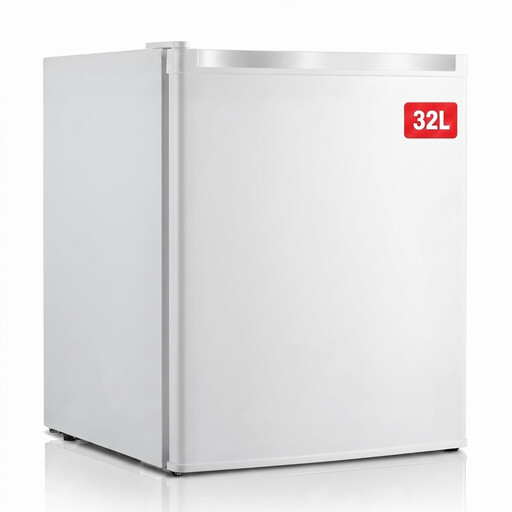
Mini freezer, 32 l
The stated compact capacity may suit a few containers in a limited space. Check that your containers will fit before buying.
32 l capacity; seven temperature settings from −10 °C to −22 °C; removable glass shelves; reversible door; 43 dB according to the product name.
View at Joybuy
 No image available
Upstreman UF35, 35 l
The stated capacity is worth considering if you’re looking for extra space for a limited number of portions.
35 l capacity; 4-star rating; removable inner compartment; reversible door; 41 dB according to the product name.
View at Joybuy
 No image available
homeX FSN2041E-S, 204 l, NoFrost
The larger stated capacity may suit you if you regularly want to store several portions of food. Remember to factor in the space it takes up.
204 l capacity; NoFrost; Super-Frost function; 4-star rating; six shelves or drawers; reversible door.
View at Joybuy
Frequently asked questions
Should I freeze the sauce if I’m eating it the same evening?
No. Freezing is mainly for keeping food until a later date. If you want to store cooked sauce for longer, the German Federal Institute for Risk Assessment recommends cooling hot food quickly to below 7 °C. For frozen storage, the consumer advice centre gives −18 °C as the optimum temperature. This does not mean that a freezer will quickly cool down warm sauce.
How should I pack cooled sauce for freezing?
Use freezer-safe containers and label them with the contents and date. For liquid food, the consumer advice centre recommends filling containers to around three-quarters full so they don’t split as the contents freeze.
What should I consider when positioning and defrosting the appliance?
Check the space available, the room needed to open the door or lid, and the instructions for the specific model. Not all appliances have NoFrost: the manufacturer says the Bosch GTV15NWEB is not frost-free, while the Gorenje FH14EAW chest freezer needs manual defrosting. The manufacturer states that only this Gorenje model can operate in ambient temperatures down to −15 °C.
How do I compare the energy consumption of different appliances?
For appliances with a similar usable capacity, compare the annual consumption in kWh shown on the EU energy label. Label values are based on standardised test conditions, so consumption in your home may differ.
What labelling applies when buying in Germany, and where should I take an old appliance?
The EU energy label applies to covered household freezers. According to the European Commission, it must also be visible when the appliance is sold online. The German Environment Agency says that old electrical appliances must be collected separately and must not go in household waste. Before ordering, check the specific offer to find out whether and how the retailer will take back an old appliance when delivering the new one.


