First, check whether your existing four-star freezer compartment has room for your sauce portions; you may not need an additional appliance. A freezer with suitable drawers can make it easier to keep individual portions organised and take them out as needed, while a chest freezer is better suited to larger stocks and homes with enough floor space. Compare the usable capacity, annual energy consumption and defrosting requirements of specific models. The Consumer Advice Centre warns against buying unnecessarily large appliances, while the Federal Centre for Nutrition distinguishes four-star compartments for freezing food from three-star compartments for storing food that is already frozen.
Which option is right for you?
Households with different mealtimes
If you freeze sauce in portions, you’ll want to take out only what you need and find the remaining portions quickly. The Consumer Advice Centre recommends using freezer-safe containers for liquids, with enough room at the top.
Households short on freezer space
If your existing freezer compartment is already full, first check whether it’s suitable for freezing food and whether your containers will fit. The Federal Centre for Nutrition recommends using a four-star compartment for this; a three-star compartment is intended for storing food that’s already frozen.
Households that cook in batches
If you regularly prepare several dishes or larger quantities, weigh up the extra space an appliance needs against the freezer capacity you actually require and its annual energy consumption. The Consumer Advice Centre advises against choosing an appliance that’s significantly larger than you need.
What should you look for when buying?
To freeze freshly made sauce, you’ll need a freezer compartment that’s suitable for freezing food. The Federal Centre for Nutrition distinguishes a four-star compartment for freezing food from a three-star compartment for storing food that’s already frozen.
Existing four-star freezer compartment
Best if: there’s room for your labelled sauce containers alongside your other frozen food.
Consider: you won’t need another appliance, but you’ll need to check that your existing compartment is suitable and has enough space.
Compact upright freezer
Best if: you regularly take out individual labelled portions and a small separate appliance will do the job.
Consider: drawers can make it easier to keep things separate, but even a small appliance needs space and you’ll still need to check its energy use and defrosting requirements.
Larger NoFrost upright freezer
Best if: you regularly store other food as well as sauce and often need to access your frozen food.
Consider: greater capacity takes up more floor space. Compare the annual energy consumption of the specific model rather than assuming NoFrost alone means lower energy use.
Chest freezer
Best if: you store larger quantities, have enough floor space and don’t need to find individual portions often.
Consider: individual containers can be harder to reach. Compare the energy labels and interior layout of specific appliances.
| What matters to you |
What to check before buying |
Who this matters most to |
| Finding portions easily |
Check that the drawer layout and usable capacity suit your containers. |
If I want to take out just one labelled portion when we eat at different times, keeping things organised matters to me. Around 36% of consumers put quick access to individual portions first. |
| Space for the appliance and sauce |
Check whether your existing compartment is four-star rated; consider the appliance’s external dimensions and available freezer space separately. |
If floor or freezer space is limited, I want to know whether my existing compartment is enough or whether an additional appliance will really fit. Around 29% of consumers prioritise available space. |
| Freezing several portions at once |
Compare the freezing capacity in kg/24 h and available volume with the amount you plan to freeze. |
If I regularly prepare larger batches, I need room for the food I’m freezing as well as for what’s already in the freezer. Around 21% of consumers focus first on capacity for larger quantities. |
| Energy use and defrosting |
Compare annual energy consumption in kWh on the EU energy label; with MinFrost, bear in mind that some defrosting may still be required. |
If running costs and easier maintenance matter to me, I want to check these details for the specific model. Around 14% of consumers put running costs and maintenance first. |
Common mistakes to avoid
-
Choosing a large appliance just in case you need the extra space
An appliance that’s significantly larger than you need may use more electricity than necessary. The Consumer Advice Centre recommends taking your actual freezer needs into account when choosing a model.
Estimate the number and size of your usual sauce portions, as well as the space you need for other frozen food. Then compare the usable capacity and kWh/year of the models you’re considering.
-
Assuming MinFrost is the same as NoFrost
Beko describes MinFrost as a feature that reduces ice build-up. This doesn’t mean you’ll never need to defrost the appliance.
Check the defrosting system on the exact model and see whether its description mentions reduced ice build-up or a feature that avoids manual defrosting.
With MinFrost, you may still need to set aside time for manual defrosting.
-
Filling unsuitable containers to the brim with liquid sauce
Liquid expands as it freezes, so an unsuitable or overfilled container may crack and you could lose the portion.
Use freezer-safe containers, leave room at the top and label each portion with its contents and date. The Consumer Advice Centre recommends filling containers for liquids to around three-quarters full.
Brands and model ranges to consider
Beko
The freestanding FSE1175N is a compact tabletop option for homes with limited floor space.
- Beko lists a 95 l freezer capacity and external dimensions of 84 × 54 × 59 cm for this model. According to the manufacturer, MinFrost is designed to reduce ice build-up.
- The product title lists 90 l, while the technical specifications state 95 l. Before buying, check the capacity against the EU product information for the specific listing. MinFrost doesn’t automatically mean that defrosting is no longer needed.
Exquisit
The GS81-040E white is a compact freestanding option with three drawers.
- Exquisit lists a capacity of 87 l, a freezing capacity of 4,4 kg/24 h and annual energy consumption of 165 kWh.
- Check that the capacity and drawers suit your containers, and compare the stated energy consumption with your household’s needs.
Siemens
The freestanding GS36NEICM illustrates a larger NoFrost upright freezer option.
- Siemens lists a capacity of 334 l, energy consumption of 171 kWh/year and a freezing capacity of 16,0 kg/24 h. According to the manufacturer, the model has an alarm for an open door or rising temperature.
- At 186,2 × 59,5 × 66,3 cm, this appliance needs considerably more space than a compact option. Check the dimensions and annual energy consumption for the space where you plan to put it.
Liebherr
The IFSd 3904 Pure is a built-in option, provided you have a suitable kitchen niche.
- Liebherr lists a capacity of 101 l and a required niche height of 87,4–89 cm. SmartFrost is designed to reduce frost build-up.
- Its built-in design sets it apart from a freestanding appliance. According to the product description, SmartFrost doesn’t eliminate the need for all defrosting.
Bosch
The manufacturer’s range includes freestanding and integrated upright freezers in different sizes.
- Bosch lists dimensions of 161 × 60 cm for the freestanding GSN29VWEP.
- Features and energy consumption vary by model number. Check the details for the specific appliance and make sure you have enough space for it.
Joybuy products related to this topic
This selection includes compact upright freezers for smaller batches of sauce and larger cabinet-style models for extra supplies. Make sure the freezing capacity, compartment layout and dimensions suit your needs.
 No image available
Upstreman UF35, 35 l
A compact option if a small separate appliance is all you need for individual portions.
35 l capacity; four-star freezing performance; temperature range of −21 to −8 °C; removable interior compartment; around 0,4 kWh/day according to the product description.
View at Joybuy
 No image available
homeX FSN2041E-S, 204 l, NoFrost
This larger upright option is designed for households that want to store other supplies as well as sauce.
204 l capacity; four-star compartment; six compartments or drawers; Super-Frost function; annual energy consumption of 222 kWh; energy rating E.
View at Joybuy
 No image available
COMFEE' RCU40WH2(E), 31 l
A compact option for smaller quantities if you’re looking for a separate appliance with four-star freezing performance.
31 l capacity; freezing capacity of up to 2 kg in 24 hours; 147 kWh/year; 41 dB; energy rating E.
View at Joybuy
 No image available
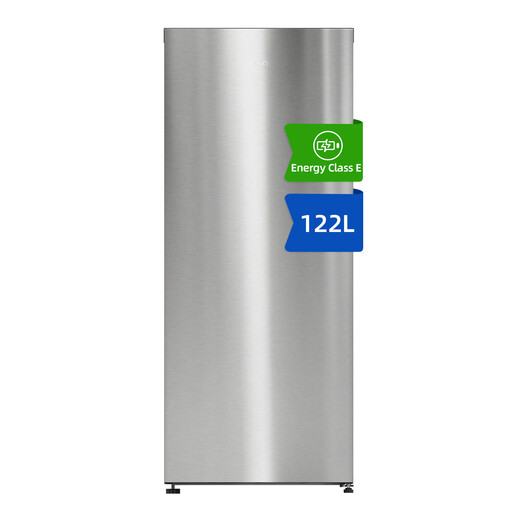
CHiQ JR122WSD, 122 l, No-Frost
This model offers more capacity than small tabletop freezers. Check that you have enough floor space and that the compartment layout suits your household.
122 l capacity; four-star freezing performance down to −24 °C; No-Frost; several operating modes; 47,5 cm wide; energy rating E.
View at Joybuy
 No image available
COMFEE' RCU60WH2(E), 60 l
The three separate storage areas may suit households that want to keep portions apart.
60 l capacity; freezing capacity of up to 6 kg in 24 hours; four-star freezing performance; two compartments with flip-up lids and one bottom drawer.
View at Joybuy
Frequently asked questions
Can I freeze freshly cooked sauce in any freezer compartment?
No. For freezing food, the Federal Centre for Nutrition recommends a four-star compartment. A three-star compartment is intended for storing food that’s already frozen, so check the rating of your compartment.
How should I prepare pasta sauce for freezing in portions?
Cool hot food quickly to below 7 °C before storing it for longer, as recommended by the Federal Institute for Risk Assessment. Transfer the sauce to freezer-safe containers, leave room at the top for liquids and label each one with its contents and date. The Consumer Advice Centre recommends filling containers for liquids to around three-quarters full.
What information helps when comparing energy consumption?
Compare the annual energy consumption in kWh on the EU energy labels for the specific models. The label makes it possible to compare appliances under standardised conditions; as the European Union explains, energy use at home depends on factors including how the appliance is used and where it’s installed.
What rules apply to energy labels and statutory guarantees?
EU energy labels with ratings from A to G apply to covered refrigeration and freezer appliances. According to Your Europe, when you buy goods from a trader in the EU, you’re entitled to a minimum two-year legal guarantee from the date you receive them. This is separate from any voluntary manufacturer’s guarantee. These rules don’t require households to choose a particular energy rating or appliance size.


