Home cooks with limited space
You want to freeze a few portions of sauce and need to check whether an existing four-star compartment is big enough, and whether there’s room for an additional appliance door to open fully.


An existing four-star freezer compartment is suitable for cooled pasta sauce if the containers and batch fit and the appliance has enough freezing capacity. According to the Federal Centre for Nutrition, a three-star compartment is intended for storing food that is already frozen, not for freezing it in the first place. If space is tight and you only need to freeze a few portions, a mini freezer may be worth considering; for larger batches on a regular basis, a compact freezer cabinet is likely to be a better fit. Compare door clearance, freezing capacity in kg/24 h and annual energy consumption, rather than looking at capacity alone. For longer-term storage, cool hot food quickly to below 7 °C, then freeze it in portions in suitable containers.
You want to freeze a few portions of sauce and need to check whether an existing four-star compartment is big enough, and whether there’s room for an additional appliance door to open fully.
If you freeze several portions at once, you’ll need to consider both the space for your containers and the appliance’s freezing capacity.
You want to weigh up the benefits of running an additional appliance all the time against its stated annual energy consumption, rather than focusing only on its size or energy rating.
A good fit if: Your containers and the batch of sauce you plan to freeze will fit.
The trade-off: The star rating alone won’t tell you whether there’s enough space and freezing capacity for your batch.
A good fit if: You freeze just a few portions and have very little floor space to spare.
The trade-off: Limited capacity may not be enough for larger batches. Also check there’s room for the door to open.
A good fit if: You regularly freeze several portions and need more room for containers and separate storage.
The trade-off: This style takes up more floor space, so measure the available area, including the space needed to open the door.
Measure the available space, including clearance from the wall and room for the door to open. Then compare usable capacity and freezing capacity in kg/24 h with the size of your usual batch, as well as annual energy consumption in kWh.
| What matters | What to check before buying | Who is this important to? |
|---|---|---|
| Positioning | Check the width, height and depth, the required wall clearance and the space needed with the door open at the intended location. | If I only have a narrow alcove available in a small kitchen, the door still needs to open fully. Around 36% of consumers say finding space for the appliance is their main concern. |
| Freezing a batch of food | Check the four-star rating, usable capacity and freezing capacity in kg/24 h against the usual quantity and the dimensions of your containers. | If I freeze several cooled portions at once, I need both enough storage space and sufficient freezing capacity. Around 29% of consumers say batch capacity is their main concern. |
| Energy consumption | Compare the kWh/year figures for specific appliances and weigh up your own usage against the location and how you’ll use it. | If I’m going to run an additional appliance all the time, I want to consider its annual energy consumption alongside its benefits. Around 21% of consumers say running costs are their main concern. |
| Finding portions again | Check the interior layout and drawers against the containers you plan to use; label containers that are suitable for freezing. | If I store lots of individual portions, I want to keep them organised and take out the ones I need. Around 14% of consumers say easy-to-organise portion storage is their main concern. |
An appliance may fit into an alcove but still hit furniture or walls when you open the door. For the Exquisit GB540-050C weiss, the manufacturer states a cabinet depth of 45 cm and a depth of 88 cm with the door open.
As well as the width and height, measure the wall clearance and the space needed for the specific model’s door to open fully.
You may need to choose a different location if the door cannot open far enough where you planned to put it.
Litres tell you how much storage space is available, not how much fresh food an appliance can freeze in 24 hours.
If you freeze larger batches, check the stated freezing capacity in kg/24 h as well as the four-star rating and the dimensions of your containers.
The consumer advice centre points out that a mini freezer can use more electricity than a larger, well-insulated appliance.
First, check whether an existing four-star compartment will do the job. If you’re considering an additional appliance, compare its stated annual energy consumption in kWh rather than looking only at size or energy rating.
An additional appliance will use electricity on an ongoing basis; actual consumption depends on factors including the model, location and how it’s used.
Liquids expand as they freeze. Packaging from other foods is also often unsuitable for freezing.
For longer-term storage, cool hot food quickly to below 7 °C. Divide the sauce between containers that are suitable for freezing, leave space for liquids to expand and label each one with its contents, quantity and date. The consumer advice centre recommends filling containers for liquid foods to no more than three-quarters full.
This reduces the risk of containers splitting or being left with an oversized frozen portion.
The GB540-050C weiss mini freezer is an example of a compact option for freezing a few portions.
The freestanding under-counter freezer GTV15NWEB is an example of a model with more storage for regular batches.
The GS 2186.1 is a compact upright freezer with drawers for storing portions.
The MD 37675 Anthrazit mini freezer is another option for smaller quantities.
The GB 8886 freezer is a compact option for smaller quantities.
This selection includes mini freezers, upright freezers and a chest freezer. Each product is listed as having a four-star compartment suitable for freezing.
 No image available
A compact option if you’re freezing a few portions and have very little floor space to spare.
35 l usable capacity; four-star freezer; removable interior shelf; reversible door. The stated temperature range is −21 °C to −8 °C.
 No image available
A chest freezer may be worth considering if you need more storage than a mini freezer offers and have space above it to open the lid.
Stated specifications include 95 l of usable capacity, a removable basket, 165 kWh/year and dimensions of 550 × 475 × 848 mm. The product description lists a convertible fridge-freezer with a four-star compartment.
 No image available
This mini model is designed for a few portions and suits a small kitchen where space is at a premium.
31 l usable capacity, four-star compartment, freezing capacity of 2 kg/24 h and 147 kWh/year; energy rating E. The model has a reversible door.
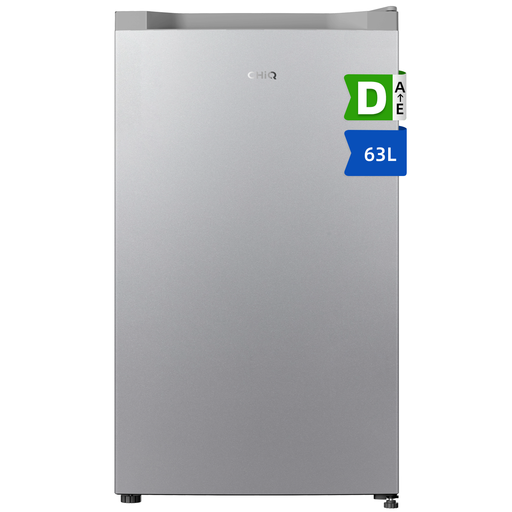 No image available
An upright design with separate compartments may suit you if you want to store portions separately.
63 l usable capacity, four-star fast freezing and two adjustable drawers. The stated width is 47 cm; the door is reversible. The appliance needs to be defrosted manually; energy rating D.
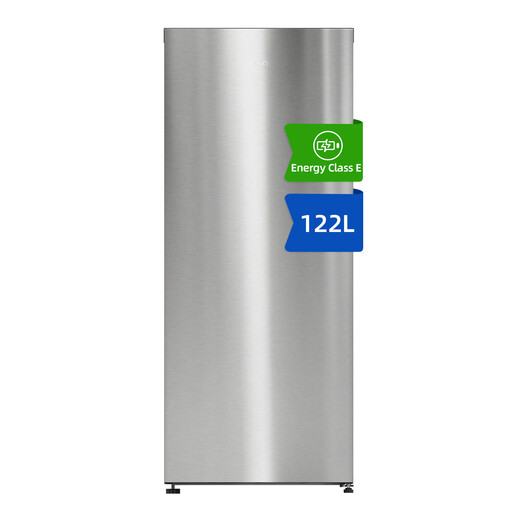 No image available
This model may be worth considering if you also want to use the convertible cooling modes mentioned in the product description.
122 l usable capacity and a four-star rating; the stated width is 47,5 cm. Features listed include NoFrost, Multi-Airflow and energy rating E.
No. According to the Federal Centre for Nutrition, a four-star compartment is suitable for freezing food, while a three-star compartment is intended for long-term storage of food that is already frozen. Check the rating of your existing compartment and the freezing capacity of the specific appliance.
For longer-term storage, cool hot food quickly to below 7 °C, then divide the cooled sauce between containers that are suitable for freezing. The consumer advice centre recommends filling containers for liquid foods to no more than three-quarters full. Label them with the contents, quantity and date.
Measure the width, height and depth with the door closed, as well as the required wall clearance and the space needed for the door to open. For example, the manufacturer gives the Exquisit GB540-050C weiss a cabinet depth of 45 cm and a depth of 88 cm with the door open; these measurements apply to this model only.
Compare the stated annual energy consumption in kWh for the specific models, bearing in mind that actual consumption can vary depending on the location and how the appliance is used. The consumer advice centre points out that a mini freezer can use more electricity than a larger, well-insulated appliance.
Not necessarily. The consumer advice centre describes chest freezers as more energy-efficient, while upright freezers take up less floor space and can make it easier to organise food with drawers. What matters is whether the appliance will fit in the available space and, for a chest freezer, whether there’s enough room to open the lid.