First, check whether your pre-portioned peas will fit in your existing freezer compartment alongside your other supplies; an extra appliance is more useful if you regularly freeze larger quantities. An upright freezer with drawers makes it easy to grab individual portions, while a chest freezer suits larger stocks if you have enough floor space. As well as usable capacity, compare freezing capacity in kg/24 h and annual energy consumption. Portioning and labelling your peas will help you take out the right amount for different cooking times, whatever type of appliance you use.
Which option is right for you?
Households with different cooking times
If you need peas at different times, it helps to measure out the quantity you need and store individual portions where you can find them easily. The Federal Centre for Nutrition recommends freezing food in portions and noting the contents, quantity and date.
Households freezing larger batches of peas
If you regularly freeze larger quantities, consider storage space and freezing capacity separately: usable capacity doesn’t tell you how much a particular appliance can freeze in 24 hours. Advice from the consumer advice centre and the manufacturer’s specifications for individual models can help you assess these figures.
Households short on space
If space is limited, compare your existing freezer compartment with the external dimensions of an additional appliance, and allow enough room to open the door or lid. If you plan to keep it in an unheated room, check that the specific model is suitable.
What should you look for when buying?
Existing freezer compartment
A good fit if:you only freeze small quantities occasionally and there’s room for the portions alongside your other food.
Consider:there needs to be enough free space and freezing capacity in your existing appliance for each fresh batch.
Upright freezer
A good fit if:you regularly take out individual labelled portions and want to keep them in separate storage areas.
Consider:external dimensions, annual energy consumption and freezing capacity vary by model, so compare each one individually.
Chest freezer
A good fit if:you regularly freeze larger quantities of peas and other supplies, and have enough floor space.
Consider:the consumer advice centre generally describes chest freezers as more energy-efficient than upright freezers; if you stack your supplies, you’ll need an organisation system to find individual portions.
| What matters |
What to check before buying |
Who is it important to? |
| Finding individual portions |
Check whether your containers will fit in the drawers or baskets; portion and label them with the contents, quantity and date. |
If I’m cooking at different times, I want to be able to spot the right pre-measured portion straight away. Around 25% of consumers prioritise quick access to individual portions. |
| Freezing larger batches |
Compare the weight of your fresh batch with the freezing capacity in kg/24 h; consider this separately from usable capacity. |
If I’m freezing several portions of blanched peas at once, I want to know how much the appliance can freeze. Around 25% of consumers prioritise freezing capacity for larger batches. |
| Allowing for space |
Measure the space and access route, and leave room to open the door or lid. For unheated rooms, check the specifications for the particular model. |
If space is tight, I want to be sure the appliance will fit, including the space needed to open it. Around 25% of consumers focus primarily on the space available. |
| Energy use and defrosting |
Compare the annual energy consumption in kWh of appliances that are the right size, and check whether they require manual defrosting or have NoFrost. |
If I’m going to leave an extra appliance running all the time, I want to understand its energy use and maintenance requirements first. Around 25% of consumers focus primarily on running costs and defrosting. |
How to avoid common buying mistakes
-
Confusing usable capacity with freezing capacity
Litres tell you how much storage space is available, not how much an appliance can freeze in 24 hours. The manufacturer’s data sheet for the PKM GT300E chest freezer lists 299 l of usable capacity and a freezing capacity of 13,50 kg in 24 hours.
Compare both figures with the amount you plan to store and the weight of your fresh batch.
-
Buying a large extra appliance too soon for occasional portions
The consumer advice centre points out that an appliance larger than you actually need can use electricity unnecessarily.
First, work out the quantity and container size of your portions of peas, as well as the space available in your existing freezer compartment.
-
Judging a chest freezer and an upright freezer on their design alone
Energy use and freezing capacity depend on the model. If supplies are stacked, finding individual portions may also take more organisation than it would in drawers.
Compare the annual energy consumption and freezing capacity of specific models. If you choose a chest freezer, plan a system for storing labelled portions.
Brands and models to consider
Bosch
The GSN33VWEP upright freezer is an example of a drawer-based solution for keeping supplies separate.
- Bosch lists a freezer capacity of 225 l, a freezing capacity of 19,0 kg in 24 hours and NoFrost for the GSN33VWEP.
- The stated external dimensions of 60 cm wide and 65 cm deep apply to this model; check that it will fit in your chosen spot.
Liebherr
The CFd 2085 Plus chest freezer is an example of a model for storing larger quantities.
- Liebherr gives this model a total capacity of 248 l and FrostProtect for ambient temperatures down to −15 °C.
- Liebherr describes SmartFrost as reducing frost build-up, not eliminating the need to defrost. These specifications apply to the CFd 2085 Plus.
Beko
The range includes chest freezers in different sizes; specific features vary by model.
- Beko lists a freezer capacity of 308 l and energy efficiency class E for the CF316EWN chest freezer.
- These figures apply to the CF316EWN model and aren’t a general indication of all Beko appliances.
Gorenje
The FH30EAW chest freezer is an example of a model for larger batches and a potential location with a low ambient temperature.
- Gorenje lists FastFreeze and FreezeProtect for ambient temperatures down to −15 °C for the FH30EAW.
- Check the installation requirements and features of the specific model; these specifications don’t support general conclusions about other appliances.
PKM
The GT300E chest freezer shows why storage capacity and freezing performance should be considered separately.
- The PKM data sheet lists 299 l of usable capacity, a freezing capacity of 13,50 kg in 24 hours, 231 kWh/year and a fast-freeze function for the GT300E.
- The GT300E is listed as requiring manual defrosting; these figures are the manufacturer’s specifications for this model.
Joybuy products for neatly organised portions of peas
The Joybuy products below are upright freezers with listed drawers or separate storage areas. For larger batches, the freezing capacity of the specific model is also an important consideration.
 No image available
Heinrich’s upright freezer, 161 l, energy class C
Three freezer drawers and two shelves provide separate storage areas for pre-portioned supplies. No Frost and Fast Freeze are also listed; freezing capacity in kg/24 h isn’t specified here.
Joybuy
 No image available
homeX FSN2041E-S upright freezer, 204 l
The six listed storage areas make it easier to keep portions separate. The model is described as having NoFrost, Super Frost and energy class E; freezing capacity in kg/24 h isn’t specified here.
Joybuy
 No image available
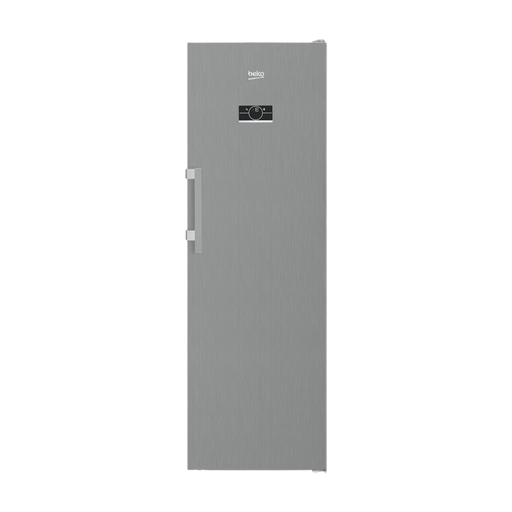
Beko B7RFNE315XP upright freezer, 286 l
Fast Freeze and a freezing capacity of 17 kg/24 h are listed for larger batches. The model has No Frost and, according to the product information, is suitable for ambient temperatures down to −15 °C; check the conditions for your chosen location.
Joybuy
 No image available
Exquisit GS581-H-010E upright freezer, 85 l
Three drawers provide separate storage for smaller portions; the stated freezing capacity is 4,0 kg in 24 hours. The appliance requires manual defrosting.
Joybuy
 No image available
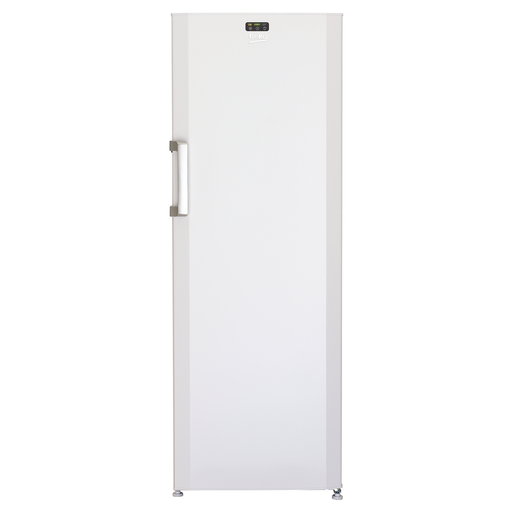
Beko FS127940N b100 upright freezer, 244 l
Five drawers and two flap compartments provide separate storage areas; Fast Freeze is also listed. According to the product information, MinFrost reduces ice build-up, but doesn’t rule out the need for manual defrosting if ice forms.
Joybuy
Frequently asked questions
How should I prepare blanched peas for different cooking times?
After blanching, cool the peas in iced water and pack them in suitable, pre-measured portions with as little air as possible. The Federal Centre for Nutrition recommends noting the contents, quantity and date to make it easier to identify each portion.
What temperature should I store peas at, and do I need to defrost them before cooking?
The consumer advice centre gives −18 °C as the optimum temperature for freezers. Its food advice says vegetables can go straight into a pan or microwave to cook; the cooking time will depend on the dish.
What costs and maintenance should I consider when buying?
Compare the annual energy consumption in kWh of appliances that are the right size for your needs, and use your own tariff to estimate potential electricity costs. Also check the maintenance instructions for the specific model: Bosch lists NoFrost for the GSN33VWEP, while the PKM GT300E is listed as requiring manual defrosting. The stated annual energy consumption doesn’t guarantee how much electricity the appliance will use in your home.
What energy labelling must be displayed when buying a new freezer online?
According to information from the European Union, the energy label must also be visible in online listings for refrigeration and freezing appliances that require one. The consumer advice centre gives the energy efficiency scale as A to G and points to details such as annual energy consumption and freezer capacity; the EU labelling requirements mentioned don’t apply to used products.


