If you’re only chilling portions of pre-cooked vegetables before freezing them, first check whether your fridge has enough room for several shallow containers and whether you have sufficient freezer space. If you’re short on freezer space, you could consider a fridge-freezer or a separate freezer; a fridge without a freezer compartment won’t solve the problem on its own. Compare fridge and freezer capacity separately, measure the space available for the appliance and take its annual energy consumption into account.
Which option is right for you?
If you batch-cook larger quantities of vegetables
For several portions, you’ll need room for shallow containers to cool, followed by enough freezer space. Germany’s Federal Institute for Risk Assessment recommends dividing larger quantities of food between several shallow dishes to cool them.
Households short on freezer space
If your existing freezer compartment can’t hold your batch-cooked portions, you’ll need to choose between a fridge-freezer and a separate freezer. The Verbraucherzentrale (German consumer advice centre) recommends choosing a capacity that suits your own needs.
Households with an existing freezer
If you already have enough freezer space, the key consideration may be whether there’s room in your fridge for the containers. Check that all your portions will fit in the fridge compartment at the same time.
What should you look for when buying?
Fridge without a freezer compartment, plus an existing freezer
Suitable if: You already have enough freezer space, but need to fit several containers in the fridge.
Bear in mind: Both appliances take up space and use electricity.
Fridge-freezer
Suitable if: You want to chill and freeze food in one appliance regularly, and its freezer capacity is enough for your portions.
Bear in mind: The freezer compartment takes up space that would otherwise be available for chilled food.
Existing fridge plus a separate freezer
Suitable if: Your fridge can hold the portions before they’re frozen, but you need extra freezer space.
Bear in mind: The second appliance needs space; the Verbraucherzentrale warns that an oversized freezer can use electricity unnecessarily.
Germany’s Federal Institute for Risk Assessment recommends a fridge temperature of 2 °C to no more than 7 °C for perishable foods. So check both the usable shelf space for shallow containers and the separately stated freezer capacity.
| Buying criterion |
What to check |
Who it matters most to |
| Rapid cooling before freezing |
Temperature controls, a way to check the internal temperature and space for several shallow containers. |
When I batch-cook large quantities, I need room for several shallow containers and want to monitor the fridge temperature. Around 36% of consumers give hygienic cooling before freezing their top priority. |
| Freezer space |
Freezer capacity stated separately from fridge capacity, with enough room for your usual batches. |
I need enough freezer space for finished portions; a fridge without a freezer compartment isn’t enough. For around 29% of consumers, having the required freezer space comes first. |
| Usable fridge space |
Fridge capacity, shelf layout, container dimensions and appliance dimensions. |
If I’m only chilling several portions before freezing them, all my shallow containers need to fit in the fridge at the same time. Around 21% of consumers prioritise this fridge space. |
| Energy use and appliance size |
Annual energy consumption in kWh and the fridge and freezer capacity you actually need. |
I only want to buy as much capacity as I’ll use, and I want to compare annual energy consumption. Around 14% of consumers put ongoing electricity costs first. |
Common mistakes to avoid
-
Confusing total capacity with usable fridge or freezer space
An appliance may offer plenty of capacity overall, while the fridge or freezer compartment you need is too small for containers and batch-cooked portions.
Compare the capacities listed separately and measure your usual containers.
-
Thinking NoFrost or a freshness compartment will cool food quickly
A feature designed to make freezing more convenient or keep fresh food fresh doesn’t prove that cooked portions can be stored safely for longer.
Divide larger quantities between shallow containers to cool them, and follow Germany’s Federal Institute for Risk Assessment guidance on cooling and temperature.
-
Choosing the largest separate freezer available
Extra freezer space is only useful if you need it for your usual batch sizes; an oversized appliance can use electricity unnecessarily.
Estimate how many portions you’ll store at once, then compare suitable capacities and annual energy consumption.
Brands and models to consider
Bosch
The models listed include both fridge-freezers and fridges without a freezer compartment.
- Bosch lists 218 l of fridge capacity and 103 l of freezer capacity for the KGN36VICT.
- According to Bosch, the KSV36VWEP offers 346 l of fridge capacity but has no freezer compartment. These figures apply to these models, not every appliance from the brand.
Liebherr
The CNsdc 5203 Pure NoFrost is a freestanding fridge-freezer.
- Liebherr lists a total capacity of 330 l and NoFrost for this model.
- Total capacity alone doesn’t tell you how much space is available in the fridge and freezer compartments. EasyFresh is designed for fresh food; it doesn’t prove that cooked food can be stored safely for longer.
Samsung
According to Samsung, the RB53DG703CS9EF is a wide fridge-freezer, so make sure your space is large enough to accommodate it.
- Samsung lists a total capacity of 538 l and a width of 759 mm for this model.
- Check the fridge and freezer capacities separately, and measure the available space. Freshness features don’t replace food hygiene practices.
Gorenje
The NRK620B61BX4OT adds a freestanding fridge-freezer to the range of options.
- Gorenje lists NoFrost Plus and dimensions of 200 × 60 × 59.2 cm for this model.
- Manufacturer claims about AdaptTech and freshness aren’t independent test results and don’t prove that cooked vegetables can be stored safely for longer.
Joybuy products for this purpose
The models below include fridge-freezers and a fridge without a freezer compartment for households with a separate freezer.
 No image available
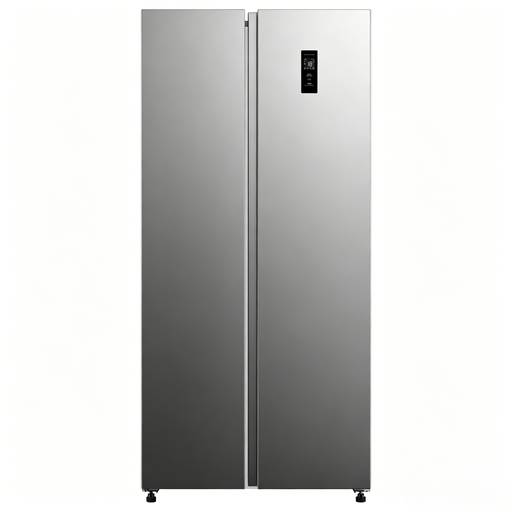
Sonlu CC-520WE side-by-side fridge-freezer
Worth considering if you need fridge and freezer space in one appliance and have enough room for its stated width.
Separate capacities: 276 l for the fridge and 168 l for the freezer.
83 cm wide; listed features include NoFrost and digital temperature control.
View at Joybuy
 No image available
CHiQ JR263LGE fridge-freezer
A compact fridge-freezer for households that want to chill containers and freeze portions in the same appliance.
187 l of fridge capacity and 75 l of freezer capacity; the appliance is 54 cm wide and 176 cm tall.
Three of the four glass shelves are height-adjustable. The freezer compartment uses Low Frost and, according to the product details, needs manual defrosting around once or twice a year.
View at Joybuy
 No image available
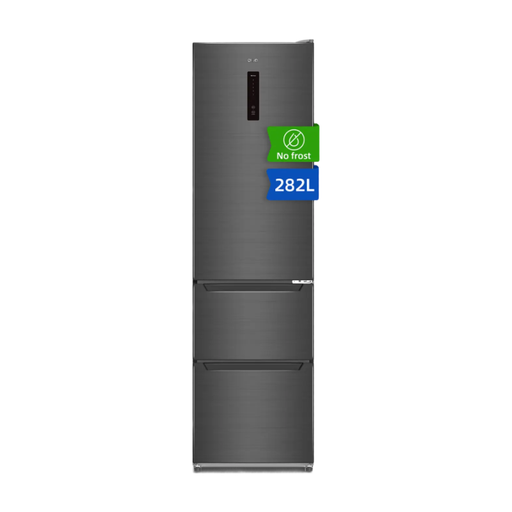
CHiQ CID282NEIBE multi-door fridge-freezer
A possible fit if you’re looking for fridge and freezer compartments in a narrower freestanding appliance.
282 l total capacity; the fresh-food compartment is listed as 197 l. Dimensions: 54 × 192 × 58.6 cm.
No Frost and energy efficiency class E are stated in the product name.
View at Joybuy
 No image available
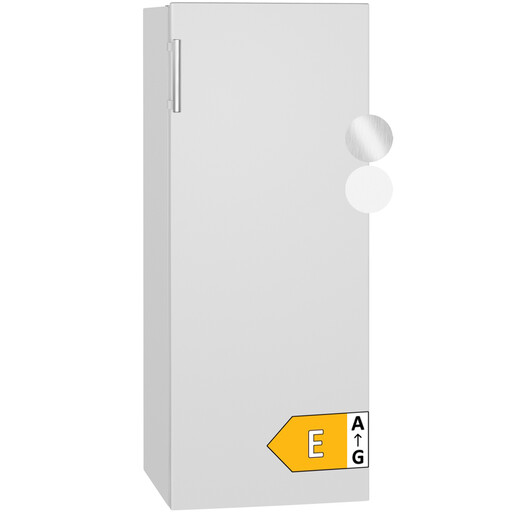
Bomann VS 7316.1 fridge without a freezer compartment
An option if you already have freezer space and need extra fridge space for containers.
242 l usable capacity and five glass shelves; four shelves are height-adjustable. Dimensions: 143.4 cm tall and 55 cm wide.
The stated temperature range is from 0 °C to +8 °C. You’ll need a separate freezer for freezing food.
View at Joybuy
 No image available
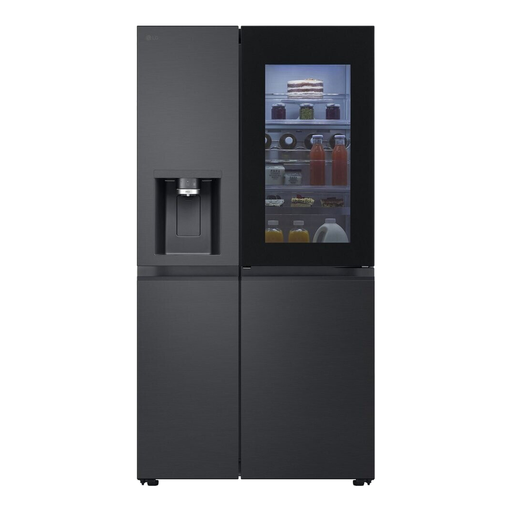
LG GSXB90EVDD InstaView side-by-side fridge-freezer
Worth considering for larger batches if you have space for an appliance of this size.
Separate capacities: 407 l for the fridge and 221 l for the freezer. Dimensions: 179 × 91.3 × 73.5 cm.
The stated freezing capacity is 15 kg per 24 hours; an express freeze function is also listed.
View at Joybuy
Frequently asked questions
How should I store cooked vegetables before freezing them?
Cool the portions quickly, dividing larger quantities between several shallow containers. Germany’s Federal Institute for Risk Assessment recommends cooling hot food quickly to below 7 °C and storing perishable foods in the fridge at 2 °C to no more than 7 °C. Check the actual temperature inside your fridge.
Is a fridge with a large vegetable drawer enough?
It’s enough for chilling the portions, provided your containers fit, but you’ll also need freezer space to freeze them. An appliance without a freezer compartment can’t freeze the portions, and a freshness feature designed for raw food doesn’t prove that cooked food can be stored safely for longer.
What temperature should my freezer be?
The Verbraucherzentrale recommends −18 °C as the optimum temperature for a freezer or chest freezer. This storage recommendation doesn’t mean that every freshly added batch will reach this temperature straight away, regardless of its size.
How do I compare energy consumption?
Compare the annual energy consumption in kWh shown on the EU energy label for appliances with fridge and freezer capacities that suit your needs. If you have a fridge and a separate freezer, remember to take both appliances’ energy consumption into account.
What labelling and disposal requirements apply in Germany?
New fridges and freezers sold in the EU must carry an energy label, which must also be visible in online shops. In Germany, old electrical appliances are collected separately; the Federal Environment Agency explains the requirements under the ElektroG (Electrical and Electronic Equipment Act). Check the details of the collection service for your order in the relevant offer.


