Grabbing portions on weekdays
You want to find small, labelled portions of rhubarb quickly for lunch boxes. First, check whether your existing freezer has enough space and whether you can easily reach the portions.


For the occasional small batch of rhubarb, your existing freezer space should be enough, provided there’s room for the portions once prepared. A separate chest freezer is more worthwhile if you regularly have larger harvests or other food to store. If you’re considering one, compare the size of your largest fresh batch, the usable capacity, freezing capacity, floor space and annual energy consumption. Plan to freeze individual, labelled portions so they’re easy to grab.
You want to find small, labelled portions of rhubarb quickly for lunch boxes. First, check whether your existing freezer has enough space and whether you can easily reach the portions.
If you cut up a large quantity in one go during the season, you’ll need to consider both the space required for the whole batch and the freezer’s capacity for fresh produce.
If you plan to put it somewhere unheated, make sure the permitted ambient temperature for the specific appliance is suitable for the temperatures there. A model’s suitability for a particular location doesn’t automatically apply to other appliances.
A good fit if: there’s room for your prepared portions as well as your other frozen food, and you only freeze rhubarb occasionally.
The trade-off: You won’t need another appliance, but space and freezing capacity could be limited when you have a larger harvest.
A good fit if: you regularly have rhubarb and other food to store, but don’t have much room for an appliance.
The trade-off: Compare usable capacity and freezing capacity. Even a small chest freezer may not be big enough for a large harvest.
A good fit if: you store large seasonal batches or other frozen food throughout the year, and have enough floor space.
The trade-off: More storage space takes up more room. An oversized appliance could use more electricity than you need.
| Priority | What to check when buying | Who is it most important to? |
|---|---|---|
| Finding portions quickly | Check the baskets and access when the lid is open; pack portions in suitable airtight containers. | If I’m taking out small portions for weekday lunch boxes, I want to get to them without having to search for ages. Around 33 % of consumers prioritise quick access to portions. |
| Freezing a large harvest | Estimate the size of your largest fresh batch and your other frozen food. Compare usable capacity in litres and freezing capacity in kg/24 h separately. | If I’m processing a large harvest in one go, I need enough storage space and suitable freezing capacity. Around 27 % of consumers prioritise large fresh batches. |
| Space and energy use | Compare the external dimensions with the usable capacity you need; check annual energy consumption in kWh against models suited to your needs. | If I’m putting another appliance in a small space, I don’t want one that’s unnecessarily large or uses more electricity than it needs to. Around 20 % of consumers prioritise floor space and running costs. |
| A cold location | Check that temperatures where you plan to put the appliance fall within the operating range specified for that model. | If my chest freezer is going in an unheated cellar or garage, its permitted temperature range needs to suit the location. Around 20 % of consumers prioritise suitability for a cold location. |
What matters is the amount you’ll store overall and the size of your largest planned batch, not getting as many litres as possible. Too much freezer space can mean unnecessary energy use and floor space taken up.
First, check how much room you have in your existing freezer and choose a usable capacity that suits the amount you actually need to store.
Litres tell you how much you can store; kg/24 h is a separate measure that also matters when you’re freezing a large fresh batch.
For larger harvests, compare both figures separately and divide the rhubarb into suitable portions before freezing.
AEG describes LowFrost and Liebherr SmartFrost as features that reduce ice or frost build-up. This doesn’t mean you can skip manual defrosting.
Check the defrosting method and maintenance instructions for the specific model rather than assuming its feature name tells you everything about the upkeep.
A solid block of frozen rhubarb is hard to divide into lunch-box portions. The Federal Centre for Nutrition recommends using only the stalks.
Remove the leaves and the parts where they join the stalks, cut the stalks into pieces and freeze them in individual labelled portions.
The CHEST range includes the HCE200C, with a capacity of 196 l, making it a specific model to compare for medium-sized food stocks.
The GTE 193 A2+, with a capacity of 166 l and one basket, is an example of a small to medium-sized chest freezer.
The CFe 1870 Pure has a capacity of 281 l. It’s a larger model that may also be worth considering for a colder location.
The AHB531D1LW has a capacity of 308 l and is a larger model with published performance data.
This selection includes small and large chest freezers for portioned lunch-box servings and seasonal harvests.
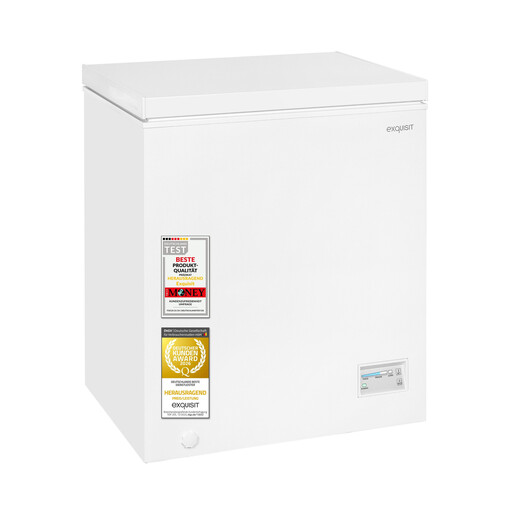 Image unavailable
According to the product description, the freezer basket is designed for food you need often, which can make it easier to reach portions for lunch boxes.
Usable capacity: 142 l. Freezing capacity: 7 kg/24 h. Annual energy consumption: 182 kWh. The description states that it has a manual defrost system.
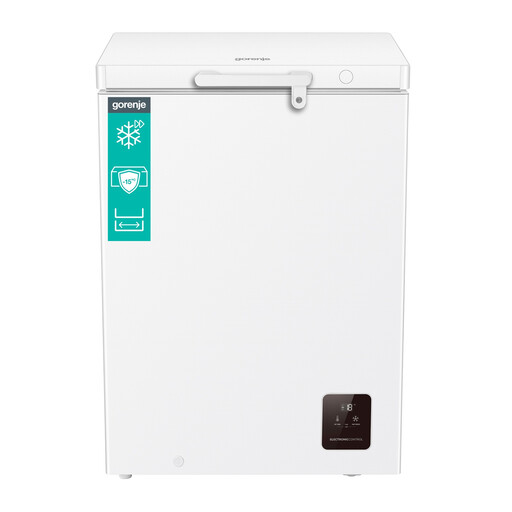 Image unavailable
According to the product description, the flexible wire basket helps keep things organised. FastFreeze and the stated freezing capacity are useful points to check when freezing a fresh batch.
Usable capacity: 141 l. Freezing capacity: 8 kg/24 h. Annual energy consumption: 182 kWh. FreezeProtect is rated for temperatures as low as −15 °C; the appliance should be defrosted if ice builds up.
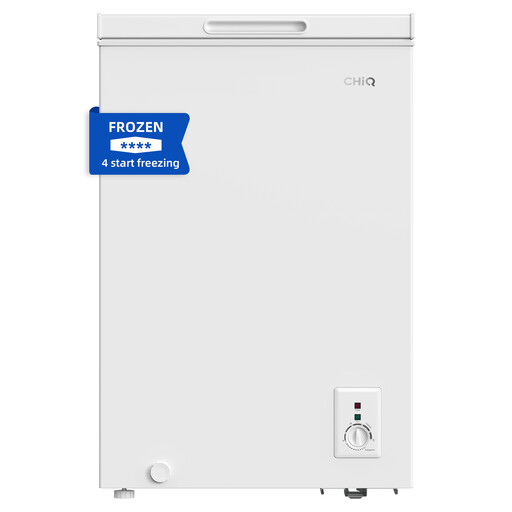 Image unavailable
The wire basket mentioned in the description can keep small portions you need often separate and easy to reach.
Usable capacity: 99 l. Freezing capacity: 4,5 kg/24 h. Energy class: E. The description lists a wire basket and wheels.
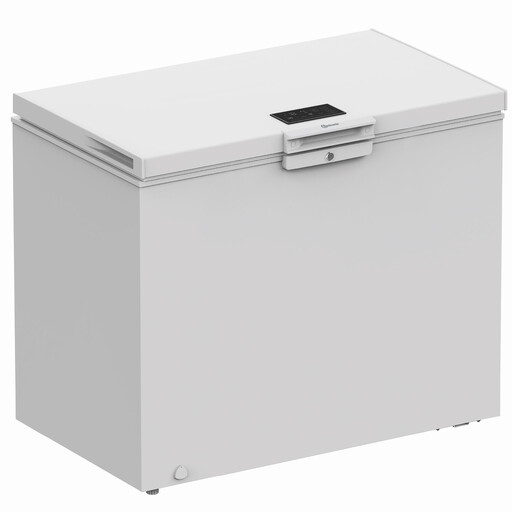 Image unavailable
According to the description, two baskets help you store food separately. The stated freezing capacity is an important point to compare when you have larger fresh batches.
Usable capacity: 198 l. Freezing capacity: 13 kg/24 h. Annual energy consumption: 126 kWh. WinterProof is rated for temperatures as low as −15 °C.
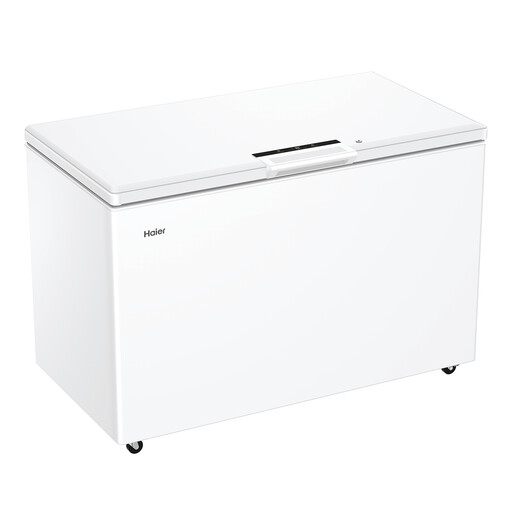 Image unavailable
Three baskets and an interior light are listed to help you organise and find larger food stocks.
Usable capacity: 418 l. Freezing capacity: 21–24 kg/24 h. Annual energy consumption: around 215 kWh. Fast Freeze is listed; Low Frost is designed to reduce ice build-up, but doesn’t mean you can skip defrosting.
No, not if your existing freezer has enough room for the portions you plan to store. The consumer advice centre recommends choosing an appliance size that suits your actual needs. A separate chest freezer is more relevant if you regularly store larger quantities or other food.
Use only the stalks, removing the leaves and the parts where they join the stalks. The Federal Centre for Nutrition recommends cutting the stalks into pieces; you can briefly blanch them if you like, then freeze them in airtight packaging. Divide them into the portions you’ll need later and label the packaging with the contents and date.
Only if the temperature there stays within the operating range specified for the particular model. For example, Liebherr lists FrostProtect for the CFe 1870 Pure for ambient temperatures as low as −15 °C; this specification doesn’t automatically apply to other appliances.
The EU energy label includes information such as the efficiency class and annual electricity consumption in kWh. Annual consumption is a standardised figure for comparison, not a guarantee of how much electricity it will use in your home. How you use it and where you place it also matter.
Take your old appliance to an appropriate take-back or collection point; don’t put it in your household rubbish. The German Environment Agency advises that electrical appliances must not be disposed of with household waste.