Freezing food occasionally
If you only want to keep a few portions of seasonal rhubarb, first check whether your existing freezer compartment is suitable and has enough room.


If your measured portions of rhubarb fit in an existing 4-star compartment suitable for freezing fresh food, you don’t necessarily need an additional freezer. If space is tight, compare usable capacity, the space it will occupy and annual energy consumption. If you’re freezing a larger harvest in one go, the specific model’s freezing capacity matters too.
If you only want to keep a few portions of seasonal rhubarb, first check whether your existing freezer compartment is suitable and has enough room.
Extra freezer space can be useful if you regularly freeze food for later. Measure the space available first, and check whether the door can open fully and your portions can be stored neatly.
If you want to freeze a large amount of rhubarb in one go, compare the specific appliance’s freezing capacity as well as its usable capacity. The Federal Centre for Nutrition recommends measuring out the amount you need and freezing it in portions.
A good fit if: there’s room for your measured portions alongside your other food, and the compartment is suitable for freezing fresh food.
The trade-off: You won’t need another appliance running all the time, but you’ll be limited by the space available and the amount you can freeze.
A good fit if: you regularly freeze extra food but have limited floor space.
The trade-off: Compare the dimensions, usable capacity and annual energy consumption. An additional freezer uses electricity while it’s running.
A good fit if: you regularly freeze larger quantities as well as rhubarb, and have enough space for the appliance.
The trade-off: More storage space takes up more room. Small portions may also be less easy to find in a chest freezer than in a cabinet-style freezer with drawers.
The consumer advice centre recommends using a 4-star compartment suitable for freezing fresh food. For running costs, the Federal Environment Agency says the figure in kWh per year on the energy label is an important point of comparison.
| What matters | What to check before buying | Who should consider it? |
|---|---|---|
| Do I need an additional appliance? | Check the quantity of portions and the free space in your existing compartment. If you’re freezing fresh rhubarb, make sure the compartment is suitable for it. | If I’m only freezing a few measured portions, I don’t want another appliance running all the time. Around 36% of consumers would first check whether an additional appliance is actually needed. |
| Space and organisation | Compare the external dimensions, including the door clearance, the usable capacity in litres and the layout of the specific model. | With limited kitchen space, I need an appliance that fits where I plan to put it and makes it easy to find small portions. Around 29% of consumers would prioritise the space needed and a well-organised layout. |
| Energy consumption | Compare the annual energy consumption in kWh on the energy label for appliances with a suitable usable capacity. | If the appliance runs all year round, I want to know its stated energy consumption rather than choosing based on the energy efficiency class alone. Around 21% of consumers would put ongoing electricity use first. |
| Freezing a larger harvest | Compare the amount you plan to freeze at a time with the specific model’s freezing capacity in kg/24 h and its 4-star function. | If I’m freezing a large amount of freshly cut rhubarb in one go, the appliance needs to be suitable for the job. Around 14% of consumers would first check the freezing capacity for larger harvests. |
For small quantities, a suitable existing freezer compartment may be enough. An additional appliance runs all the time and uses electricity.
First check the rating of your existing compartment and measure the space needed for the portions you plan to freeze.
The capacity in litres tells you how much storage space is available, not how much fresh food the appliance can freeze within 24 hours.
If you want to freeze a larger harvest in one go, compare both figures for the exact model variant.
The energy efficiency class alone doesn’t tell you the specific appliance’s annual energy consumption.
Compare the stated consumption in kWh per year for appliances with a usable capacity that suits your needs.
Similar model suffixes don’t prove that two appliances are identical. Differences can be important when comparing products.
Check the full model number on the product page against the manufacturer’s specifications.
The GS81-040C white is a compact freestanding freezer. Its dimensions and annual energy consumption can help you plan for a small space.
The GS 8865 tabletop freezer has a drawer-based layout for keeping different foods separate.
The FSE1074N is a tabletop appliance with more freezer space than the 85–87 l models mentioned above.
The GTV15NWEB is a tabletop freezer that could be an option if you have limited width to work with.
The Fe 1414 Pure is a tabletop freezer with SmartFrost as another technical option to consider.
The following Joybuy freezers are listed with a 4-star function for freezing fresh food. Their usable capacities and freezing capacities vary considerably, so check that each model’s size suits your rhubarb portions and the space you have available.
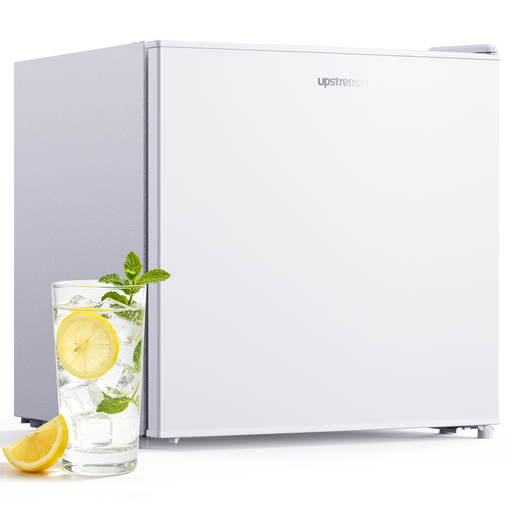 No image available
A compact option if you want a small, separate freezer for fresh portions of rhubarb.
4-star freezing function; 35 l usable capacity; 47.5 × 44.2 × 48.8 cm; reversible door; 41 dB.
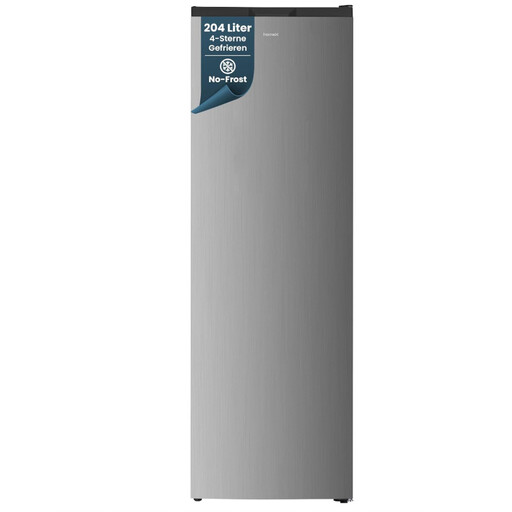 No image available
The generous usable capacity is more relevant if you’re planning to store other food as well as rhubarb; it may offer more space than you need for just a few portions.
4-star compartment and Super Frost function; 204 l; NoFrost; 222 kWh/year; energy efficiency class E; six drawers and compartments; 39 dB.
 No image available
The small capacity could suit you if you’re looking for a separate appliance for a few fresh portions and its stated freezing capacity meets your needs.
4-star freezing function; 31 l; freezing capacity of up to 2 kg/24 h; 147 kWh/year; 41 dB; reversible door.
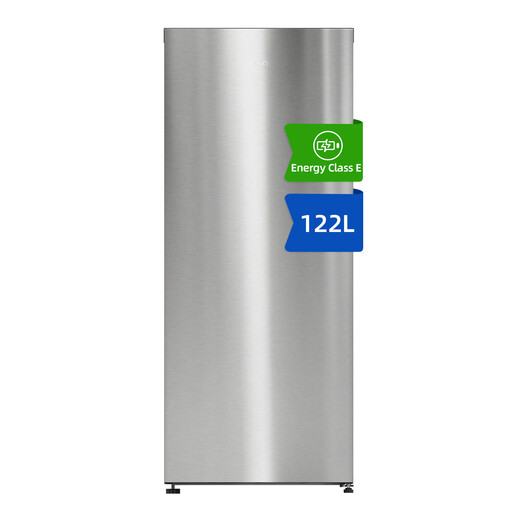 No image available
A larger option if you want to store other food alongside rhubarb. Check that the usable capacity and the space it takes up suit your household.
4-star freezing function; 122 l; NoFrost; 39 dB; 47.5 cm wide; freezer, fridge, chill and soft-freeze modes; energy efficiency class E.
 No image available
The three-part layout can be useful for storing different portions separately. Check the dimensions against the space you have available.
4-star freezing function; freezing capacity of up to 6 kg/24 h; 60 l; three storage compartments; 44.5 × 47.5 × 84.5 cm; reversible door.
Remove the leaves and the leaf bases, cut the stalks into pieces, then pack the amounts you need into separate, suitable airtight freezer containers or bags. The Federal Centre for Nutrition suggests briefly blanching the rhubarb as an option, not a necessary step.
No. Look for a 4-star compartment suitable for freezing fresh food. The consumer advice centre distinguishes this function from a compartment that can only store food that’s already frozen.
The Federal Environment Agency recommends keeping freezers away from heat sources and direct sunlight, and opening the door only briefly. Also check the specific model’s installation instructions and permitted ambient temperature.
Compare the kWh per year shown on the energy label for appliances with a suitable usable capacity. To estimate the cost, multiply this figure by your own electricity rate.
The Federal Environment Agency explains that, since March 2021, EU energy labels have used a scale from A to G instead of the previous plus-rated classes. As well as the class, compare the specific appliance’s annual consumption in kWh.