What to look for when buying
First, think about how many individual containers you’ll store at once and how often you freeze new portions. Germany’s Federal Centre for Nutrition recommends using suitable containers and labelling them; the consumer advice centre recommends choosing an appliance size and energy consumption to suit your needs.
Existing freezer compartment
A good fit if: You only freeze a few portions occasionally and your existing freezer space is large enough.
Things to consider: There’ll be less room for other frozen food; check that your containers will fit.
Upright freezer with drawers
A good fit if: You regularly take out individual portions at different times and want to store them separately.
Things to consider: Choose a size to suit your stock; drawers help keep things organised, but take up some of the interior space themselves.
Chest freezer
A good fit if: You want to store larger quantities of soup and other food together, and have enough floor space.
Things to consider: If you’ll often be taking out individual portions, check how the interior is divided up and whether the containers will be easy to reach.
| Buying priority |
What to check |
Who it matters most to |
| Store portions separately |
Check the number of drawers and usable interior dimensions against the containers you plan to use; label suitable containers. |
If I take out lots of individual containers at different times, I need a clear layout; around 36% of consumers put easy access to individual portions first. |
| Freeze batches of food |
Compare usable capacity in litres and freezing capacity in kg/24 h separately; they measure different things. |
If I freeze several batches at once, both storage space and freezing capacity need to be right; around 29% of consumers prioritise space and performance for larger quantities. |
| Ongoing energy consumption |
Compare the kWh/year shown on the energy label for similarly sized appliances, and avoid buying a larger capacity than you need. |
If the appliance runs all the time, I want to avoid unnecessary capacity and compare annual energy consumption; around 21% of consumers put ongoing electricity costs first. |
| Installation space |
Check the external dimensions and door clearance at the installation site; if the room is unheated, follow the installation requirements for the specific model. |
If space is limited or the room is unheated, the dimensions and permitted ambient temperature need to suit the room; around 14% of consumers prioritise installation conditions. |
Joybuy products for soup and food storage
The products below include upright freezers in various sizes, a mini freezer, an under-counter freezer and a fridge-freezer with separate fridge and freezer compartments.
 No image available
Heinrich’s upright freezer, 161 l
The drawer layout described could make it easier to store soup portions separately.
161 l; NoFrost; three freezer drawers and two additional drawers; temperature range from −14 °C to −22 °C; energy efficiency class C.
View at Joybuy
 No image available
Upstreman UF35 mini freezer, 35 l
Its compact design could be a good option if you have limited space.
35 l; four-star freezer; temperature range from −21 °C to −8 °C; removable inner container; reversible door; 41 dB.
View at Joybuy
 No image available
homeX FSN2041E-S upright freezer, 204 l
The drawers and compartments described could help you organise different food stocks.
204 l; NoFrost; Super-Freeze function; 39 dB; energy efficiency class E.
View at Joybuy
 No image available
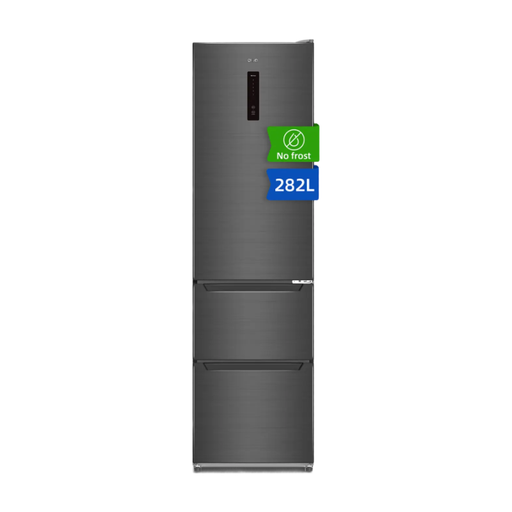
CHiQ CID282NEIBE fridge-freezer, 282 l
A fridge-freezer is worth considering if you need fridge space as well as room to freeze food.
282 l total capacity; 54 cm wide and 192 cm high; No Frost; energy efficiency class E; separate storage areas for fresh and frozen food.
View at Joybuy
 No image available
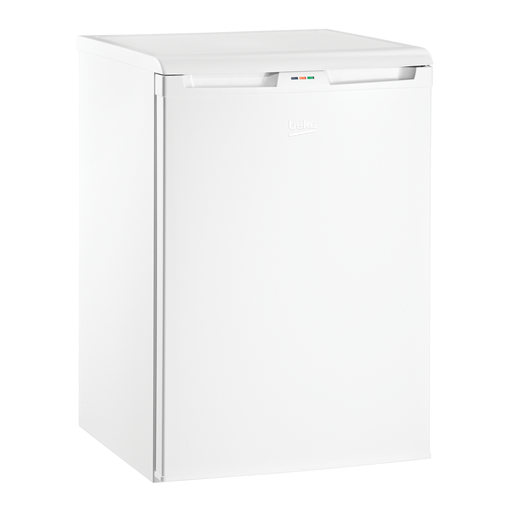
Beko FSE1074N b100 under-counter freezer, 95 l
The interior layout described could help you store different food stocks separately.
95 l freezer capacity; two drawers and one compartment with a transparent flap; MinFrost; 37 dB; energy efficiency class E; reversible door.
View at Joybuy
Frequently asked questions
Do I need an extra freezer for a few portions of soup?
Not necessarily. If you only freeze food occasionally and your existing freezer compartment has enough room, it may be sufficient; the consumer advice centre also lists a fridge-freezer as an option. Any additional appliance should be suited to the food stocks you actually need to store.
How should I prepare cooked vegetable soup for meals at different times?
Divide the soup into portions in suitable containers and label them so you know what’s inside and when it was frozen. Germany’s Federal Centre for Nutrition recommends freezing soup in portions. Proper cooling and hygienic handling are still important; saying that food has “cooled down” doesn’t mean it’s safe to leave at room temperature for a long time.
What temperature should I set my freezer to?
The consumer advice centre recommends −18 °C as the optimum temperature for an upright or chest freezer. This is consumer guidance, not a claim that there’s a legal minimum temperature for every household freezer.
How do I compare the energy consumption of freezers?
Compare the annual consumption in kWh shown on the EU energy label, and make sure the appliances are sized for similar needs. Actual energy consumption can vary depending on how and where the appliance is used.
Do household freezers in Germany need to carry an energy label?
Household refrigeration appliances covered by EU rules must follow the labelling requirements of Delegated Regulation (EU) 2019/2016. The European Union explains that the energy label must be visible at points of sale, including online shops. This doesn’t mean you have to buy an appliance with a particular efficiency class.


