If there’s always room in your existing freezer compartment for labelled portions of sauce, you may not need an additional appliance. If space is often at a premium, a compact upright freezer with easy-to-access compartments could be a good fit; for larger batches, also consider usable capacity and freezing capacity. A chest freezer is worth considering if you have room for it and can agree on a shared system for keeping things organised. Always compare the energy consumption figures for the specific models you’re considering.
Which option suits you?
House share with a regular supply of sauce
Several people want to store portions separately and find them easily later. Accessible compartments and a shared labelling system can help. The Federal Centre for Nutrition recommends using containers specifically designed for freezing.
Kitchen with limited space
If there’s little room for extra freezer capacity, make sure the appliance’s external dimensions and door clearance suit your kitchen. The consumer advice centre also recommends considering your needs and the energy consumption of the specific appliance.
Shared household cooking in large batches
If you regularly freeze lots of cooled portions at once, check the usable capacity and freezing capacity of the model. The German Federal Institute for Risk Assessment recommends dividing larger quantities of food between several shallow dishes to cool them.
What should you look for when buying?
Existing freezer compartment
A good fit if: you only have a few portions to store and there’s always enough room.
Consider: your existing compartment may not have enough capacity if space is tight or you have larger quantities of fresh food to freeze.
Compact upright freezer
A good fit if: several people regularly take out small, labelled portions and space is limited.
Consider: usable capacity, door clearance and annual energy consumption vary by model; compact doesn’t automatically mean energy-efficient.
Larger upright freezer
A good fit if: you regularly store other supplies or larger quantities alongside your sauce.
Consider: more usable capacity takes up more floor space, so choose a size that suits your ongoing needs.
Chest freezer
A good fit if: there’s room to open the lid and everyone can follow the same system for keeping things organised.
Consider: the consumer advice centre generally describes chest freezers as more energy-efficient, but individual models may differ. For two Exquisit models reviewed, the 99-l chest freezer uses 169 kWh/year, compared with 133 kWh/year for the 91-l upright freezer.
| Priority |
What to check when buying |
Who it matters most to |
| Finding portions again |
Check for separate compartments or areas, and room for suitable portion containers. |
If I’m storing small portions with other people, I want to be able to identify the contents and date easily. Around 31% of consumers prioritise keeping portions well organised. |
| Freezing large batches |
Compare usable capacity in litres and freezing capacity in kg/24 h for the exact model. |
If several cooled batches need to fit at once, the stated freezing capacity is important. Around 25% of consumers prioritise capacity for batches of cooked food. |
| Energy consumption |
Compare kWh/year and usable capacity for the specific model on its energy label. |
If the appliance runs all the time, I want to compare its stated annual energy consumption with my actual needs. Around 25% of consumers prioritise low running costs. |
| Positioning and access |
Check the dimensions, door clearance, noise level in dB(A) and any model-specific warning functions. |
If the appliance is in a shared kitchen, I need enough access and a suitable spot for it. Around 19% of consumers prioritise where it can be placed and how easy it is to use communally. |
Whichever appliance you choose, the same advice applies to cooked sauce: the German Federal Institute for Risk Assessment recommends cooling hot food quickly to below +7 °C. You can divide larger quantities between several shallow dishes to help them cool.
Avoid common misconceptions
-
A chest freezer always uses less electricity than an upright freezer
A generalisation about the type of appliance is no substitute for comparing specific models. Exquisit lists 169 kWh/year for the 99-l GT100-050E white chest freezer, while the 91-l GS80-HE-040D white upright freezer uses 133 kWh/year.
Compare kWh/year alongside usable capacity and how you plan to use the appliance, rather than choosing based on its type alone.
-
A mini freezer is automatically the most energy-efficient option
The consumer advice centre points out that smaller appliances can use more energy than larger, well-insulated models, despite having less capacity.
First check whether there’s room in your existing freezer compartment. If you’re considering an additional appliance, compare the annual energy consumption of models that will actually fit.
-
If an appliance fits in the space, it’ll be easy to use there
The stated depth of the Exquisit GS80-HE-040D with its door open is 107 cm; the appliance itself is 57.5 cm deep. A chest freezer needs enough room to open its lid from above.
Measure the space, the route for moving the appliance and the clearance needed to open it before you decide.
Brands and models at a glance
Exquisit
The models mentioned include a compact upright freezer and a small chest freezer.
- Exquisit lists a capacity of 91 l and 133 kWh/year for the GS80-HE-040D; the GT100-050E is listed at 99 l and 169 kWh/year.
- According to Exquisit, the GS80-HE-040D is 107 cm deep with the door open. These figures apply to these specific models.
Beko
According to Beko, the FSE1074N is a freestanding under-counter appliance for spaces with limited room.
- Beko lists a capacity of 95 l, a width of 54 cm, static cooling and a reversible door.
- MinFrost is the manufacturer’s term for reduced ice build-up and shouldn’t be confused with NoFrost.
Bosch
The GSN29VWEP is a larger upright model for supplies stored by a household or group.
- For this model, Bosch lists a capacity of 200 l, energy consumption of 221 kWh/year, a noise level of 39 dB(A), NoFrost, and alerts for an open door or rising temperature.
- Its dimensions of 161 × 60 × 65 cm need to suit your space; these specifications apply to the GSN29VWEP.
Liebherr
The FNdi 1624 Plus is an under-counter model with NoFrost and removable drawers.
- Liebherr lists a total capacity of 92 l and a noise level of 37 dB.
- At 60 cm wide, this model needs more space than narrower under-counter appliances. NoFrost and VarioSpace are manufacturer-stated features.
Siemens
The GS51NAWCV is a larger freestanding option for storing more supplies.
- For this model, Siemens lists a capacity of 290 l, energy consumption of 161 kWh/year and a freezing capacity of 21 kg/24 h.
- Its width of 70 cm and depth of 78 cm may be important considerations in a small shared kitchen.
Freezers at Joybuy
The models below include compact and larger upright freezers for storing portions of sauce together with other supplies.
 No image available
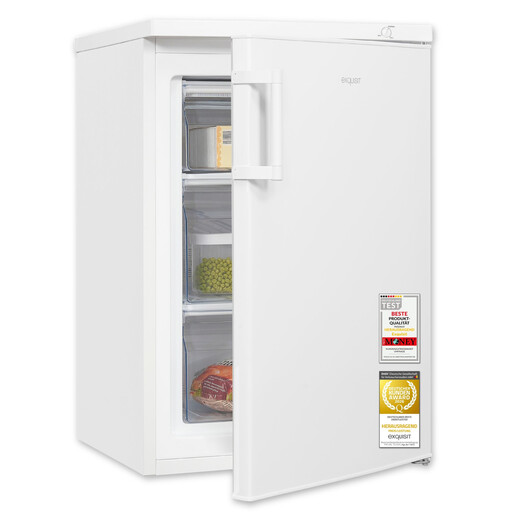
Exquisit GS581-H-010E upright freezer, 85 L
The compact extra capacity is ideal for keeping portions stored separately.
85 L; 3 drawers; 4-star freezer compartment; manual temperature control; reversible door; manual defrost.
Joybuy
 No image available
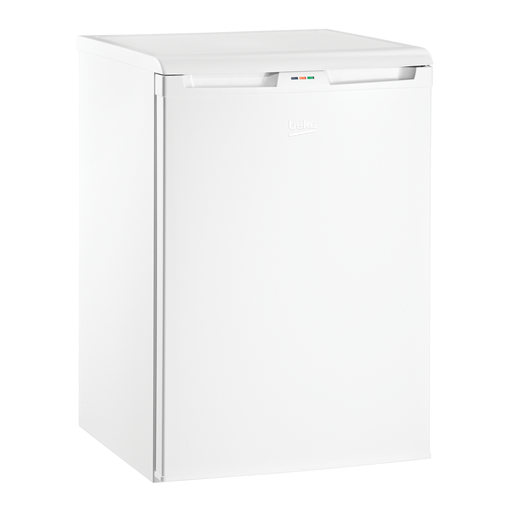
Beko FSE1074N under-counter freezer, 95 L
With a capacity of 95 L, this under-counter model is an option for limited space and neatly organised shared portions.
95 L; MinFrost; 37 dB; energy efficiency class E; freestanding.
Joybuy
 No image available
COMFEE' RCU40WH2(E) mini freezer, 31 L
The compact capacity is designed for small portions and limited space.
31 L; 4-star freezer compartment; reversible door; 147 kWh/year; energy efficiency class E.
Joybuy
 No image available
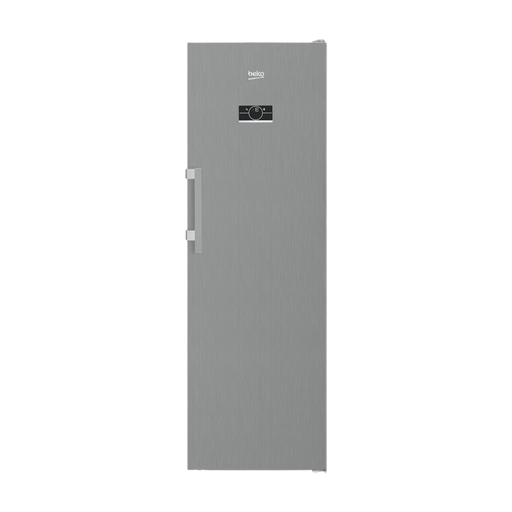
Beko B7RFNE315XP upright freezer, 286 L
The larger capacity is an option if you need space for other supplies as well as portions of sauce.
286 L net capacity; No Frost; fast freeze; suitable for unheated rooms; energy efficiency class D.
Joybuy
 No image available
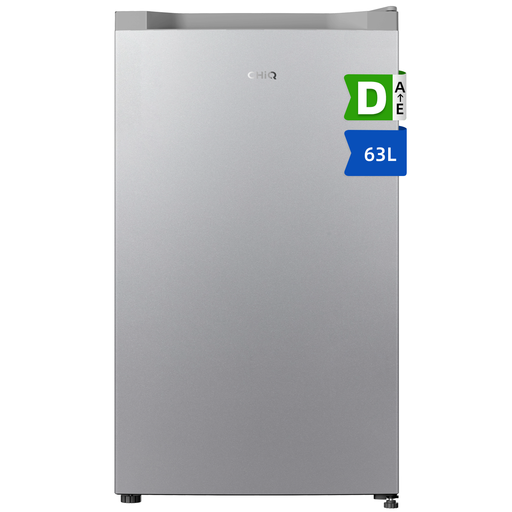
CHiQ JR63DSD upright freezer, 63 L
With a capacity of 63 L and a width of 47 cm, this model is an option for limited space and separately stored portions.
4-star freezer compartment; 38 dB; manual defrost; reversible door; energy efficiency class D.
Joybuy
Frequently asked questions
Does tomato sauce need to cool before freezing?
Yes. The German Federal Institute for Risk Assessment recommends cooling hot food quickly to below +7 °C; you can divide larger quantities between several shallow containers to help them cool. This advice is about handling cooked sauce, not a specific feature of any freezer.
How can you organise portions of sauce in a shared freezer?
Use suitable freezer containers and label them with the contents, quantity and date. The Federal Centre for Nutrition recommends packaging specifically designed for freezing. You should also agree on who uses each area.
How do I compare the energy consumption of freezers?
Compare the kWh/year figure and usable capacity on the EU energy label for the specific models. Actual energy consumption also depends on how and where the appliance is used, so choose a size that suits your ongoing needs.
What warranty and disposal rules apply to private purchases in Germany?
The seller’s statutory liability for faulty goods is different from a voluntary guarantee. Since 31 July 2026, rules on the right to repair have also applied to covered refrigeration appliances. The consumer advice centre explains that if a repair is carried out instead of a replacement within the first two years, the liability period is extended to three years. The German Environment Agency says that large electrical appliances can be returned free of charge when you buy a similar replacement, including for online purchases with delivery. This guidance applies to private purchases; if you’re buying for business use, check the relevant obligations separately.


