Families who cook in batches
If you prepare several meals at once, you’ll need space for separate portions of sauce and other frozen food. The German Federal Centre for Nutrition recommends freezing sauces in individual portions.


For the occasional portion of sauce, your existing freezer compartment should be enough if there’s space available; you don’t necessarily need an additional appliance. If you regularly prepare larger quantities for family meals, compare usable capacity and the space available, and take the stated annual energy consumption into account. Drawers make it easier to take out individual portions, while a chest freezer is better suited to storing larger quantities when you have enough floor space.
If you prepare several meals at once, you’ll need space for separate portions of sauce and other frozen food. The German Federal Centre for Nutrition recommends freezing sauces in individual portions.
If you’re considering an additional appliance, its dimensions and the space needed to open the door or lid must fit the area available. The consumer advice centre recommends choosing an appliance to suit your actual needs.
If you often cook ahead, consider not only storage space but also annual energy consumption and how easy it is to take out individual portions. The consumer advice centre and the European Commission outline different points of comparison, including your needs and the information on the energy label.
The German Federal Centre for Nutrition recommends dividing sauces into the portions you’ll need; the consumer advice centre advises choosing an appliance size to suit your storage needs.
| Priority | What to check when buying | Who is this important to? |
|---|---|---|
| Space for family portions | Check how much space is available in your current freezer and how many portions you plan to store; compare usable capacity. | If I need room for several family meals and other food, usable capacity matters to me. Around 33% of consumers put space for several family portions first. |
| A suitable space for the appliance | Measure the width, height and depth, the clearance needed to open it, and the route for moving it into the intended position. | When space is limited, I want to know whether the appliance will fit in the intended spot with its door or lid open. Around 27% of consumers prioritise the space available. |
| Energy consumption | For models that suit your needs, compare the stated annual energy consumption in kWh. | If an additional appliance is going to run all the time, I compare its annual energy consumption with my storage needs. Around 20% of consumers prioritise energy consumption. |
| Finding portions again | Consider compartments or baskets and suitable containers for separate portions; label each one with its contents, quantity and date. | When planning several family meals, I want to be able to find and take out individual labelled portions. Around 20% of consumers pay particular attention to organisation and easy access to individual portions. |
An appliance that’s significantly larger than your actual storage needs may use more electricity than necessary. The consumer advice centre recommends choosing a size to suit your needs.
First, check how much space is available in your existing freezer and how many portions of sauce you usually freeze.
The size of an appliance alone doesn’t tell you its stated annual energy consumption.
For models with a capacity that suits your needs, compare the figure in kWh/year.
Liquids need room to expand as they freeze. Unsuitable or overfilled containers can split, causing you to lose some of your sauce.
Use freezer-safe containers, leave space at the top, and label them with the contents, quantity and date. For liquids, the consumer advice centre recommends filling containers to about three-quarters full.
The design affects how you organise your food and take out individual portions. A larger capacity alone won’t tell you which option is right for your day-to-day needs.
Before buying, think about how often you’ll take out individual portions and how you’d like to organise them in the appliance.
The GS81-040C white upright freezer is a compact model with 87 litres of usable capacity and three drawers.
The FNd 4224 and CFe 2500 represent different sizes and designs: an upright freezer with a capacity of 160 litres and a chest freezer with a capacity of 497 litres.
The B5RFNE295W, with a capacity of 260 litres, and the HSM14550, with a capacity of 148 litres, show two different designs: an upright freezer and a chest freezer.
The Joybuy products below include larger upright freezers for extra family food storage, as well as a smaller freezer for more limited spaces.
 No image available
An option if you’d like to store family portions in separate drawers.
161 litres of usable capacity; three freezer drawers; No-Frost; energy class C.
 No image available
A possible choice if you’d like to store food in an upright freezer with designated storage areas.
204 litres; NoFrost; energy class E; 39 dB.
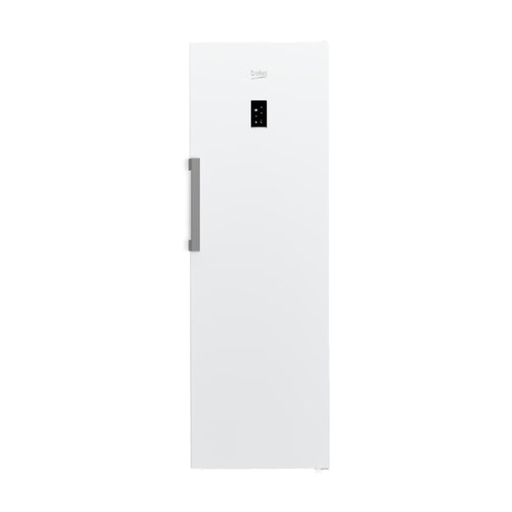 No image available
An option if you regularly need space for other family food as well as portions of sauce.
286 litres of usable capacity; No Frost; energy class C; 40 dB.
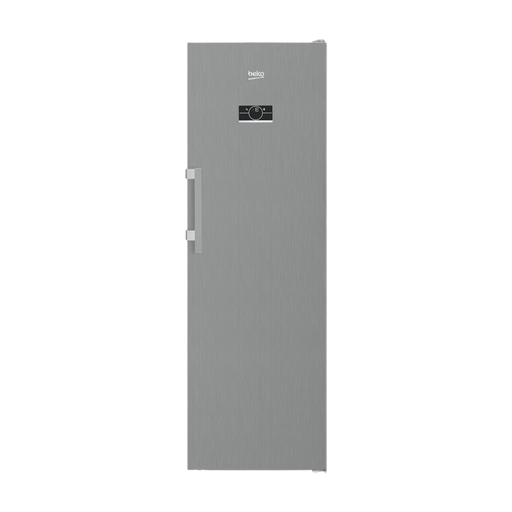 No image available
A possible choice if you’d like to store larger quantities separately and make use of a Fast Freeze function.
286 litres of usable capacity; No Frost; Fast Freeze; described as suitable for unheated rooms in the product name.
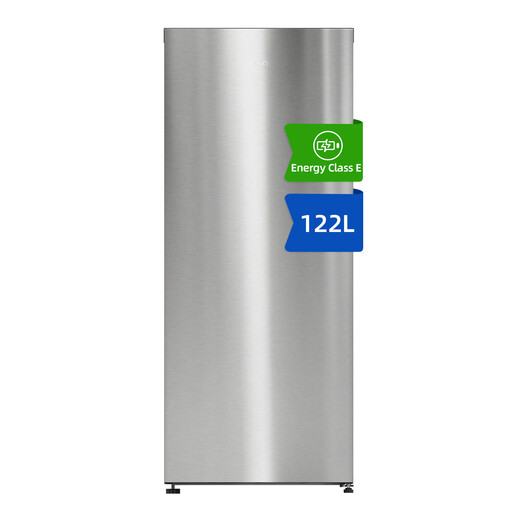 No image available
An option if you’d like extra freezer space and are considering a more compact model.
122 litres; 4-star freezing; No-Frost; energy class E; 39 dB.
No, not if there’s enough space in your existing freezer compartment. The consumer advice centre suggests using an existing freezer compartment or fridge-freezer if you have more modest storage needs; an additional appliance may be worth considering if you regularly freeze larger quantities.
Divide the sauce into the portions you’ll need later and use freezer-safe containers. Label them with the contents, quantity and date; for liquids, the consumer advice centre recommends filling containers to about three-quarters full.
It’s not advisable to leave it unrefrigerated for a long time. The German Federal Institute for Risk Assessment points out that inadequate temperatures during storage and transport can allow harmful germs to survive and multiply, so cool the sauce promptly and hygienically.
For appliances with a capacity that suits your needs, compare the stated consumption in kWh/year on the EU energy label. The European Commission explains that, since 1 March 2021, the efficiency scale for household freezers has run from A to G; the label figure isn’t an estimate of your household’s individual electricity costs.