A guide to relevant brands
The information below relates to the manufacturers and model ranges mentioned. Always check the specifications and features of the specific model.
Liebherr
The FNe 1404 under-counter freezer is a compact NoFrost option for extra freezer space.
- Liebherr lists a total capacity of 92 l and NoFrost for the FNe 1404. According to the manufacturer, its components are designed for ambient temperatures down to −15 °C.
- This suitability for cold environments and these features apply to the model mentioned and shouldn’t be assumed to apply to other Liebherr appliances.
Beko
The models mentioned include a 90-l freezer and a 104-l chest freezer.
- Beko describes both models as featuring MinFrost technology to reduce ice build-up.
- MinFrost doesn’t guarantee frost-free NoFrost operation. Check energy consumption and installation requirements for the specific model.
Haier
The freestanding H4F226WDH1 freezer is a larger model with drawers, designed for extra storage needs.
- Haier lists a capacity of 226 l, four drawers, Total No Frost and external dimensions of 600 × 742 × 1535 mm for this model.
- This capacity may be more than you need if you only freeze small amounts of stock. The manufacturer’s specifications don’t show that it costs less to run than smaller appliances.
Siemens
The manufacturer’s range includes freestanding freezers with flexible storage and NoFrost features.
- The Siemens range lists Total NoFrost and optional connected controls.
- Check the features and functions of the specific model you choose.
Related products from Joybuy
The Joybuy products below include small and larger freezers, as well as a fridge freezer. Compare the capacity you need, the available space and the energy consumption listed for each specific model.
 No image available
Heinrich’s freezer, 161 l
Three freezer drawers provide separate spaces for portioned supplies.
The product name lists a capacity of 161 l, NoFrost and three freezer drawers.
View at Joybuy
 No image available
Upstreman UF35 mini freezer, 35 l
If you’re considering a small freezer, compare its stated capacity with the portions you plan to store and the space available.
The product name lists a capacity of 35 l, a 4-star rating, reversible doors and 41 dB.
View at Joybuy
 No image available
homeX FSN2041E-S freezer, 204 l
The stated capacity may suit larger quantities; check that it matches your needs and the space available.
The product name lists a capacity of 204 l, NoFrost, 39 dB and energy class E.
View at Joybuy
 No image available
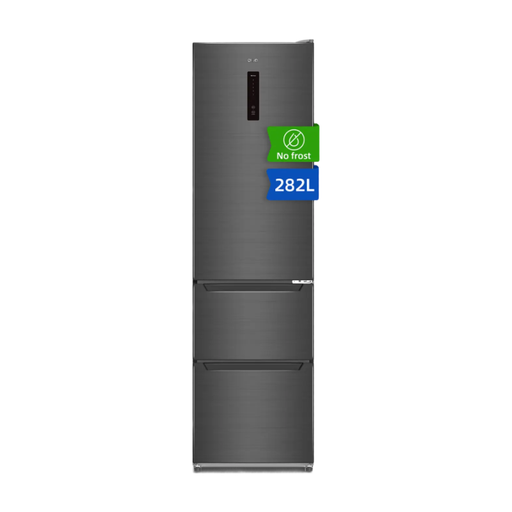
CHiQ CID282NEIBE fridge freezer, 282 l
If you need fridge space as well as freezer space, this product is listed as a fridge freezer.
The product name lists a capacity of 282 l, a width of 54 cm, a height of 192 cm, energy class E and No Frost.
View at Joybuy
 No image available
COMFEE’ RCU40WH2(E) mini freezer, 31 l
If space is very limited, check whether the stated capacity is enough for your portions.
The product name lists a capacity of 31 l, annual energy consumption of 147 kWh and energy class E.
View at Joybuy
Frequently asked questions
How should I prepare cooked vegetable stock before freezing it?
For longer storage, cool warm stock promptly to below 7 °C, as recommended by the German Federal Institute for Risk Assessment. Then divide it into portions in freezer-safe containers and label them with the contents, quantity and date. The Federal Centre for Nutrition recommends including these details to help you stay organised.
What temperature should a freezer maintain?
The consumer advice centre recommends −18 °C as the optimum temperature for an upright or chest freezer. Check the setting and, if necessary, the temperature of the specific appliance.
How can I check energy use and noise levels before buying?
The EU energy label shows, among other things, the standardised annual energy consumption in kWh, the capacity and the maximum noise level. Your Europe explains that, since 2021, fridges and freezers have no longer used the previous label symbol; the scale runs from A to G. Actual energy use also depends on how and where the appliance is used.
What happens to an old freezer in Germany?
Online retailers also have obligations to take back old electrical appliances, as explained by the German Federal Ministry for the Environment. Certain old appliances must be collected from your home free of charge when you buy a new one, if this has been agreed. Check the arrangements for returning your old appliance when placing your order.
Who should I contact if a newly purchased appliance is faulty?
For your statutory consumer rights, you should generally contact the seller; the consumer advice centre states that the claim period is two years. For purchase contracts made from 31 July 2026, it explains that this period can be extended once by 12 months if you choose a repair rather than a replacement when a fault occurs. A voluntary guarantee has its own terms and conditions.


