Weekly meal planners
Freeze stock in individual portions for several lunches and want to find the right amount quickly in the morning. The Federal Centre for Nutrition recommends measuring out the amounts you need and freezing them in portions.


If your existing four-star freezer compartment has enough room for your pre-portioned stock, you won’t need an extra appliance. A freezer with drawers is easy to organise when you regularly take out individual portions; a chest freezer is better suited to larger stocks, but needs careful organisation and enough floor space. For any appliance, check its freezing function, usable capacity, dimensions and annual energy consumption.
Freeze stock in individual portions for several lunches and want to find the right amount quickly in the morning. The Federal Centre for Nutrition recommends measuring out the amounts you need and freezing them in portions.
Check first whether your existing compartment is big enough, rather than planning for extra capacity you may not need. The consumer advice centre recommends choosing an appliance size based on your actual freezing needs.
Cook larger quantities in one go and need to consider freezing performance, storage space and floor space together. The consumer advice centre recommends factoring in how much frozen food you need when choosing an appliance.
Suitable if: you’re only adding a few pre-portioned containers and there’s still room in the compartment.
Consider: check that it has a designated freezing function for freshly made stock; you won’t need an additional appliance.
Suitable if: you regularly freeze portions, your existing compartment isn’t big enough and you want to keep containers neatly organised.
Consider: an additional appliance takes up floor space and adds to your ongoing electricity use.
Suitable if: you want other supplies as well as stock to be close to hand regularly.
Consider: the capacity may be more than you need for a few weeks’ worth of portions; allow for the door opening and the space it will occupy.
Suitable if: you’re freezing larger quantities of stock and other supplies together, and have enough floor space.
Consider: small containers need to be organised in the deeper interior so they’re easy to reach day to day.
| Priority | What to check when buying | Who is it important to? |
|---|---|---|
| Find individual portions quickly | Check the drawer layout and internal dimensions against the containers you plan to use; label your portions. | If I want to grab the right portion of stock in the morning without searching, I look for a well-organised layout. Around 36% of consumers prioritise quick access to individual portions. |
| Avoid an unnecessary extra appliance | Compare the available capacity and star rating of your existing compartment with the quantity and frequency of your new portions. | If I only freeze stock occasionally, I want to use the freezer space I already have first. Around 29% of consumers are particularly keen to avoid an unnecessarily large additional appliance. |
| Freeze larger quantities in one go | Check the usable capacity, freezing capacity in kg/24 h and external dimensions; don’t assume the kg figure directly translates into a volume of stock. | If I freeze a large batch in one go, I need enough capacity and a suitable stated freezing performance. Around 21% of consumers prioritise freezing larger batches. |
| Keep an eye on ongoing energy use | Compare the annual consumption in kWh on the EU energy label and multiply it by your personal electricity rate to work out your own costs. | If I’m going to have another appliance running all the time, I want to take its stated annual consumption into account. Around 14% of consumers are particularly focused on ongoing electricity costs. |
Storing food that is already frozen and freezing freshly prepared portions are two different requirements.
Check that your existing compartment has a four-star rating, and look for a designated freezing function when choosing an appliance. The Federal Centre for Nutrition and Severin distinguish between freezer compartments and the function for freezing fresh food.
An oversized freezer can take up unnecessary space and use more electricity. The consumer advice centre recommends choosing a size that meets your actual needs.
First work out how much stock you’ll freeze and how often, as well as your other freezer needs. Then compare usable capacity and annual consumption.
Beko describes MinFrost as reducing ice build-up. It isn’t the same as a NoFrost specification and doesn’t mean you’ll never need to defrost the appliance.
Check the defrosting technology using the exact model name and product information.
If you need small containers every day, you’ll also want to consider access, how the interior is organised and whether there’s enough room to open the lid.
Before choosing, plan how you’ll arrange the portions inside and check how much floor space you have, including room to access the lid.
The information below relates to the specific models and product ranges mentioned; it isn’t a general recommendation of any brand.
According to Beko, the Beko FSE1074N is an upright freezer with a capacity of 90 l. It could be a compact option for extra storage if your existing freezer space isn’t enough.
According to Liebherr, the Liebherr FNe 1404 Pure is an under-counter freezer with a total capacity of 92 l and NoFrost.
Bosch lists the freestanding GSN33VWEP as having 225 l of freezer space and a freezing capacity of 19,0 kg/24 h.
Severin offers different styles, including the 200 l GT 8849 chest freezer and the 161 l GS 8868 NoFrost freezer.
This selection at Joybuy includes compact freezers for stock frozen in portions, from small additional appliances to models with more storage space.
 No image available
For storing portions when you’re looking for a compact upright appliance with separate drawers.
85 l usable capacity; three drawers; rated as a four-star freezer. The product name also specifies manual temperature control and a reversible door.
 No image available
For smaller supplies if you’re looking for a mini freezer with a modest stated capacity.
31 l; four-star freezer; reversible door and adjustable feet. The stated energy consumption is 147 kWh/year and the energy rating is E.
 No image available
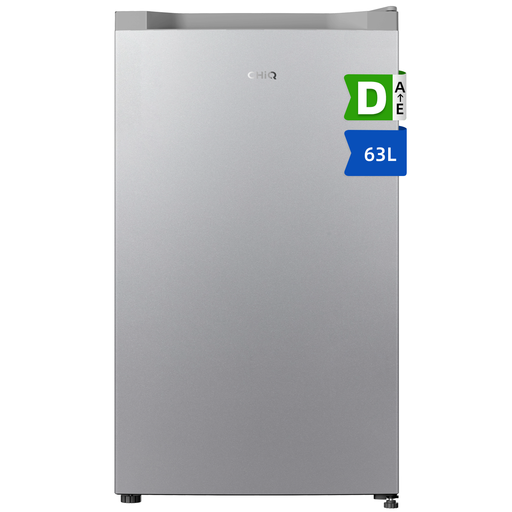
For storing portions if you’re considering a compact upright model with a specified fast-freeze function.
63 l; four-star fast freeze; 47 cm wide; two adjustable drawers. The product name also specifies manual defrosting, a reversible door and energy rating D.
 No image available
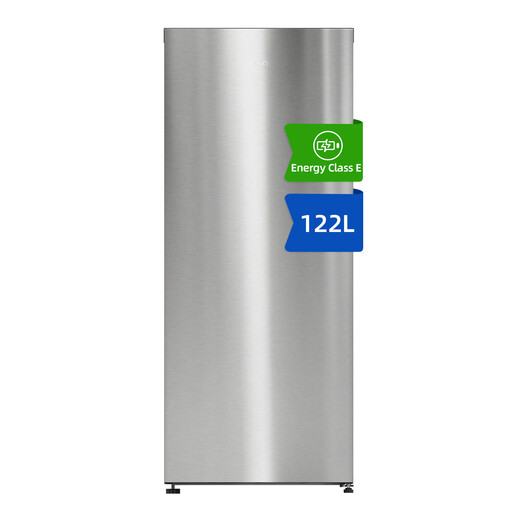
For extra storage space if you want to freeze other food as well as stock.
122 l; four-star freezing; NoFrost and Multi-Airflow. The product name also specifies an inverter compressor with a noise level of 39 dB, a cooling mode and energy rating E.
 No image available
For compact storage if you’d find several separate storage areas useful.
60 l; three storage areas; adjustable temperature and a reversible door. Before buying, check the stated freezing function for newly added, cooled stock.
If you’re freezing stock that hasn’t already been frozen, check that the compartment has a designated freezing function. For a freezer compartment, a four-star rating is the right choice. Treating three-star and four-star compartments as equivalent just because they have similar storage temperatures doesn’t take their freezing functions into account.
The Federal Institute for Risk Assessment recommends cooling hot food to below 7 °C within a few hours. Larger quantities can be divided between several shallow containers to help them cool. Freeze the cooled stock in portions in suitable freezer containers, and keep food that needs to stay chilled cool when you’re out and about. This is a food hygiene recommendation; it doesn’t mean that any particular freezer will make an unrefrigerated lunch safe.
It depends on the model: Severin describes the GS 8868 as a NoFrost appliance, while the GB-8882 freezer box is described as requiring manual defrosting. Check the instructions for the specific model.
To calculate your own annual running costs, multiply the stated annual consumption in kWh by your electricity rate in €/kWh. Actual consumption may differ from the standardised energy-label conditions. The Federal Ministry for the Environment describes retailers’ take-back obligations in certain circumstances. When you buy, check what take-back and transport services have been agreed for your specific purchase.
The EU energy label for fridges and freezers uses a scale from A to G. Alongside the efficiency rating, compare the stated annual consumption and capacity. The label doesn’t replace checking that the appliance has the freezing function you need for your portions of stock.