Home cooks with limited space
You need extra freezer space, but only have a small alcove or area available. Check the external dimensions, door clearance and installation instructions before focusing on the usable capacity.


For occasional small batches, a spare 4-star freezer compartment may be enough, provided it has the space and freezing capacity you need. A compartment with fewer stars is not suitable for freezing fresh food in the same way (Verbraucherzentrale). If you regularly freeze small amounts, a compact freezer could be a good option; for larger batches, consider a bigger appliance. In either case, take account of the space available, freezing capacity and annual energy consumption. Cool the stock quickly before freezing and freeze it in portions, as recommended by the Lower Saxony Food Inspection Authority and the Federal Centre for Nutrition.
You need extra freezer space, but only have a small alcove or area available. Check the external dimensions, door clearance and installation instructions before focusing on the usable capacity.
If you regularly freeze several portions at once, make sure the usable interior space and stated freezing capacity suit the size of batch you usually make.
If you only freeze stock occasionally, first check whether an existing 4-star compartment suitable for freezing is enough, before making space for an additional appliance.
First, measure the space available. Then work out how much stock you want to freeze at once, and compare the freezing capacity and running costs of appliances in the right size range.
| What to consider | What to check when buying | Who is this important for? |
|---|---|---|
| Space and door clearance | Check the external dimensions, space needed to open the door and installation instructions against the intended location. | When every centimetre counts in my small kitchen, I first check that the appliance fits and the door can open properly. For around 33% of consumers, available space is the most important buying consideration. |
| Freezing capacity and batch size | Consider the amount of stock you usually make alongside your containers; check the stated freezing capacity in kg/24 h and the interior space. | If I want to freeze several portions of stock at once, the freezing capacity and available interior space need to suit the amount I usually make. Batch size is the top priority for around 27% of consumers. |
| Running costs | Compare the annual energy consumption in kWh/a for the specific models, and consider any suitable freezer space you already have if you only freeze stock occasionally. | If I’m adding an appliance that will run all the time, I want to know its annual energy consumption, especially if I only freeze stock now and then. Running costs are the main consideration for around 20% of consumers. |
| Portioning and access | Check that freezer-safe containers of the right height and shape fit in the compartments or drawers; label each portion with its contents, quantity and date. | If I want to take out small amounts of stock, I check that my containers fit neatly inside. Organising individual portions is particularly important for around 20% of consumers. |
The Verbraucherzentrale points out that a mini freezer can use more electricity than a larger, well-insulated appliance. Size alone, then, doesn’t tell you which model will be cheaper to run.
Compare the annual energy consumption in kWh/a and usable capacity of the specific appliances. If you only freeze stock occasionally, first check whether a suitable freezer compartment you already have will do the job.
Usable capacity and freezing capacity describe different things. For example, Bomann lists 31 l and 2 kg/24 h for the GB 341.1, while Gorenje lists 86 l and 4 kg/24 h for the F492PW. These manufacturer figures apply to the specific models.
Work out how much stock you usually make, then check that the freezing capacity, interior layout and containers suit your needs.
Beko lists 90 l in the heading and 95 l in the technical section for the FSE1074N. For the Exquisit GB505-040E, figures of 31 l and 33 l appear depending on the variant shown.
Check the full model number and specific variant against its EU product information sheet before comparing capacities.
The Garfield Eco chest freezer is a compact option for limited space and smaller stocks.
The GB 341.1 is a small chest freezer with a reversible door.
The FSE1074N is a freestanding under-counter freezer for when extra freezer space matters more than keeping external dimensions to a minimum.
The F492PW is an under-counter freezer with drawers, useful if you want to keep different supplies separate.
The GB505-040E is another compact chest freezer option.
This selection includes compact freestanding freezers for tight spaces, as well as larger models if you need more room for portions of stock.
 No image available
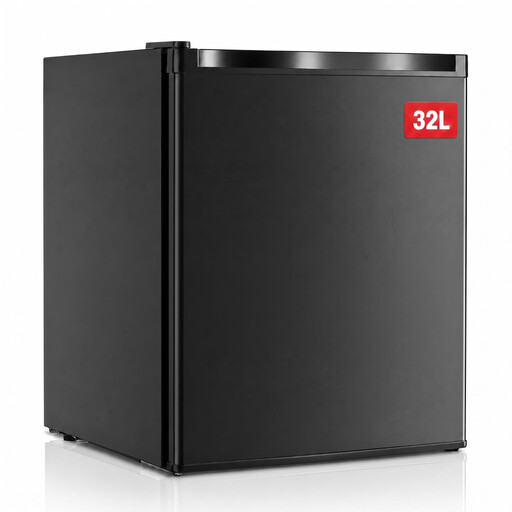
Listed as a compact 32-l freezer; before buying, check that the specific variant is suitable for freezing fresh food.
The product details list seven temperature settings, a reversible door and dimensions of 45,4 × 44,3 × 49,5 cm. Check for a 4-star function or stated freezing capacity.
 No image available
The stated 4-star function makes this compact appliance an option for regularly freezing small portions of stock. Check that the space available is suitable for your containers.
The product details list a capacity of 35 l, a reversible door and dimensions of 47,5 × 44,2 × 48,8 cm.
 No image available
The product details list a 4-star freezing function and a capacity of 95 l; check that the extra storage space will fit in your kitchen.
Features include a removable basket, an adjustable thermostat and external dimensions of 550 × 475 × 848 mm.
 No image available
The stated 4-star function and freezing capacity of 2 kg/24 h are useful for small batches; compare them with the amount you usually freeze at once.
The product details list a capacity of 31 l, annual energy consumption of 147 kWh and a reversible door.
 No image available
With a stated 4-star function and freezing capacity of 6 kg/24 h, this model is an option for freezing several portions at once, provided you have enough space for it.
The product details list a capacity of 60 l, three interior compartments, dimensions of 44,5 × 47,5 × 84,5 cm and a reversible door.
Let the stock cool quickly before freezing rather than putting it in the freezer while hot. The Lower Saxony Food Inspection Authority recommends cooling food in the fridge first; dividing larger quantities between shallow containers can help. The Federal Institute for Risk Assessment recommends cooling prepared food to below +7 °C within a few hours.
Pour measured portions into containers specifically designed for freezer use, and label them with the contents, quantity and date. The Federal Centre for Nutrition recommends measuring food into the portions you’ll need later before freezing it. That makes it easier to take out individual portions than if you freeze everything in one large block.
Compare the annual energy consumption in kWh on the EU energy label for the specific models. To estimate the cost for yourself, multiply this figure by your electricity price per kWh. The label figure is measured under standardised conditions, so actual consumption at home may differ.
Old electrical appliances must not go in household waste. According to the Federal Ministry for the Environment, municipalities must provide enough collection points, where old electrical appliances can be handed in regardless of their type or size. Retailer take-back schemes have their own conditions, including whether you’re buying an equivalent new appliance; check the terms with the retailer concerned.