If you only have small amounts of stock to freeze occasionally, a suitable freezer compartment you already own will do, provided there’s enough space. An additional appliance will add to your ongoing electricity consumption. If you regularly freeze larger quantities, consider an upright freezer with separate compartments or, if you have enough floor space, a chest freezer. Compare capacity, freezing capacity and annual energy consumption. Before freezing larger quantities of stock, cool them in shallow containers to below +7 °C within a few hours, as recommended by the German Federal Institute for Risk Assessment for larger quantities of food.
Which solution suits you?
For the occasional small portion
If you only freeze a little stock now and then, first check whether there’s enough room in a suitable freezer compartment you already own. The German Federal Centre for Nutrition points out that *- or **-rated compartments are suitable only for short-term storage.
For batch cooks sharing the load
If you regularly freeze several portions, make sure the containers fit in the appliance and can be stored separately. Consider the quantity and freezing capacity together: capacity alone doesn’t tell you how much an appliance can freeze in 24 hours.
For those keeping an eye on energy use
If you run an additional appliance all the time, choose a size that suits the amount you actually store and compare the stated annual energy consumption. The consumer advice centre warns against choosing a freezer that’s too large for your needs.
What to look for when buying
Existing freezer compartment
A good fit if: you only have a few portions to freeze and the compartment is suitable and has enough room.
Bear in mind: You’ll be sharing the space with other food; according to the German Federal Centre for Nutrition, *- and **-rated compartments are suitable only for short-term storage.
Compact upright freezer
A good fit if: you regularly freeze separate portions of stock but have limited floor space.
Bear in mind: An additional appliance takes up space and uses electricity. Check the interior dimensions and door swing to make sure your containers will fit.
Larger upright freezer
A good fit if: several people regularly freeze larger quantities and separate compartments make it easier to keep track of everything.
Bear in mind: Check that the height and floor space work for you. According to the consumer advice centre, an appliance that’s too large can use more electricity than necessary.
Chest freezer
A good fit if: you’re planning to store a larger shared supply and have enough width to accommodate it.
Bear in mind: It can be harder to keep lots of small, different portions organised when you access the freezer from above. Think about how you’ll sort the contents to suit your day-to-day routine.
| Priority |
What to check when buying |
Who is this important to? |
| Space and portions |
Check the available space in a suitable compartment, along with the dimensions of your containers and the compartments. |
If I want to find small portions easily in a shared freezer, available space and clear organisation matter. Around 33 % of consumers put space-saving portion storage first. |
| Larger batches |
Compare the usual quantity in a fresh batch with the specific model’s freezing capacity in kg/24 h. |
If you regularly freeze a lot of stock at once, it’s important to choose an appliance suited to the size of each new batch. Around 25 % of consumers prioritise freezing larger quantities regularly. |
| Energy consumption and size |
Compare the capacity you need with the specific model’s stated kWh/year. |
If I’m running an additional appliance all the time, I want to choose a size that suits the amount I store and take the annual energy consumption into account. Around 25 % of consumers prioritise energy use and choosing the right appliance size. |
| Defrosting and care |
Check the defrosting system on the exact model and how easy it is to access for cleaning. |
If several people use the appliance, it should be practical to maintain and share responsibility for day to day. Around 17 % of consumers put the effort involved in defrosting and care first. |
The consumer advice centre recommends matching the appliance size to your needs. When freezing several fresh portions, storage capacity and freezing capacity are different things: litres tell you how much you can store, while kg/24 h is the amount the manufacturer says the appliance can freeze within 24 hours.
Common buying mistakes
-
Buying an additional appliance before working out what you need
According to the consumer advice centre, a freezer that’s too large for the amount you actually store uses electricity unnecessarily.
First, count the portions of stock you usually freeze and check how much space is available in a suitable freezer compartment you already own.
-
Confusing storage capacity with freezing capacity
Litres tell you how much storage space is available; kg/24 h refers to a different appliance specification and matters when you regularly freeze larger fresh batches.
For these batches, compare both figures for the specific model.
-
Assuming SmartFrost is the same as NoFrost
Liebherr describes SmartFrost on the Fe 1003 Pure as reducing frost build-up. For the FNe 1404 Pure, the manufacturer specifies NoFrost, meaning there’s no need to defrost it manually.
Check the defrosting information for the model you choose and agree who’ll take care of the appliance in your shared kitchen.
-
Choosing a wide chest freezer just because of its capacity
According to the manufacturer, the Liebherr CFe 1870 Pure is 104 cm wide. With access from above, lots of small, different portions can be harder to keep organised.
Measure the floor space and clearance needed to open the lid, and plan a clear way to sort the containers.
Manufacturer examples to help you choose
Liebherr
Examples from the manufacturer include compact under-counter freezers and a larger chest freezer.
- Liebherr states that the FNe 1404 Pure has NoFrost and a total capacity of 92 l. On the 75 l Fe 1003 Pure, SmartFrost is designed to reduce frost build-up.
- According to the manufacturer, the CFe 1870 Pure has a total capacity of 281 l and is 104 cm wide. These details apply to the models listed and don’t support a general claim about other appliances from the brand.
Bosch
The GSN29VWEP is an example from the manufacturer of a larger freestanding upright freezer.
- For this model, Bosch lists 200 l of freezer capacity, a freezing capacity of 16,0 kg/24 h, NoFrost and 221 kWh/year.
- At 161 cm tall, the appliance needs to fit the space where you plan to put it. These specifications don’t demonstrate that the brand is better overall.
Miele
The FNS 4382 D is an example from the manufacturer of a freestanding upright freezer with NoFrost.
- Miele lists NoFrost for this model and offers optional delivery and installation services.
- Check the terms for these services and the space needed for the specific appliance. This isn’t an independent performance comparison with other brands.
Freezers at Joybuy
The following Joybuy products are freezers for storing portions of stock, from smaller appliances to larger storage options. Compare the listed model features with your containers, available space and usual batch size.
 No image available
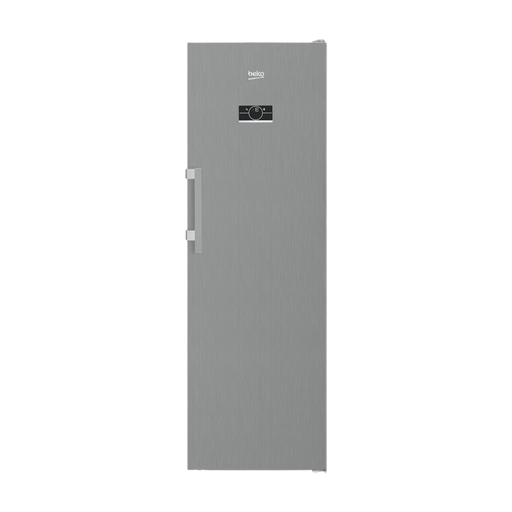
Beko B7RFNE315XP upright freezer, 286 l, No Frost, Fast Freeze, energy efficiency class D
For regular portions of stock that you want to store separately.
The product information lists 286 l, No Frost and Fast Freeze, as well as energy efficiency class D.
Joybuy
 No image available
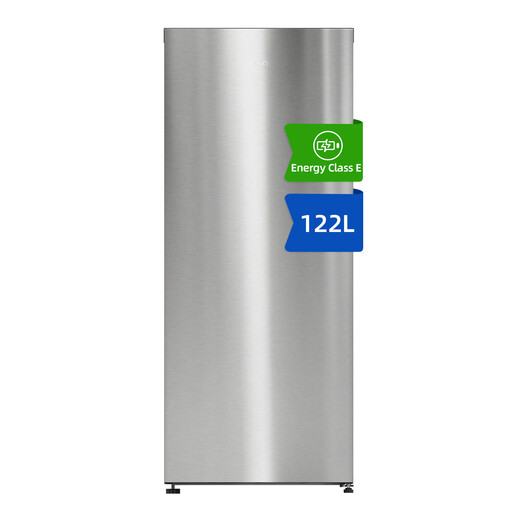
CHiQ JR122WSD upright freezer, 122 l, 4-star compartment, No Frost, energy efficiency class E
An option for portioned supplies in an appliance with a stated capacity of 122 l.
The product information lists a 4-star compartment, No Frost and a switchable fridge mode. It also specifies energy efficiency class E and 39 dB.
Joybuy
 No image available
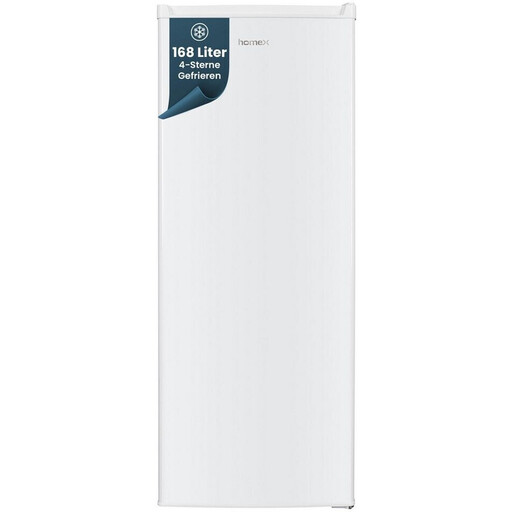
homeX FS1681E-W upright freezer, 168 l, 4 drawers and flap compartment, energy efficiency class E
For several separately organised portions, if the drawers and flap compartment suit the way you plan to sort them.
The product information lists 168 l, a freezing capacity of 7,8 kg in 24 hours and 190 kWh/year. It also specifies a reversible door and 40 dB.
Joybuy
 No image available
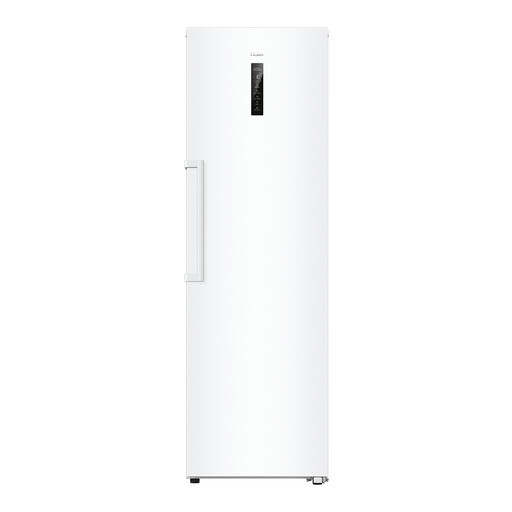
Haier H4F306WCH1 upright freezer, 301 l, Total NoFrost, 4 drawers, energy efficiency class C
For larger shared supplies, provided the capacity and compartment layout suit your needs.
The product information lists 301 l, four drawers, Total NoFrost and a switchable fridge-freezer function.
Joybuy
 No image available
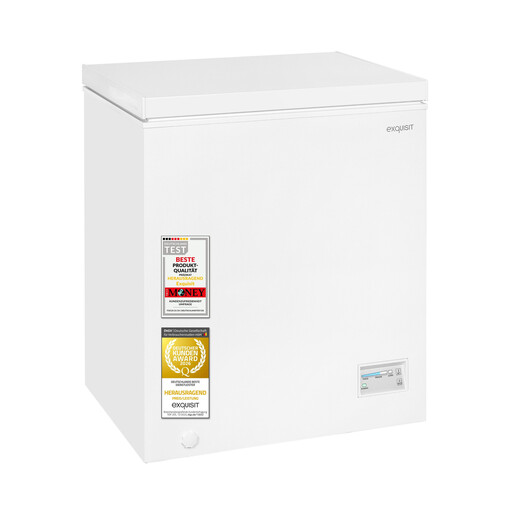
Exquisit chest freezer, 142 l, 4-star compartment, freezing capacity of 7 kg in 24 hours
A chest freezer for storing supplies, if top access and the layout work for everyone sharing it.
The product information lists 142 l, a 4-star compartment and a freezing capacity of 7 kg in 24 hours. Manual defrosting is required; a removable basket and castors are also listed.
Joybuy
Frequently asked questions
Should vegetable stock be cooled before freezing?
Yes. The German Federal Institute for Risk Assessment recommends dividing larger quantities of food between several shallow dishes and cooling them to below +7 °C within a few hours. Don’t leave a large, hot pan standing for too long.
Which containers are suitable for portions of stock?
The German Federal Centre for Nutrition recommends using bags or containers specifically labelled as suitable for freezing. Label portions when sharing them. According to the German Federal Centre for Nutrition, margarine and soft cheese tubs are generally not suitable for freezing.
Is a *- or **-rated freezer compartment suitable for longer-term storage?
No. According to the German Federal Centre for Nutrition, *- and **-rated compartments are suitable only for short-term storage. Check the star rating on your existing compartment before using it to freeze and store stock for longer.
What should I consider when it comes to energy use and the guarantee?
Compare the stated annual energy consumption in kWh with that of other models that suit your needs. If an appliance is faulty, the seller is generally your point of contact for the statutory two-year guarantee, as explained by the consumer advice centre. This is separate from any voluntary manufacturer’s guarantee.
Can I put an old freezer in the household rubbish in Germany?
No. Electrical and electronic waste must be collected separately. The German Electrical and Electronic Equipment Act covers, among other things, take-back and disposal. When placing your order, check the options and terms for returning or having the specific old appliance taken away.


