
Lieferung heute & morgen

Qualitätsgarantie

Willkommens-Angebote freischalten: KOSTENLOSE Lieferung | Bis zu 80 % RABATT | Kostenlose 30-Tage-JoyPlus-Testphase
App herunterladen
Purchasing a new refrigerator seems straightforward at first glance. But behind the shiny exteriors and marketing promises, pitfalls often lie hidden, leading to dissatisfaction and unnecessary costs. As your Joybuy Product Recommendation Officer, I'll help you identify the crucial features and make an informed choice that perfectly suits your needs.
Before we dive into the technical details, let's shed light on the most common marketing traps that often lead to a bad purchase.
To avoid these pitfalls, focus on three objective criteria. These will help you factually assess an appliance's performance and suitability.
Choosing the right size and type is fundamental. As a rule of thumb for usable capacity:
Also, consider which form factor best suits your daily life:
The energy efficiency class provides an initial orientation, but the annual energy consumption in kWh is the decisive figure for your electricity bill. You can find this value on the EU energy label. A class C appliance can be cheaper in the long run than a less expensive class E model, as the running costs over the years will more than offset the initial price difference.
A refrigerator's noise level is specified in decibels (dB). For easy classification:
Here are some models that represent a considered choice for specific user profiles, based on objective criteria.
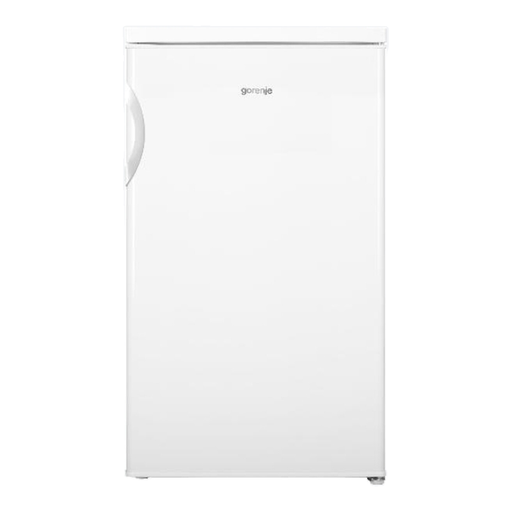
Why it's a good fit: With 133 litres of usable capacity, this refrigerator without a freezer compartment offers plenty of space for one person's weekly groceries. Its compact dimensions and reversible door hinge make it ideal for smaller kitchens or a first apartment.
The 133 L specification is the clear net usable capacity. At 39 dB, it's within an acceptable noise range for standard kitchens, and energy class D is a solid value for this price point.
Features a CrispZone drawer, which, according to the manufacturer, is designed to keep fruits and vegetables fresh for longer. The annual consumption of 72 kWh is low.
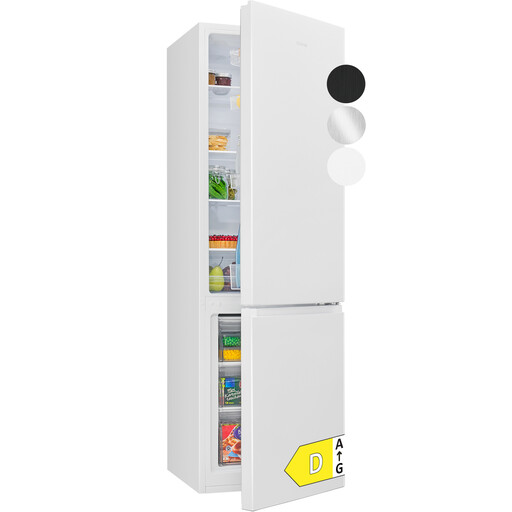
Why it's a good fit: This freestanding fridge-freezer combination, with 198 L of cooling and 71 L of freezer space (269 L total), provides ample room for a multi-person household. Its 180 cm height makes optimal use of vertical space.
The usable capacity figures are clearly broken down. The noise emission of 39 dB is a good value for an appliance of this size and is suitable for most living situations.
The 4-star freezer compartment allows for long-term food storage at ≤ -18°C. Height-adjustable glass shelves and adjustable feet offer great flexibility.
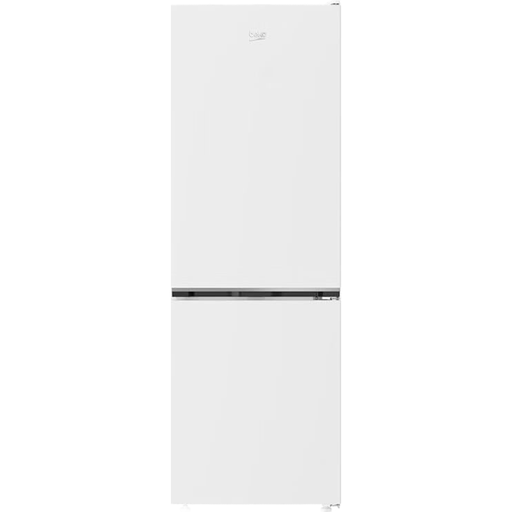
Why it's a good fit: This model is aimed at users who value low running costs and modern features. With a total volume of 301 litres, it is suitable for demanding households that appreciate convenience features like NoFrost.
At 35 dB, the appliance is very quiet and ideal for open-plan kitchens. Energy efficiency class C is excellent by the new standard and promises low running costs. The NoFrost technology prevents ice build-up, a common annoyance with simpler models.
According to Beko, the AeroFlow technology ensures even air distribution, which helps keep food fresh for longer. The HarvestFresh drawer simulates the natural day-night cycle with light to preserve the vitamin content in fruits and vegetables.
We have compiled a complete, up-to-date list of products that fully meet these strict selection criteria and German safety regulations.
1. How much usable capacity does my refrigerator need? A common recommendation is to plan for about 100 to 150 litres for a one- to two-person household. For each additional person in the household, you should add around 50 litres. Also, consider your shopping habits—if you shop less frequently but in larger quantities, you'll need more space.
2. What does the energy efficiency class mean for a refrigerator? The energy efficiency class, which ranges from A (highest efficiency) to G (lowest efficiency), indicates how economical an appliance is relative to its size and features. However, the more important figure for real-world costs is the annual consumption in kilowatt-hours (kWh) shown on the energy label. Multiply this value by your electricity price per kWh to calculate the annual running costs.
3. How loud can a refrigerator be without being disruptive? The noise level largely depends on the installation location and your personal sensitivity. For open-plan kitchens, models with a noise emission of under 35 dB are a good choice, as they are barely audible. Appliances between 36 and 39 dB are considered normally quiet and are unproblematic for most households. Values from 40 dB upwards can be perceived as a distracting hum in a quiet environment.