
Lieferung heute & morgen

Qualitätsgarantie

Willkommens-Angebote freischalten: KOSTENLOSE Lieferung | Bis zu 80 % RABATT | Kostenlose 30-Tage-JoyPlus-Testphase
App herunterladen
For many coffee lovers, the French press, also known as a press pot or coffee plunger, is the method of choice for a full-bodied, aromatic coffee. The preparation is a simple ritual that works without paper filters and allows for complete control over the brewing process. However, the market is crowded, and not every manual coffee maker lives up to its promise. Before you make a decision, you should be aware of the typical weaknesses that often only become apparent after a few weeks of use.
Common Pitfalls When Buying a French Press:
To avoid these problems, you should check three key features before buying. These largely determine the longevity, ease of use, and quality of your coffee.
The choice of material for the carafe is a fundamental decision.
A good filter system is crucial for a clear, sediment-free coffee. Look for a multi-part system consisting of a base plate, a spiral spring, and a fine-mesh screen. The spiral spring ensures that the screen is pressed firmly against the inner wall of the carafe, preventing any coffee particles from slipping past the sides. The screen itself should be made of durable stainless steel and be cleanly finished.
The size of the press pot should match your coffee consumption. Using a carafe that is too large for just one cup is inefficient. Common sizes are:
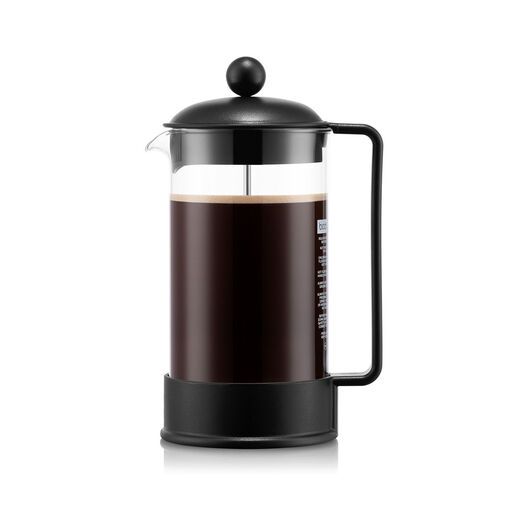
Why it's a good fit: Ideal for anyone looking to enter the world of French press coffee without a major investment. This model offers proven Bodum quality in a functional and affordable package.
The carafe is made of heat-resistant borosilicate glass. The lightweight yet sturdy frame made of BPA-free plastic protects the glass and ensures a secure stand, minimising the risk of instability.
Offers excellent value for money. Uses Bodum's standard filter system, which is known for delivering a clean brew.
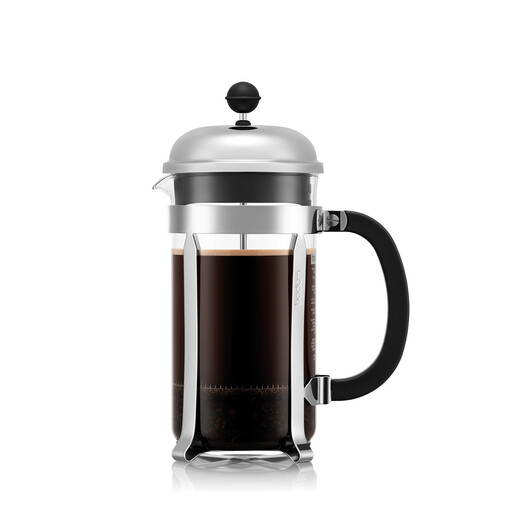
Why it's a good fit: The design classic for those who value aesthetics, high-quality craftsmanship, and durability. The Chambord is not just a coffee maker, but also a stylish element in any kitchen.
The robust steel frame effectively protects the glass carafe and ensures maximum stability. The precision-made, three-part stainless steel filter system reliably prevents coffee grounds from getting into the cup.
Timeless, iconic design. The steel construction of the frame and lid ensures a long service life. All parts are available as spare parts.
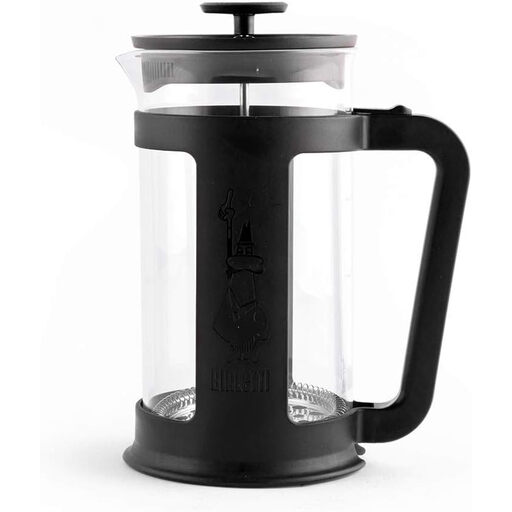
Why it's a good fit: A functional and robust choice from another heritage brand. The design with its aluminium body is built for durability in daily use and offers an alternative to classic glass-and-metal constructions.
The matte aluminium body makes the carafe more resistant to impacts than unprotected glass carafes. The construction is focused on stability and straightforward handling for daily use.
Lightweight yet durable aluminium body. The reusable filter system is eco-friendly and economical. Clean, functional design by Bialetti.
We have compiled a complete, up-to-date list of products that fully meet these strict selection criteria and safety standards.
A coarse grind is required for a French press. The consistency of the coffee grounds should resemble coarse sea salt. A grind that is too fine will cause particles to pass through the screen, making the coffee muddy and taste bitter due to over-extraction. It also makes the plunger difficult to press down.
Cleaning is straightforward. Remove the coarse coffee grounds (do not put them down the drain; they make great plant fertiliser). Rinse the carafe with warm water. The plunger's filter assembly can be unscrewed for a thorough cleaning. Most glass carafes and stainless steel filters are dishwasher-safe, but always check the manufacturer's instructions. The frame should be cleaned by hand.
A bitter taste is usually a sign of over-extraction. Possible causes are:
A muddy mouthfeel indicates that coffee grounds have passed through the filter, which can be attributed to a grind that is too fine or a faulty filter system.