
Lieferung heute & morgen

Qualitätsgarantie

Willkommens-Angebote freischalten: KOSTENLOSE Lieferung | Bis zu 80 % RABATT | Kostenlose 30-Tage-JoyPlus-Testphase
App herunterladen
A French press, also known as a plunger pot or coffee press, offers one of the most authentic methods for brewing full-bodied and aromatic coffee. This manual preparation is a ritual that works without electricity, paper filters, or pods. However, the market is flooded with models that look impressive at first glance but prove to be impractical or short-lived in daily use. Before you make a decision, it's crucial to understand the typical weaknesses often hidden behind polished chrome and lofty marketing promises.
This guide will show you the decisive criteria for selecting a durable and functional French press and introduce you to specific models for different user profiles.
Many coffee presses look great on the shelf but reveal their flaws after just a few weeks of use. Pay close attention to these three common problems to avoid a bad purchase.
To avoid these pitfalls, you should base your purchasing decision on objective features. Three parameters are of central importance.
The choice of material affects the durability, handling, and thermal properties of your plunger pot.
The size of the French press should match your consumption habits. Manufacturers' "cup" specifications can be misleading, as they often refer to small mocha cups (approx. 125 ml). It's better to go by the millilitre measurement.
The heart of any plunger pot is the filter unit. A high-quality system typically consists of three parts: an upper metal plate that guides the plunger, a fine-mesh filter screen in the middle, and a bottom plate that secures the screen. A crucial detail is a spring along the filter's edge, which ensures that the filter presses firmly against the glass wall, preventing any coffee grounds from escaping. The screen itself should be made of stainless steel to guarantee durability and taste neutrality.
Here are some recommendations tailored to specific use cases that purposefully avoid the pitfalls mentioned above.
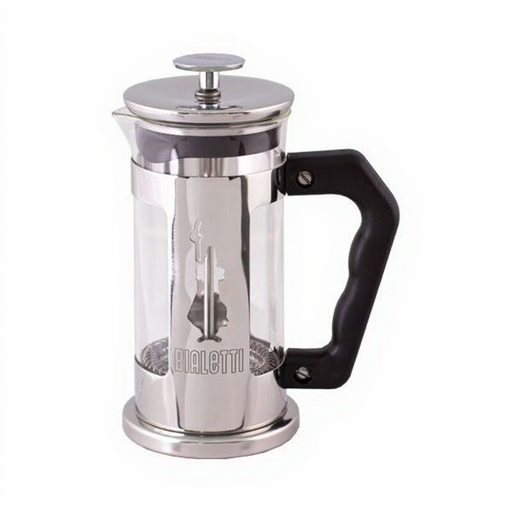
Why This Fits Their Persona: Ideal for coffee lovers who appreciate Italian design and brand quality. The 350ml size is perfect for a single serving or two small cups and fits into any kitchen without taking up much space.
The sturdy 18/10 stainless steel frame protects the borosilicate glass carafe from impacts (avoids Pitfalls 1 & 2). The Bialetti brand is known for its well-engineered coffee products, which is also reflected in the quality of its filter system.
Elegant design with high-quality materials. According to the manufacturer, the carafe is dishwasher-safe, which simplifies cleaning.
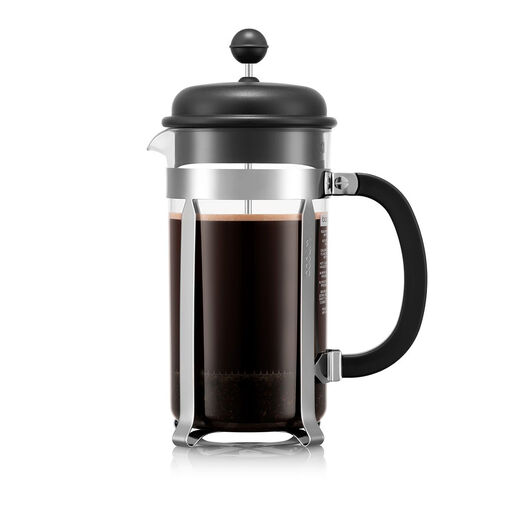
Why This Fits Their Persona: For households or offices where several cups of coffee are consumed daily. The Bodum French press is a classic, valued for its reliability and large one-litre capacity.
Bodum's time-tested design features a stable frame and an ergonomic handle (avoids Pitfall 2). The filter system is an industry standard, ensuring a clean separation of coffee and grounds (avoids Pitfall 3).
Large 1L French press capacity for up to 8 cups. The carafe is made of heat-resistant borosilicate glass and the frame is chrome-plated stainless steel.
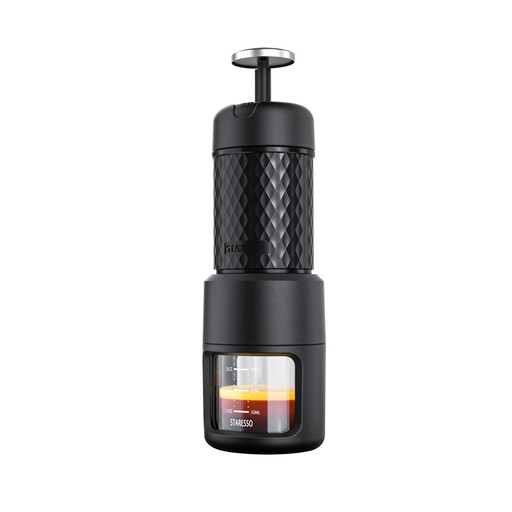
Why This Fits Their Persona: For travellers, campers, or commuters who don't want to compromise on high-quality coffee on the go. This device is extremely compact, requires no electricity, and is designed for mobile use.
This model completely bypasses the glass breakage trap (Pitfall 1) by using a 304 stainless steel inner chamber and a robust plastic and silicone shell. The construction is designed for maximum stability and portability.
Operates without electricity through manual pressure build-up. Compatible with ground coffee and capsules. Lightweight, compact, and easy to clean.
We've compiled a complete, up-to-date list of products that meet these strict selection criteria.
1. How much coffee powder and water do you use in a French press? A proven rule of thumb is a ratio of about 60 grams of coarsely ground coffee to 1 litre of water. For a smaller 350 ml press, that would be about 21 grams. Adjust the amount according to your desired strength. The water temperature should ideally be between 92 and 96 °C (198 and 205 °F) – so, off the boil.
2. Why does my coffee from the plunger pot taste bitter? Bitterness is often a sign of over-extraction. The most common causes are:
3. Can you clean a French press in the dishwasher? This depends on the specific model. Many glass and stainless steel carafes are dishwasher-safe. However, for models with plastic, wood, or painted metal parts, hand washing is often recommended to protect the materials. Always check the manufacturer's care instructions. The Bialetti coffee press Preziosa mentioned here is dishwasher-safe according to the manufacturer.