
Lieferung heute & morgen

Qualitätsgarantie

Willkommens-Angebote freischalten: KOSTENLOSE Lieferung | Bis zu 80 % RABATT | Kostenlose 30-Tage-JoyPlus-Testphase
App herunterladen
A French press coffee maker, often called a plunger pot or coffee press, represents the pinnacle of pure, full-bodied coffee enjoyment for many enthusiasts. The preparation is a deliberate ritual that forgoes paper filters, allowing the precious oils of the coffee bean to flow directly into your cup. However, the buying process is fraught with pitfalls that can quickly lead to disappointment and wasted money. While many models look similar at first glance, they differ in crucial details that determine their longevity and the quality of your coffee.
As your Joybuy Product Recommendation Officer, I'm here to help you navigate the typical marketing traps and make an informed decision. We'll focus on the facts so you can find a coffee maker that truly fits your needs.
The market is flooded with options, but not every shiny pot delivers on its promise. Pay close attention to these three common weak points to avoid a bad purchase:
To avoid the problems mentioned above, you should check three core features before buying a French press coffee maker. These objective criteria are more important than any marketing promise and will help you separate the wheat from the chaff.
The choice of material has a direct impact on taste, heat retention, and durability.
A precisely engineered filter is non-negotiable. A good system typically consists of three parts: a spiral plate that presses the filter against the carafe wall, a fine stainless-steel mesh filter, and a stabilising cross plate. It is crucial that the filter fits tightly and flush against the inner wall of the carafe to prevent coffee grounds from bypassing it as you press the plunger down. Models from established brands like Bodum or Bialetti place special emphasis on this.
Size descriptions can be confusing. A "cup" in this context usually corresponds to only about 125 ml (4.2 oz).
Instead of making a one-size-fits-all recommendation, we have identified models that meet specific requirements and successfully avoid the aforementioned pitfalls.
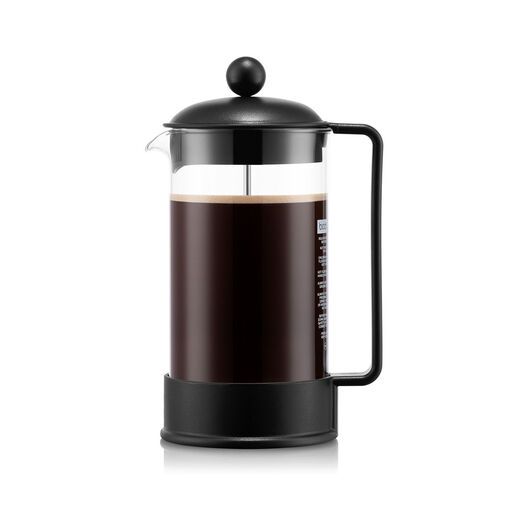
Why This Fits Their Persona: This model is ideal for anyone wanting to enter the world of French press coffee without compromising on core functionality. It offers proven Bodum quality at an accessible price.
According to the manufacturer, the carafe is made of heat-resistant borosilicate glass, and the BPA-free plastic frame provides stability. The standard Bodum filter system ensures a clean brew.
Large 1-litre capacity for up to 8 cups. Simple to use and clean. A proven design that focuses on the essentials.
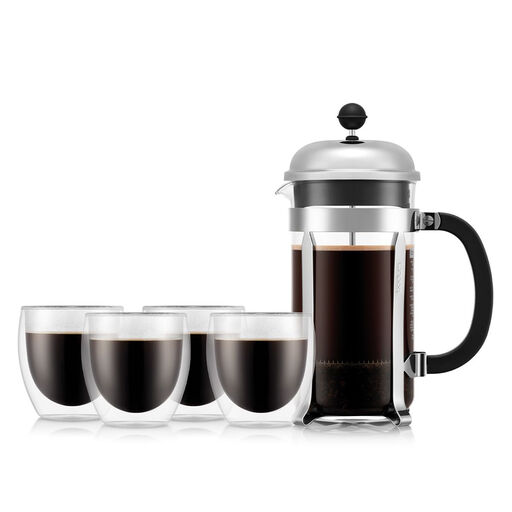
Why This Fits Their Persona: For users who value iconic design, high-quality materials, and a complete coffee experience. This set is a statement piece in any kitchen and provides everything for the perfect indulgence.
The sturdy, chrome-plated stainless steel frame reliably protects the borosilicate glass carafe. The precision filter system is a hallmark of the Chambord line and effectively prevents coffee grounds in your cup.
Complete set with four double-walled, insulating Pavina glasses. Timeless design, proven for decades. High-quality craftsmanship for a long service life.
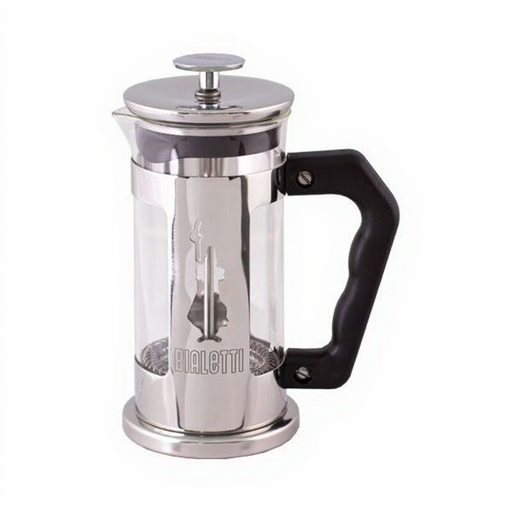
Why This Fits Their Persona: Perfect for a single-person household or for couples who enjoy one or two cups of freshly brewed coffee. This Bialetti coffee maker combines compact dimensions with elegant Italian design.
The use of 18/10 stainless steel for the holder and borosilicate glass for the carafe ensures stability and durability. The design, featuring the Bialetti logo on the filter plunger, is a testament to brand quality.
Compact 350 ml size. According to the manufacturer, the glass carafe is dishwasher-safe, which simplifies cleaning. Elegant design from a storied Italian brand.
We have compiled a complete, up-to-date list of products that fully meet these strict selection criteria and German safety regulations.
1. What is the ideal grind size for a French press? A coarse grind is crucial for a French press. The consistency should resemble coarse sea salt or breadcrumbs. A grind that is too fine, like that used for espresso, can clog the filter, making it difficult to press the plunger down and resulting in an over-extracted, bitter coffee with a lot of sediment in the cup.
2. How do I clean a French press coffee maker correctly? Cleaning is straightforward. Remove the coffee grounds (preferably with a wooden or plastic spoon to avoid scratching the glass) and rinse the carafe. The plunger can usually be unscrewed to clean all parts thoroughly. Many models, especially the glass carafes and stainless steel filters, are dishwasher-safe, such as the Bialetti Preziosa. Always follow the manufacturer's instructions.
3. Can I also brew tea in a French press? Yes, a French press is also excellent for brewing loose-leaf tea. The method is identical: add the loose tea to the carafe, pour hot (not boiling) water over it, let it steep, and then slowly press the plunger down. This effectively separates the tea leaves from the brew. However, it is advisable to use a separate press for tea to avoid any flavour transfer from the coffee.