
Lieferung heute & morgen

Qualitätsgarantie

Willkommens-Angebote freischalten: KOSTENLOSE Lieferung | Bis zu 80 % RABATT | Kostenlose 30-Tage-JoyPlus-Testphase
App herunterladen
Deciding on a French press is often the first step into the world of artisanal coffee. However, the market is flooded with models that look appealing at first glance but prove to be impractical or short-lived in daily use. As your Joybuy Product Recommendation Officer, I'll filter out the noise and provide the essential information you need to make an informed decision and avoid falling for empty marketing promises.
Many buyers get frustrated with three specific problems that often only appear after a few weeks. Knowing what they are is the key to making the right choice.
To avoid these common pitfalls, you should check three key technical features before buying. These factors define the durability and functionality of your future French press.
The material is crucial for both taste and durability. For the carafe, borosilicate glass has become the standard. It's heat-resistant, non-porous (so it won't affect taste), and more robust than conventional glass. Some models also feature double-walled stainless steel carafes, which keep coffee hot for longer but make it difficult to see the fill level.
The frame should securely encase the glass carafe and provide a stable base. Frames made of stainless steel are generally more durable and resistant to warping than basic plastic holders. Ensure the handle is firmly attached to the frame and feels comfortable to hold.
A good filter system consists of three parts: an upper metal disc, the fine-mesh stainless steel screen in the middle, and a lower base plate. The quality of the mesh and the spiral spring around its edge is critical. A firm, tight-fitting spring creates a seal against the carafe wall, preventing coffee grounds from bypassing the filter as you press the plunger down. The mesh itself should be well-finished, with no frayed edges.
Manufacturer size specifications often refer to small cups of about 125 ml (4 oz). Therefore, a 1L (34 oz) French press doesn't yield ten cups, but rather three to four large mugs of coffee. Consider how much coffee you typically prepare:
Here are a few models that, based on objective criteria, are excellent choices for different types of users.
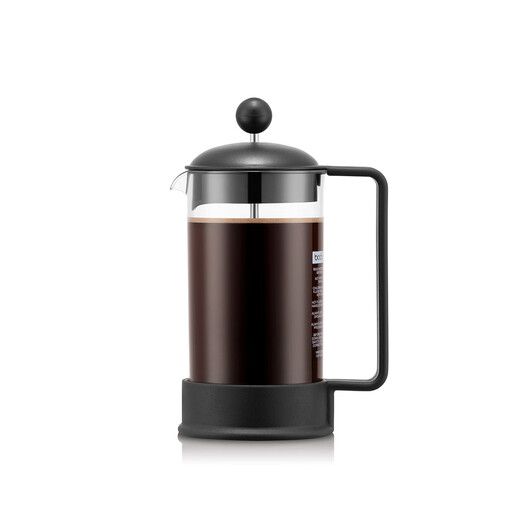
Why it's a good fit: Ideal for anyone looking to start the ritual of manual coffee brewing without a major investment. It offers the proven functionality of a well-known brand in a simple, back-to-basics design.
The model uses a borosilicate glass carafe and a BPA-free plastic frame, avoiding the problems of unsuitable glass and unstable, low-cost constructions.
Offers a reliable brewing system and brand-name quality at a very accessible price. Also available as a 1-litre version.
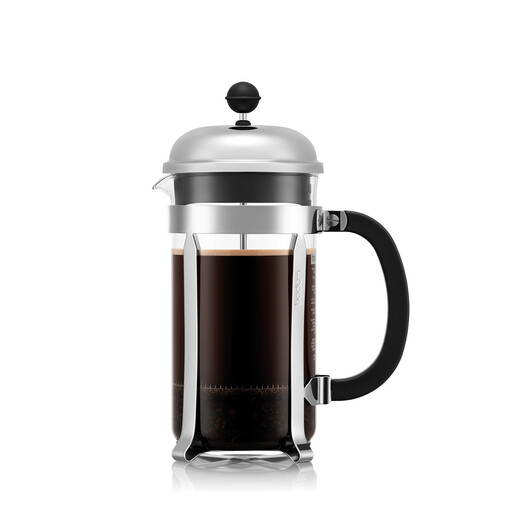
Why it's a good fit: For coffee lovers who appreciate iconic design, high-quality materials, and long-lasting durability. The Chambord is a classic that looks great in any kitchen.
The robust, chrome-plated steel frame effectively protects the glass carafe and ensures maximum stability. This counteracts the problem of wobbly and unstable frame constructions.
A timeless design, proven for decades, combined with durable materials. This Bodum coffee maker is an investment in lasting coffee quality. Also available as a 350 ml version.
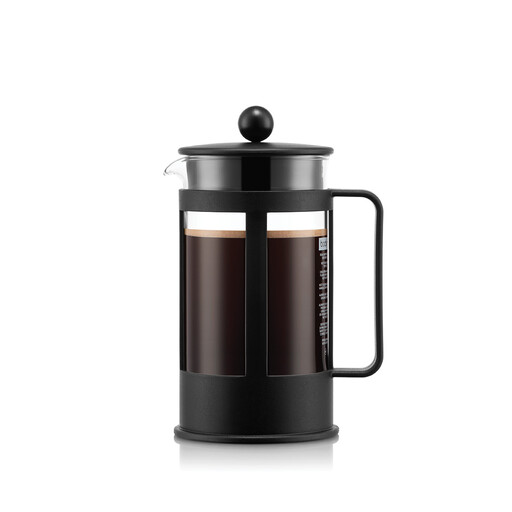
Why it's a good fit: For daily use or serving guests, a large capacity and robust handling are essential. Its modern design with a protective frame is built for functionality.
The plastic frame is designed to protect the glass carafe from bumps while ensuring safe handling. This helps prevent breakage from frequent use and cleaning.
We have compiled a complete, up-to-date list of products that fully meet these strict selection criteria and safety regulations.
A coarse grind is required for brewing with a French press. The coffee grounds should have a consistency similar to coarse sea salt. A grind that is too fine will clog the metal filter and lead to over-extraction, making the coffee taste bitter. For the best results, we recommend freshly grinding your beans with a manual coffee grinder, such as the TIMEMORE C5 Pro, which allows for precise grind size adjustment.
Cleaning is straightforward. Remove the used coffee grounds (they make great plant fertiliser). Next, disassemble the filter unit on the plunger. Rinse all parts—the carafe, plunger, and individual filter components—thoroughly with warm water. Avoid using abrasive sponges on the glass carafe. Check the manufacturer's instructions to see if your model is dishwasher-safe. Regular, thorough cleaning prevents old coffee oils from building up and affecting the taste of your brew.
A French press and a moka pot, also known as a stovetop espresso maker (like the Bialetti Coffee Maker), are two different methods for brewing coffee manually. The French press uses the full-immersion method to produce a full-bodied, smooth coffee with a rich texture. In contrast, a moka pot uses steam pressure to force water through the coffee grounds, resulting in a strong, concentrated coffee similar to an espresso. The choice depends on your personal taste preference.