
Lieferung heute & morgen

Qualitätsgarantie

Willkommens-Angebote freischalten: KOSTENLOSE Lieferung | Bis zu 80 % RABATT | Kostenlose 30-Tage-JoyPlus-Testphase
App herunterladen
The French press, also known as a coffee press or plunger pot, is the epitome of uncomplicated, flavour-rich coffee preparation for many enthusiasts. Instead of relying on complex technology and paper filters, it uses direct immersion and filtration to produce a full-bodied coffee that retains its natural oils and aromas. However, selecting the right model comes with a few pitfalls that can quickly sour the coffee experience. Many buyers are swayed by exaggerated marketing promises or an appealing design, only to find that their coffee maker has significant flaws after a short time.
This guide will help you avoid these common mistakes. We focus on the objective features that define a good French press, so you can make an informed decision that suits your needs—whether it's for a quick coffee in the morning, for the office, or for use while camping.
Before deciding on a model, it's helpful to know the most common problems that arise with low-quality products.
To avoid the problems mentioned above, you should focus on three essential technical parameters. These determine the longevity, functionality, and quality of your coffee.
The material of the carafe directly affects heat retention and durability.
A good filter system is crucial for a clean, sediment-free result. A high-quality filter usually consists of a fine stainless steel mesh. Some models feature an additional silicone seal around the edge, which ensures the filter presses firmly against the carafe wall and prevents any grounds from slipping past. The plunger itself should be made of solid stainless steel to ensure stability when pressing down.
No French press can reach its full potential if the coffee is ground too finely. This brewing method requires a coarse grind, roughly the consistency of coarse sea salt. Powder that is too fine will clog the filter and be pushed through, resulting in an over-extracted, bitter, and muddy coffee. A good manual coffee grinder or an electric grinder with an adjustable burr set is therefore a worthwhile addition to optimise the result.
Based on these objective criteria, we have compiled a selection of models for different user profiles.
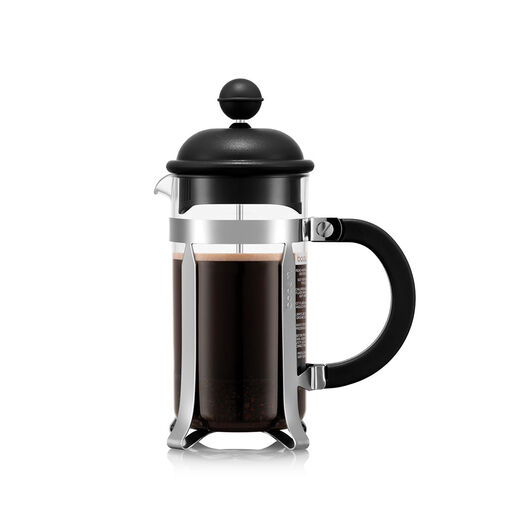
Why This Fits Their Persona: Ideal for individuals or couples who prepare 1-2 cups of fresh coffee daily. The classic design and compact size fit into any kitchen and are designed for straightforward, everyday use.
The sturdy frame protects the borosilicate glass carafe from impacts. The proven Bodum filter system ensures a clean separation of coffee grounds and beverage.
Compact 350ml capacity, ideal for up to 3 cups. Easy to clean, as all parts can be disassembled.
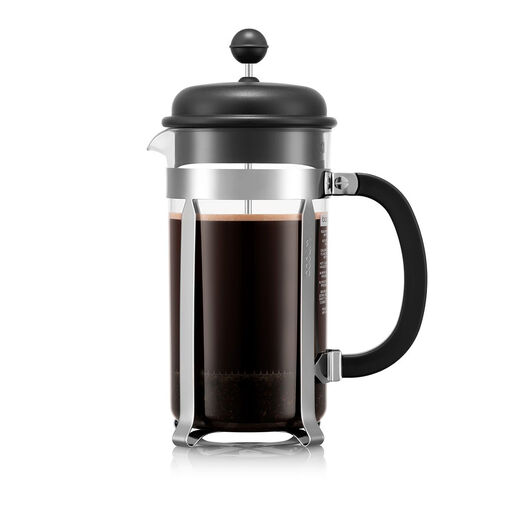
Why This Fits Their Persona: Perfect for families, office teams, or when entertaining guests. The large 1-litre volume is enough for up to 8 cups, making preparation for multiple people simple and efficient.
This model solves the problem of mismatched capacity for heavy users. It offers sufficient volume without needing to brew multiple batches.
Large 1-litre capacity. Utilises the same reliable filter technology and robust design as the smaller models in the series.
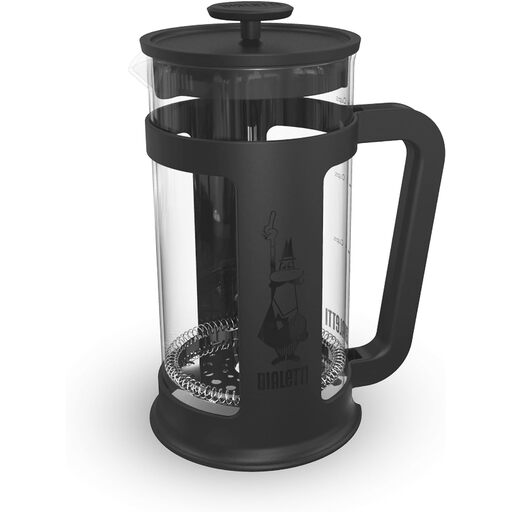
Why This Fits Their Persona: For those who don't want to miss out on good coffee, even on the go. This Bialetti coffee press is specifically designed for use outdoors, while travelling, or when camping.
The stainless steel body makes the press extremely robust and resistant to knocks and drops. This completely eliminates the risk of a fragile glass carafe.
Durable stainless steel construction. Compact size and low weight, ideal for mobile use.
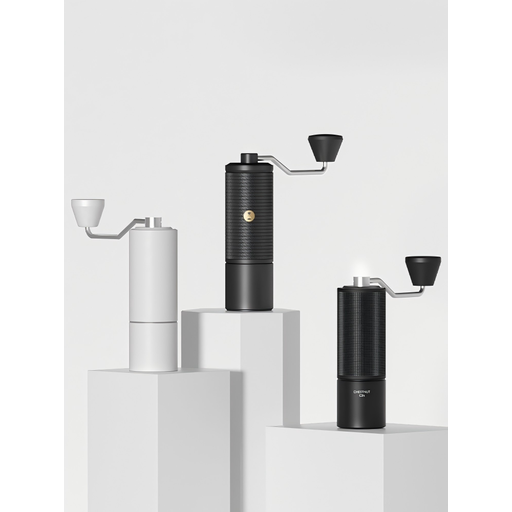
Why This Fits Their Persona: For coffee lovers who understand that beans should be ground just before brewing. This manual coffee grinder provides full control over the grind size.
Prevents the fundamental mistake of using pre-ground, overly fine coffee powder. A precise, coarse grind is the prerequisite for a successful French press.
Precisely adjustable burr set for a consistent, coarse grind. Manual, power-free operation, making it an ideal companion to a French press.
We have compiled a complete, up-to-date list of products that fully meet these strict selection criteria and comply with European safety regulations.
For brewing in a French press or plunger pot, a coarse grind is required. The coffee particles should be roughly the size of coarse sea salt or semolina. A grind that is too fine will allow particles to pass through the metal filter, resulting in a bitter and "muddy" coffee.
Cleaning is straightforward. Remove the coffee grounds (it's best to dispose of them in organic waste or compost, not down the drain). Then, unscrew the filter assembly on the plunger and rinse all parts thoroughly under warm water. Most glass carafes and stainless steel parts are dishwasher-safe, but always check the manufacturer's instructions.
Yes, a French press is also very well-suited for brewing loose-leaf tea. The process is identical: add tea to the carafe, pour hot (not boiling) water over it, let it steep, and then slowly press the plunger down. However, it is advisable to use a separate press for tea, as coffee can leave behind intense aromas that could affect the taste of the tea.