
Lieferung heute & morgen

Qualitätsgarantie

Willkommens-Angebote freischalten: KOSTENLOSE Lieferung | Bis zu 80 % RABATT | Kostenlose 30-Tage-JoyPlus-Testphase
App herunterladen
For many coffee lovers, the French press, also known as a press pot or plunger pot, is the epitome of coffee indulgence. It promises a full-bodied, aromatic coffee, and its preparation is a mindful ritual. However, the market is flooded with models that promise more than they can deliver. Before you buy a new coffee maker, it's crucial to understand the typical weaknesses that often only become apparent after a few weeks, souring the coffee experience.
This guide will show you the three most common flaws found in budget models and explain which technical features you should look for to find a durable and functional French press.
To avoid these pitfalls, you should base your purchasing decision on objective criteria. Three components are crucial for the function and longevity of a French press.
The choice of material affects both the taste and the handling.
A high-quality filtration system is essential for a clear, sediment-free coffee. Look for a three-part stainless steel system. This typically consists of:
This construction ensures a clean seal and prevents coffee grounds from bypassing the filter when you press the plunger down.
The capacity of a French press is often stated in cups and litres. However, these figures can vary. It's best to use the volume in litres as your guide:
Instead of making a one-size-fits-all recommendation, we have selected models that suit different user profiles and meet the quality criteria mentioned above.
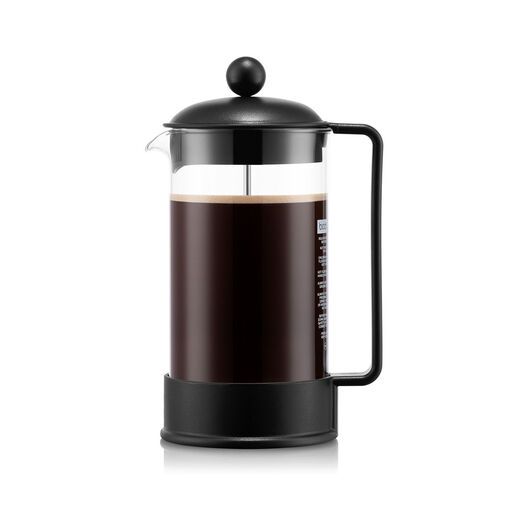
Why it's a great fit: The BRAZIL series by Bodum is a classic for daily use. It focuses on the essentials: reliable function and simple handling. Ideal for anyone looking for a proven, straightforward coffee maker for their morning brew.
The carafe is made of heat-resistant borosilicate glass. The lightweight yet sturdy plastic frame (BPA-free) protects the glass and ensures a secure footing, thus avoiding the pitfall of an unstable construction.
Proven Bodum filtration system for clean coffee. The functional design makes it a durable companion with excellent value for money.
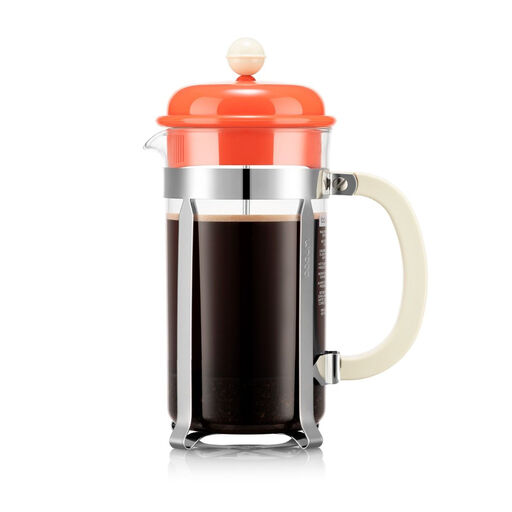
Why it's a great fit: For those who view their coffee maker as a stylish kitchen accessory. The Bodum Caffettiera combines iconic design with modern colours, making a deliberate statement on the breakfast table or kitchen counter.
The chrome-plated steel frame effectively protects the borosilicate glass carafe from bumps and ensures stability. The proven 3-part stainless steel filtration system reliably prevents grounds in your cup.
Combines reliable brewing quality with an expressive design. The large 1-litre capacity makes it as practical as it is beautiful.
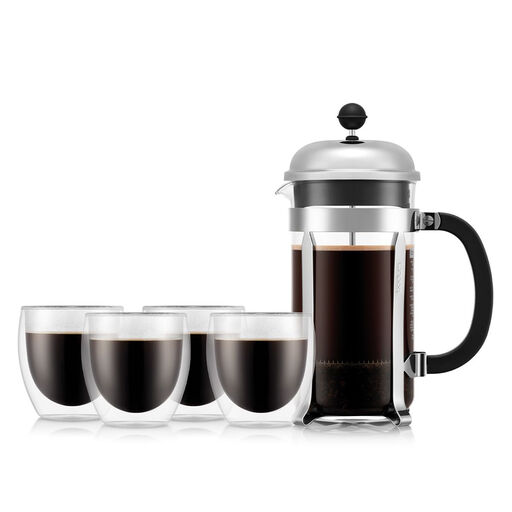
Why it's a great fit: This set is ideal for anyone who loves to entertain and values a cohesive, elegant presentation. The CHAMBORD is Bodum's premium model, complemented here by matching double-walled glasses.
The CHAMBORD line represents the highest quality materials. The robust stainless steel frame and high-end manufacturing process address all three typical weaknesses: the glass is protected, the filter is precise, and the entire construction is extremely stable.
A complete, high-quality set for the perfect coffee experience. The double-walled PAVINA glasses keep coffee warmer for longer and are comfortable to hold.
We have compiled a complete, up-to-date list of products that fully meet these strict selection criteria and rigorous quality and safety standards.
A coarse grind is crucial for the French press. The coffee beans should be ground to a consistency similar to coarse sea salt. A grind that is too fine will cause particles to pass through the filter, make the plunger difficult to press down, and result in a bitter coffee due to over-extraction.
Cleaning is straightforward. Remove the coffee grounds (preferably with a wooden or plastic spoon to avoid scratching the glass). Then, unscrew the filter assembly from the plunger and rinse all parts thoroughly under warm water. Most glass carafes and stainless steel parts are dishwasher-safe, but it is advisable to check the manufacturer's instructions to ensure the longevity of finishes like chrome or coloured plastic.
A bitter taste is usually a sign of over-extraction. The most common causes are: