
Lieferung heute & morgen

Qualitätsgarantie

Willkommens-Angebote freischalten: KOSTENLOSE Lieferung | Bis zu 80 % RABATT | Kostenlose 30-Tage-JoyPlus-Testphase
App herunterladen
The French press, also known as a coffee press or plunger pot, is a cherished method for brewing full-bodied, aromatic coffee without electricity or paper filters. However, buying a new cafetière comes with hidden pitfalls that often only become apparent after a few weeks. Certain design flaws or inferior materials can sour your coffee experience and lead to rapid wear and tear.
As your Joybuy Product Recommendation Officer, I'm here to help you identify these pitfalls. This guide focuses on the objective features that define a durable and functional French press, ensuring your investment pays off in the long run.
Many models on the market look appealing at first glance, but a closer inspection reveals critical weaknesses. Pay close attention to these three points to avoid buyer's remorse:
To avoid the problems mentioned above, you should check the following three core parameters before buying a new French press. These are crucial in determining the longevity, functionality, and safety of your coffee maker.
The choice of carafe material affects both heat retention and durability.
The heart of any plunger pot is the filter unit. A high-quality filter consists of a fine, stainless steel mesh that retains its shape even after many cleanings. The surrounding spiral spring is crucial: it must have enough tension to press the screen firmly against the inner wall of the carafe. This is the only way to reliably keep coffee grounds out of your brew.
The size of a French press is often indicated in cups, where one "cup" frequently corresponds to just 125 ml. A 3-cup press (approx. 350 ml) is therefore primarily suitable for a single large mug of coffee. For the needs of two people or for larger quantities, models with 8 cups (approx. 1 liter) are the more practical choice. Before buying, consider how many people you typically want to serve coffee to.
Here are some models that represent a considered choice for different user profiles, based on objective criteria.
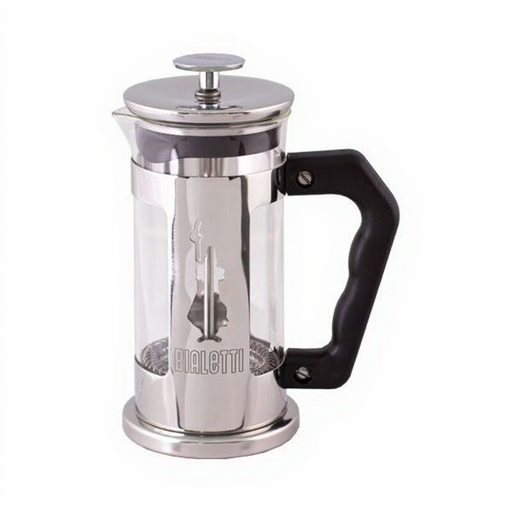
Why This Fits Their Persona: Ideal for individuals or couples who value proven brand quality and a classic design. The Bialetti French Press is a reliable tool for daily coffee enjoyment without unnecessary frills.
The carafe is made of heat-resistant borosilicate glass, which minimises the risk of breakage. The 18/10 stainless steel frame ensures stability and a secure plunger mechanism.
A combination of durable, flavour-neutral materials and an established design. Dishwasher-safe for easy cleaning, according to the manufacturer's specifications.
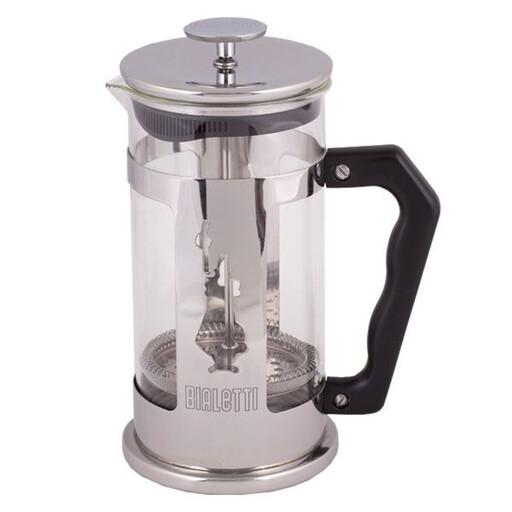
Why This Fits Their Persona: Perfect for families, office teams, or anyone who regularly prepares multiple cups of coffee. The large capacity covers the demand for breakfast or when entertaining guests.
Despite its size, the mechanism remains stable. The proven combination of borosilicate glass and a supportive stainless steel frame provides the necessary durability, even in this 1-liter model.
Large volume for up to 8 cups (according to the manufacturer). Offers the same reliable material quality and handling as its smaller counterpart.
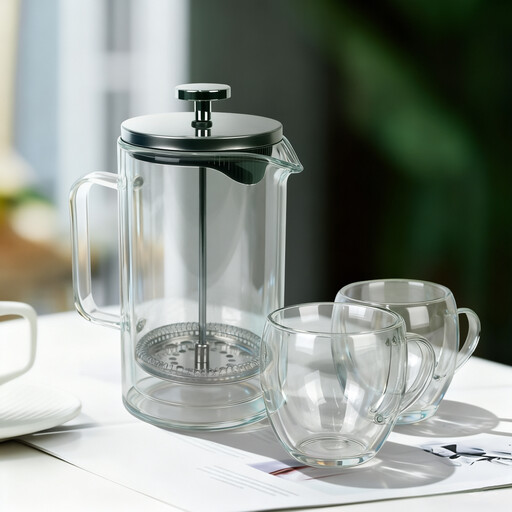
Why This Fits Their Persona: For users who appreciate modern aesthetics and want to keep their coffee warm for longer. The set, which includes a matching double-walled mug, is also a visual highlight.
The double-walled construction of borosilicate glass provides good insulation while protecting against the risk of breakage from thermal shock. The exterior remains comfortably cool to the touch.
Improved heat retention compared to single-walled glass presses. The stainless steel filter system ensures a clean extraction. Delivered as a complete set.
If you prefer an unbreakable and exceptionally well-insulated alternative, we have compiled a comprehensive list of products that meet these strict selection criteria.
A coarse and consistent grind is crucial for brewing with a French press. If the coffee powder is too fine, it will clog the metal screen, make it difficult to press the plunger down, and lead to over-extraction, which makes the coffee taste bitter. An inconsistent grind results in uneven extraction. A manual coffee grinder with an adjustable mechanism, like the Cuisync Manual Coffee Grinder, provides the necessary control to achieve the optimal result.
Cleaning is straightforward. First, remove the coarse coffee grounds. Then, unscrew the filter assembly at the end of the plunger. Rinse all individual parts (screen, spiral spring, retaining plate) thoroughly under warm water. The carafe itself can also be rinsed out. Many glass and stainless steel models are dishwasher-safe, as stated by the manufacturer for the Bialetti Preziosa. However, always check the specific care instructions for your product.
A bitter taste is almost always a sign of over-extraction. The most common causes are: