
Lieferung heute & morgen

Qualitätsgarantie

Willkommens-Angebote freischalten: KOSTENLOSE Lieferung | Bis zu 80 % RABATT | Kostenlose 30-Tage-JoyPlus-Testphase
App herunterladen
A French press coffee maker, also known as a plunger pot or coffee press, is the epitome of a delightful and mindful coffee ritual for many enthusiasts. The method promises a full-bodied, aromatic coffee because the oils and fats from the coffee grounds are not absorbed by a paper filter. However, the market is flooded with models of widely varying quality. Before you make a purchasing decision, it's crucial to know the typical weak points that often only become apparent after a few weeks of use.
Many buyers become frustrated with three central problems:
This guide will help you navigate these pitfalls and find a manual coffee maker that is durable, functional, and safe.
To avoid a bad purchase, you should focus on a few, but crucial, technical parameters. These are the primary determinants of the longevity and quality of your coffee experience.
The centrepiece of any cafetière is the carafe. There are two established material options here, each with clear advantages and disadvantages:
A high-quality filter system is essential to keep coffee grounds out of your cup. A proven system consists of three parts: a spiral plate that presses against the carafe wall, a fine stainless steel mesh filter, and a cross plate for stabilisation. This design ensures clean filtration and can be easily disassembled for thorough cleaning. Models with a single-piece or overly coarse mesh filter often lead to an unsatisfying, "gritty" result.
The size of the coffee maker should match your consumption habits. Capacities are usually given in litres or cups (where one cup is often calculated as approx. 125 ml).
Instead of presenting an overwhelming list, we have matched a few models to typical user profiles.
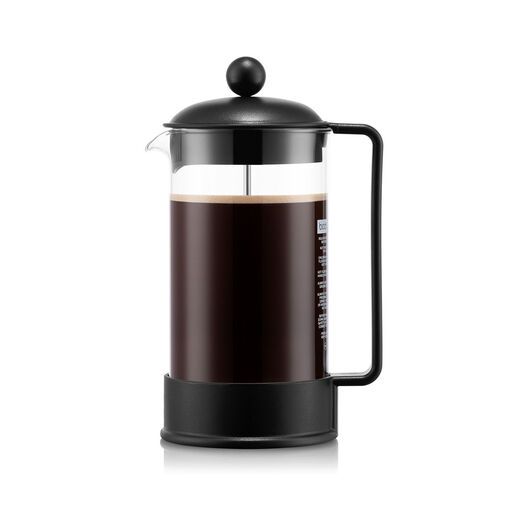
Why it's a good fit: It offers proven Bodum quality and a large capacity at an accessible price. Ideal for starting your journey into manual coffee brewing without compromising on functionality.
The carafe, made of heat-resistant borosilicate glass, and the sturdy plastic frame withstand temperature fluctuations and daily use better than no-name budget products.
Large 1-litre capacity for up to 8 cups; proven and easy-to-use brewing system.
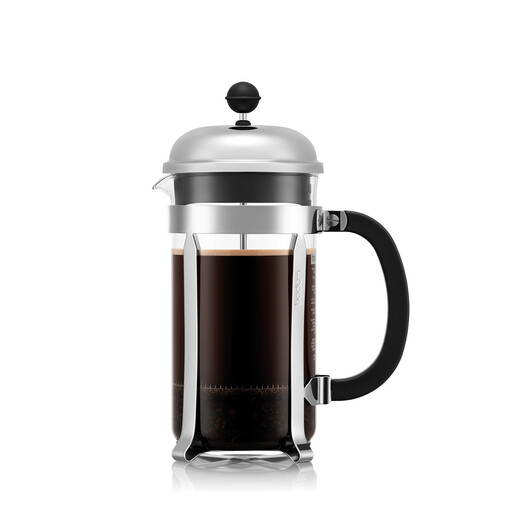
Why it's a good fit: As a design icon among Bodum coffee makers, the Chambord line combines high-quality materials with a timeless aesthetic. The steel frame is not just a visual highlight but also provides additional protection for the glass carafe.
The robust steel frame ensures high stability and durability. It prevents the wobbling that is often a problem with cheaper models that have simple plastic holders.
Timeless, elegant design; durable construction of steel and borosilicate glass.
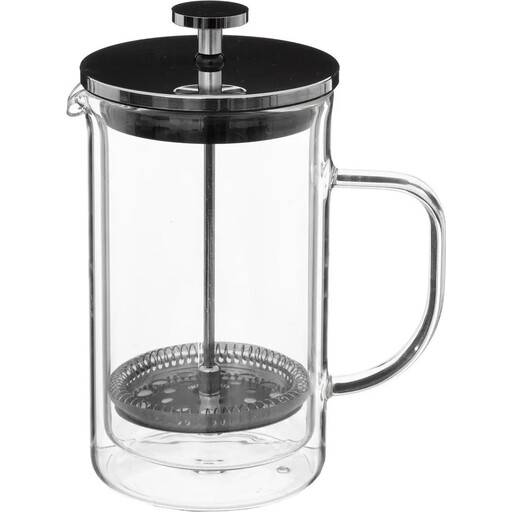
Why it's a good fit: The double-walled construction keeps coffee significantly warmer for longer – ideal for anyone who wants to enjoy their second cup as hot as their first. The 600 ml capacity is a great middle-ground for 1-2 people.
The double-walled glass is not only thermally efficient but also more robust than single-walled alternatives, reducing the risk of cracks from thermal shock.
Improved heat insulation thanks to double-walled glass; modern, minimalist design.
We have compiled a complete, up-to-date list of products that fully meet these strict selection criteria and safety regulations.
For brewing in a coffee press, a coarse grind is crucial. If the coffee grounds are too fine, they can clog the metal filter, making it difficult to press the plunger down and leading to an over-extracted, bitter taste. Additionally, fine particles can pass through the filter and into your cup. A grind size reminiscent of coarse sea salt is a good benchmark.
Regular and thorough cleaning is important for both taste and longevity. After use, you should remove the coffee grounds (do not rinse them down the drain, as this can cause blockages). The plunger can then be easily unscrewed. The glass carafe and the individual parts of the filter (spiral plate, mesh, cross plate) can usually be cleaned with warm water and washing-up liquid. Many models, especially those with glass carafes, are dishwasher-safe – check the manufacturer's instructions for this.
The characteristic flavour comes from the "full immersion" method, where the coffee grounds are completely surrounded by water for the entire brewing time. Unlike pour-over methods where a paper filter retains many of the aromatic oils and fats, the metal filter of the French press allows them to pass through. The result is a coffee with a fuller body, a richer texture, and a more intense aroma.