
Lieferung heute & morgen

Qualitätsgarantie

Willkommens-Angebote freischalten: KOSTENLOSE Lieferung | Bis zu 80 % RABATT | Kostenlose 30-Tage-JoyPlus-Testphase
App herunterladen
A French press coffee maker needs no power connection, coffee pods or complicated steps. Even so, models vary considerably in capacity, filter design, materials and care requirements. If you focus only on the design or a large cup capacity, you may end up with a vessel that is too small for everyday use, difficult to clean or more delicate than expected.
This buying guide explains which details matter before you buy and which coffee maker is best suited to your home, office, travels or occasional tea brewing.
A 1-litre French press is often described as a coffee press for 8 cups. However, this usually refers to smaller serving sizes rather than eight large mugs. A litre is practical when serving several people, while a smaller 350-ml coffee press may be more suitable for one person.
Before ordering, the capacity in millilitres or litres should therefore be your main consideration. Some space also remains in the vessel once the filter has been inserted, so the usable amount may be slightly below the stated capacity.
Borosilicate glass is used for its temperature resistance and because it gives you a clear view of the brewing process. However, it is still glass and should not be placed on a hot hob or exposed to sudden changes in temperature. According to the product information, the Bialetti Preziosa has a maximum temperature limit of 120 °C.
Models with stainless steel housings can provide additional protection for the glass and make serving safer. Even so, this does not replace careful handling, particularly when removing the glass carafe.
A dishwasher-safe French press is more convenient to clean. Nevertheless, you should always follow the relevant manufacturer's instructions: some products can be placed in the dishwasher in their entirety, while for others the approval applies only to certain components. Models with aluminium housings or coated surfaces are often specifically intended for hand washing.
A removable filter and an easy-to-access glass vessel are just as important for everyday care as the “dishwasher-safe” label.
A stainless steel and borosilicate glass French press coffee maker combines a clear view of the brewing process with a sturdy outer frame. 18/10 stainless steel, for example, is specified for the Bialetti Preziosa. Plastic elements can reduce the weight and make the handle more comfortable to hold, but should not come into contact with direct heat.
Double-wall models can keep coffee warm for longer, but they are not automatically suitable for dishwashers or microwaves. According to the product description, hand washing is recommended for the Coseeda Double-Wall Set; it is not designed for use on the hob or in the microwave.
A French press is a manual coffee maker that normally uses a reusable metal mesh filter. This means there is no need for paper filters. A coffee maker with a permanent filter should have a sturdy plunger and fine mesh, so that as little coffee sediment as possible reaches the cup.
Ground coffee is generally best prepared using a fairly coarse grind. Very finely ground coffee can make the plunger harder to press down and leave more residue in the drink. If you grind your own beans, you will also need a grinder with a suitable coarse setting for French press coffee.
For an even brew, start by grinding the coffee coarsely, then pour over hot water that is not bubbling. After steeping for several minutes, slowly press the plunger down. You can adjust the exact coffee-to-water ratio to suit your personal taste.
Similar basic steps apply when using a French press for tea. It is important to remove coffee and tea residue thoroughly, as flavours can cling to the filter and the carafe. After every use, we recommend:
If easy cleaning is particularly important to you, check the manufacturer's instructions regarding dishwasher use before buying.
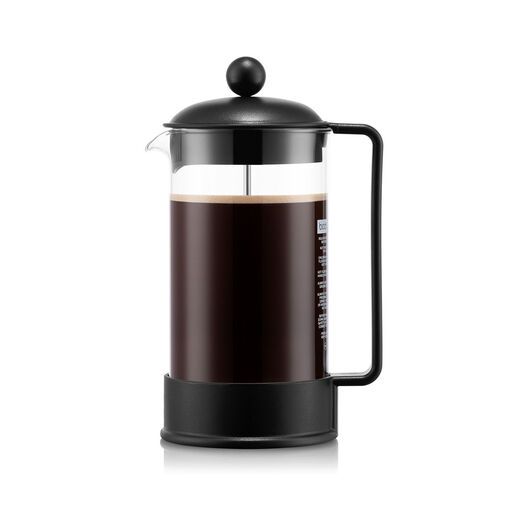
Why this product suits this profile: The 1-litre version is designed for households, small offices or serving several people, and works entirely manually.
The 1-litre capacity is clearly stated. The manufacturer also indicates that it is suitable for cleaning in the dishwasher.
1-litre capacity, three-part stainless steel filter and, according to the product description, dishwasher suitability.
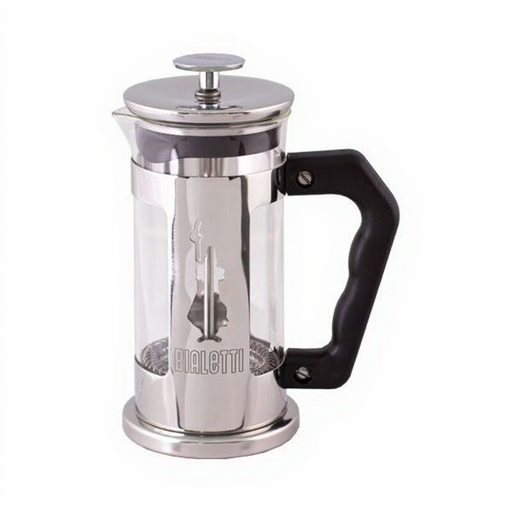
Why this product suits this profile: The combination of an 18/10 stainless steel housing and borosilicate glass is ideal for users who prioritise material specifications and a compact size.
The actual 350 ml capacity is stated instead of an unclear large-cup measurement. The maximum temperature of 120 °C must be observed.
350 ml capacity, stainless steel housing, borosilicate glass and, according to the manufacturer, dishwasher suitability.
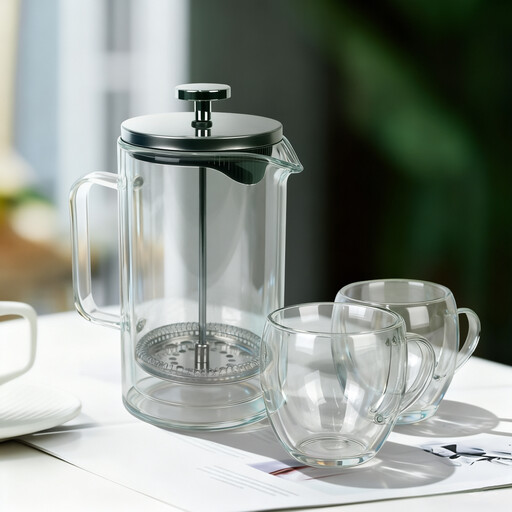
Why this product suits this profile: This set is designed for users who want to brew coffee directly and serve it in a matching double-walled cup.
The care instructions are clear: hand wash only, no microwave and no direct use on the hob. This makes it easier to assess whether the design is suitable for its intended use.
High-borosilicate glass, stainless steel components, double-wall construction and an additional insulated cup.
We have put together a complete, regularly updated list of products that fully meet these strict selection criteria and the safety regulations applicable in the EU.
This depends on the capacity and the strength you prefer. A 1-litre French press is suitable for several servings, while 350 ml is generally intended for one to three smaller cups. As a starting point, you can use a rough coffee-to-water ratio and then adjust it to taste.
A coarse grind is usually best for a French press coffee maker. Coffee that is ground too finely can pass through the mesh, clog the filter and create additional resistance when pressing the plunger down. If you grind your own coffee, choose a grinder with a clearly defined coarse setting.
Its lifespan depends on the materials, filter construction and care. Stainless steel frames are less prone to breakage in everyday use than an unprotected glass vessel. Borosilicate glass still needs to be handled with care. Regular cleaning, avoiding thermal shock and replacing a damaged filter can help extend its service life. Avoid incorrect assumptions about dishwasher suitability and do not use the press on the hob.