
Lieferung heute & morgen

Qualitätsgarantie

Willkommens-Angebote freischalten: KOSTENLOSE Lieferung | Bis zu 80 % RABATT | Kostenlose 30-Tage-JoyPlus-Testphase
App herunterladen
A French press coffee maker needs neither electricity nor paper filters and is ideal for brewing coffee from ground beans. However, models vary considerably in capacity, materials, ease of cleaning and portability. If you focus only on colour or a low price, it is easy to overlook important details.
Selected by: Joybuy Product Recommendation Officer
A specification such as “8 cups” does not automatically mean eight large mugs of coffee. For many manufacturers, eight cups correspond to around 1 litre capacity. If you use large mugs or want several refills, this quantity may be less than expected. Always check the measurement in millilitres or litres.
A 1-litre French press is usually suitable for a household with several people, an office or serving coffee to guests. For a single serving, a 350 ml French press, or a model with a capacity of 0.35 litres, is often more convenient.
For a glass coffee maker, the product description should state clearly whether heat-resistant borosilicate glass is used. This material is designed to withstand temperature fluctuations, but it remains breakable. A protective frame made from plastic or stainless steel can provide additional protection when pouring and putting the coffee maker down.
With a stainless steel French press, it is important to check whether the interior and filter are also made from stainless steel. A metal-look exterior alone reveals little about the construction. Also check the care instructions, as not every stainless steel model is dishwasher-safe.
A French press uses a reusable metal filter. Coffee ground too finely can clog the mesh and make the plunger difficult to move. For manual brewing, coarsely ground coffee is therefore the practical choice. Lower the plunger slowly and apply even pressure. Noticeable resistance is not a signal to use more force.
Do not rely solely on the number of cups. Instead, consider the actual capacity:
A French press for 8 cups generally corresponds to a capacity of 1 litre in the products mentioned. The usable amount of coffee is slightly below the maximum fill mark, as room is needed for the water and coffee grounds.
A three-part stainless steel filter typically consists of a spiral, cross plate and fine mesh. It should fit securely, come apart for cleaning and move smoothly without tilting when pressed down. A safety lid can help keep the lid in position while pouring.
The handle should be sufficiently far away from the glass body and provide a secure grip even when the coffee maker is full. For outdoor use, a protected container, low weight and a robust exterior construction are also important.
A dishwasher-safe French press reduces the cleaning effort, provided the manufacturer expressly confirms this. With glass models, the filter and plunger should be rinsed after every use to prevent coffee residue from becoming trapped in the mesh. Even when coloured plastic parts or coated frames are dishwasher-safe, hand-washing may help them retain their finish for longer.
Before first use, wash the coffee maker with warm water and washing-up liquid. Place it on a level, non-slip and heat-resistant surface. Only use hot water within the limits specified by the manufacturer.
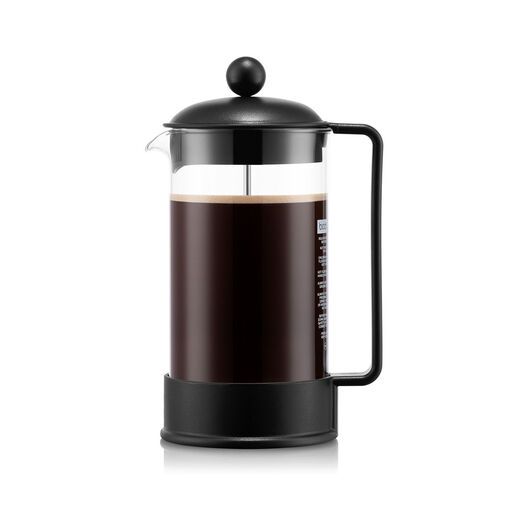
Why this product suits the profile: The 1-litre model offers a clearly stated capacity for households, offices and serving several portions. Its black finish is understated and versatile.
The product details specify both 1 litre and 8 cups. They also state that it is dishwasher-safe, making the care requirements clear.
1-litre capacity, three-part stainless steel filter and dishwasher-safe according to the product details.
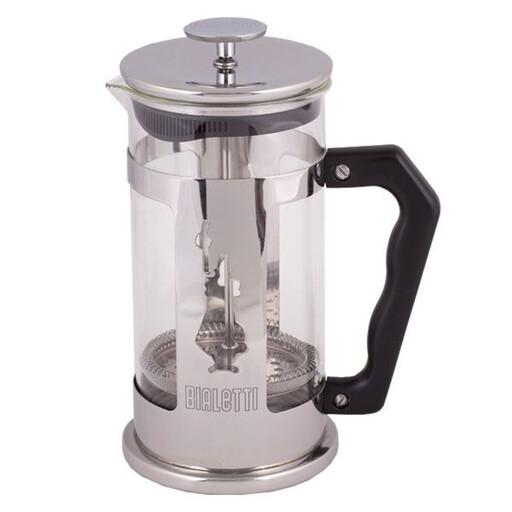
Why this product suits the profile: The combination of a stainless steel body, borosilicate glass and a reusable filter will appeal to buyers who prioritise clear material specifications and durable construction.
The description clearly states the material combination and specifies a maximum temperature of 120 °C. This allows you to check care and safety requirements before buying.
18/10 stainless steel, borosilicate glass and dishwasher-safe according to the product details; capacity: 1 litre.
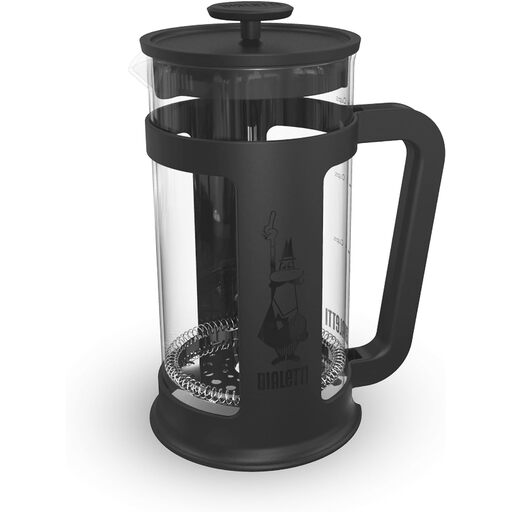
Why this product suits the profile: Its compact capacity and manual operation make it suitable for travel, camping, hiking or use at work.
The small capacity prevents you from carrying unnecessarily large quantities when you are out and about. The filter is also reusable; according to the product details, the coffee maker is not dishwasher-safe.
350 ml capacity, stainless steel construction and manual use without a mains connection.
We have put together a complete, regularly updated list of products that fully meet these strict selection criteria and the safety regulations applicable in the EU.
For consistently good results, follow these basic steps:
Take care when moving a glass coffee maker. A portable French press should be allowed to cool completely, emptied and protected against knocks before transport. For offices and travel, a stainless steel model or one with a protective outer frame may be more practical than a completely unprotected glass body.
As a starting point, use approximately 60 grams of coarsely ground coffee per litre of water. The actual amount depends on the type of beans, grind size and desired strength. For 350 ml, you can use around 21 grams of coffee. Adjust the ratio gradually to suit your personal taste.
This depends on the model. The BODUM BRAZIL and several Bialetti Preziosa models are described as dishwasher-safe in the product details. The Bialetti COFFEE PRESS SMART, on the other hand, is specified as not dishwasher-safe. Before buying, check the information for the glass carafe, filter, lid and frame separately.
Its lifespan depends primarily on the glass, filter, seals and how it is handled each day. With proper care, stainless steel parts are less susceptible to breakage, while borosilicate glass still needs to be handled carefully despite its heat resistance. Regularly rinsing the filter, avoiding excessive pressure and following the temperature guidance can help reduce wear.