
Lieferung heute & morgen

Qualitätsgarantie

Willkommens-Angebote freischalten: KOSTENLOSE Lieferung | Bis zu 80 % RABATT | Kostenlose 30-Tage-JoyPlus-Testphase
App herunterladen
A French press coffee maker requires neither electricity nor pods or paper filters. This makes a cafetière an appealing choice for homes, offices, camping and travelling. However, French press coffee makers vary considerably in capacity, materials, filters and cleaning requirements.
Anyone who focuses only on colour or brand name can overlook important details. Three common buying mistakes occur particularly often:
The size should reflect your actual drinking habits:
Manufacturers do not all define “cups” in the same way. For a reliable choice, the capacity in millilitres is therefore more important than the number of cups.
Borosilicate glass is widely used for French press coffee makers. It lets you see the brewing process and normally does not absorb coffee aromas. Nevertheless, glass remains vulnerable to knocks and drops. A protective frame made from stainless steel or plastic can make the coffee maker more stable when pouring.
Stainless steel bodies are practical for frequent transport and outdoor use. However, they conceal the liquid level. Double-walled models may keep the coffee warm for longer, but you should still follow the specific care instructions.
Also check the maximum temperature specification. For example, the Bialetti Preziosa has a stated temperature limit of 120 °C. The coffee maker must not be placed directly on a hob unless the manufacturer expressly permits this.
A reusable stainless steel filter means there is no ongoing need for paper filters. The mesh should be evenly finished, and the plunger should glide through the coffee maker smoothly, without jerky movements.
The following details are relevant when it comes to cleaning:
A dishwasher-safe coffee maker can reduce the effort required for cleaning. However, for some models, hand washing is still recommended for the frame, lid or coloured surfaces.
A coffee maker for ground coffee requires coarsely ground coffee. Fine coffee grounds can clog the filter and increase the pressure needed to press the plunger down.
A simple method:
If the plunger becomes heavily blocked, do not force it. Pull it back slightly and continue with less pressure.
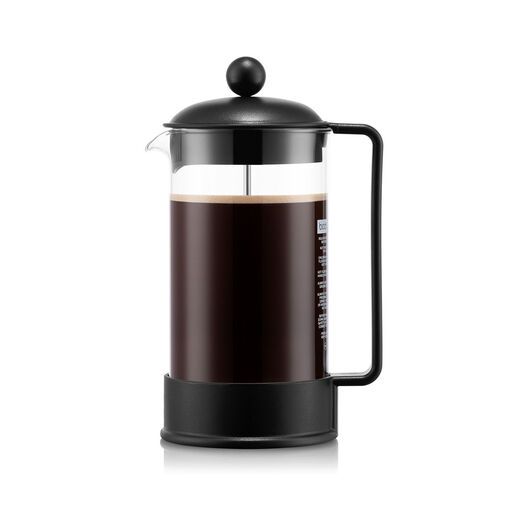
Why this product suits this profile: This manual coffee press has a 1-litre capacity and a classic design for everyday use without pods.
The product details state a 1-litre capacity, a three-part stainless steel plunger and dishwasher-safe cleaning.
1-litre capacity, heat-resistant container and reusable stainless steel filter.
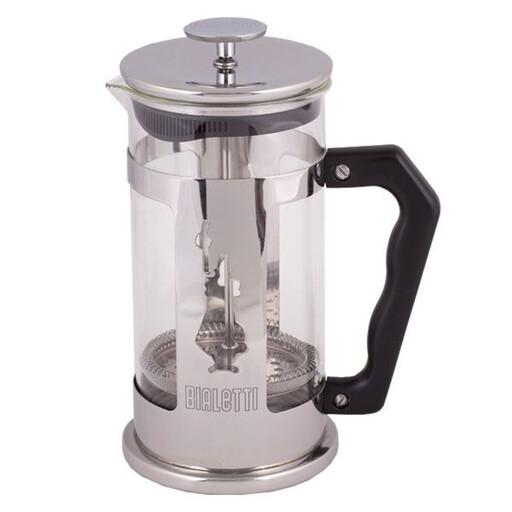
Why this product suits this profile: The stainless steel body, borosilicate glass and 1-litre capacity combine a sturdy construction with clearly specified materials.
The product details expressly state a maximum temperature of 120 °C and dishwasher suitability.
18/10 stainless steel body, borosilicate glass and 1-litre capacity according to the product description.
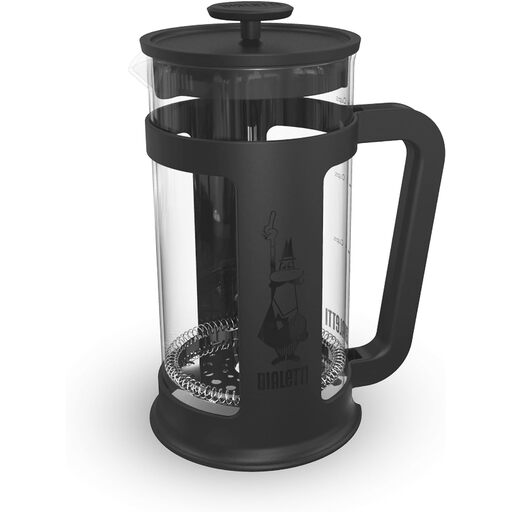
Why this product suits this profile: This compact model is designed for outdoor use, camping, hiking and travelling, and works manually with ground coffee.
The 350 ml capacity prevents you from carrying unnecessarily large quantities when travelling. The product details also state that it is not dishwasher-safe.
Stainless steel construction, 350 ml capacity and reusable filter for use on the go.
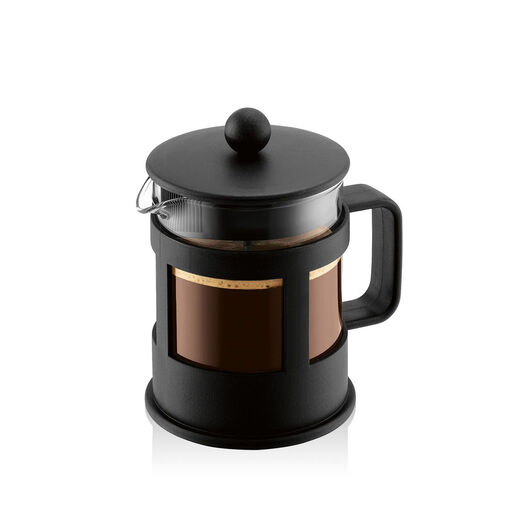
Why this product suits this profile: The medium capacity is suitable for smaller quantities without taking up as much space as a 1-litre French press.
The product size is clearly stated as 0.5 litres or four cups, helping you plan realistic quantities.
Heat-resistant borosilicate glass, black polypropylene frame and three-part stainless steel filter system.
We have put together a complete, regularly updated list of products that fully meet these strict selection criteria and the safety regulations applicable in the EU.
This depends on the capacity and the strength you prefer. For a 1-litre coffee maker, around 60 g of coarsely ground coffee is a sensible starting point. With a 350 ml French press, you can reduce the amount accordingly. Your personal taste, the beans and the grind size are all important factors.
Its lifespan depends on the material, how often it is used and how well it is cared for. Stainless steel frames and filters can last for many years when handled properly. Glass containers, however, remain vulnerable to knocks. Before each use, check the coffee maker for cracks, loose parts or damaged filter edges.
It is operated manually and does not require electricity. Ongoing costs mainly come from coffee and water. As the filter is reusable, you would not normally need paper filters or pods. Once cooled, the coffee grounds can be disposed of with food waste, provided local waste disposal rules allow this.