Hosts planning several portions
If you’re making spaghetti for a shared meal, plan your batch size and the time until serving together.


If you’d like a machine to do most of the mixing and shaping, compare fully automatic pasta makers by their spaghetti attachments, batch size and cleaning requirements. A motorised roller or stand mixer attachment is a better fit if you want to prepare the dough yourself and control its thickness. Attachments must be compatible with your exact stand mixer model. Also plan whether you’ll transport the pasta uncooked and chilled, or cooked and kept safely chilled or hot enough until serving.
If you’re making spaghetti for a shared meal, plan your batch size and the time until serving together.
If you’ll be preparing sauce and other dishes at the same time, check which steps the machine actually handles and how much cleaning is involved.
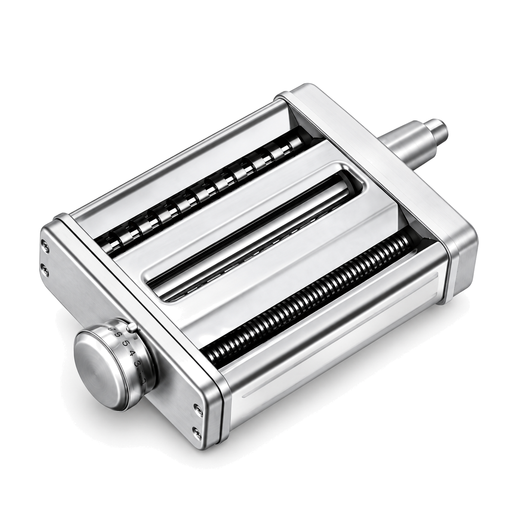
A motorised attachment may be a good fit if you want to make the dough yourself, then roll and cut it. Compatibility with your existing appliance is key.
A good fit if: you want the machine to mix and knead the dough, then extrude the spaghetti.
Things to consider: the shaping discs and pressing mechanism need cleaning, and capacity figures may use different measures.
A good fit if: you want to prepare the dough yourself and control its thickness and cut.
Things to consider: preparing the dough and rolling several portions are still jobs you’ll need to do yourself.
A good fit if: you already own a compatible stand mixer and want to roll dough you’ve prepared yourself.
Things to consider: the attachment isn’t a standalone appliance, so check your exact mixer model and what’s included.
| What to consider | What to check before buying | Who it matters most to |
|---|---|---|
| Batch size | Check how many guests you’re catering for, along with the minimum and maximum quantities. See whether the figure refers to flour or finished pasta. | If I’m preparing several portions, I want to plan batches reliably. Around 22% of consumers put batch size first. |
| Work involved | Check whether the model mixes, kneads and extrudes the dough; relate any time estimates to the stated quantity of pasta. | If you’re preparing sauce and other dishes before heading out, you’ll want the machine to take care of as many steps as possible. Around 22% of consumers prioritise keeping hands-on preparation to a minimum. |
| Spaghetti shape | Check that the spaghetti attachment and the strand thickness you want are included with the specific version. | If a particular spaghetti shape matters to me, I want to make sure I have the right attachment. Around 17% of consumers prioritise the spaghetti cut. |
| Transporting the pasta | Check in advance whether you can cook at your destination and how you’ll manage chilling, transport and serving. | If you’re taking fresh pasta to a shared meal, you’ll need to think about storage and temperature until serving. For around 22% of consumers, transporting the pasta is a key consideration. |
| Cleaning | Check the instructions for each removable part, and don’t assume that dishwasher-safe claims apply to the whole appliance. | If I want to keep washing up to a minimum after several batches, I need to know which parts must be cleaned by hand. Around 17% of consumers pay particular attention to cleaning requirements. |
Springlane states that the Nina takes 200–600 g of flour per batch; for the PM 220, Rommelsbacher states a capacity of up to 800 g of finished pasta per batch. These figures use different measures, so they aren’t directly comparable.
Plan the number of batches using the same unit of measurement, and check the figures for the specific model.
Several batches may mean extra preparation time.
What’s included and which shaping discs are supplied vary by model and version. A large number of attachments doesn’t, by itself, confirm that a spaghetti disc is included.
Check what’s included with the specific version. If you’re buying an attachment, make sure it’s compatible with your existing appliance too.
If the attachment you need isn’t included, you may have to buy a compatible accessory separately.
Automated dough preparation doesn’t take care of cooking or cleaning. Rommelsbacher says that parts including the discs and pressing screw on the PM 220 need to be cleaned by hand. Philips’ under-10-minute preparation time refers to 250 g of pasta.
Allow time for a test run and cleaning, and work out where and when you’ll cook the pasta.
Your statutory rights against the seller, a voluntary manufacturer’s warranty and any additional manufacturer repair scheme are separate things. Additional schemes depend on whether the specific appliance falls within the product category covered.
If something goes wrong, check the purchase date and seller. For any additional claims, check that the appliance falls within the relevant category.
The Nina is a freestanding fully automatic pasta maker with a spaghetti disc and a stated capacity of 200–600 g of flour.
The Pastamaker 7000 HR2665/93 is a freestanding extruder with weighing and kneading functions.
The Pastarella PM 220 is a fully automatic pasta maker with controlled water supply. Rommelsbacher states that it can make up to 800 g of finished pasta per batch.
The Atlasmotor+ combines a motorised dough roller with a spaghetti cutter, which the manufacturer says is included.
The 3-in-1 Pasta Attachment 5KSM3MPA rolls dough and cuts spaghetti when used with a compatible stand mixer.
According to Kenwood, the MAX980ME Pasta Set for the Chef range includes a lasagne roller, a fettuccine cutter and a spaghetti cutter.
This selection includes electric pasta makers for shaped pasta and a stand mixer attachment. For each model, check whether a spaghetti disc is included. For the attachment, check that it’s compatible with your stand mixer.
 No image available
For dough you’ve prepared yourself, when you want to adjust the thickness of the pasta sheets.
The product name lists seven thickness settings. According to the product details, clean the surfaces with a dry cloth and the blades with the brush provided; don’t immerse the appliance in water.
 No image available
For automatically making shaped pasta at home, as long as one of the included discs produces the spaghetti you want.
The product name lists nine shaping discs. Before buying, check the exact selection to see if it includes the shape you want.
 No image available
For automatic dough preparation and shaped pasta. Check whether the included discs include a suitable spaghetti shape.
The product name lists 180 W and nine interchangeable shaping discs.
 No image available
For dough you’ve prepared yourself, if you already own a compatible KitchenAid stand mixer.
The set includes a lasagne roller, a fettuccine cutter and a spaghetti cutter. The attachment isn’t a standalone appliance and needs a compatible stand mixer.
 No image available
For smaller batches of dough. If you’re making several portions, plan to run the machine enough times.
The stated maximum capacity is 200 g of dough per batch. According to the product details, don’t rinse the appliance with water; wipe it clean instead.
Yes, as long as you plan hygienic storage and transport. The German Federal Institute for Risk Assessment recommends keeping perishable foods chilled until they’re prepared or eaten wherever possible. This doesn’t mean there’s one general shelf life that applies to every dough recipe. If your dough contains raw egg, it’s particularly important to use clean hands, equipment and work surfaces.
Only if you can reliably control the temperature. The German Federal Institute for Risk Assessment recommends keeping heated food at a temperature of at least 60 °C throughout until it’s eaten. If that isn’t possible, plan to chill it safely and serve it later rather than leaving it lukewarm.
No, it depends on the model and the individual part. Rommelsbacher Support says that parts including the discs and pressing screw on the PM 220 should be cleaned by hand. Check the instructions for your specific appliance, and don’t assume that guidance for individual removable parts applies to the whole machine.
For appliances covered by the relevant EU rules, the manufacturer uses the CE marking to declare that the product complies with those requirements. It isn’t approval from a central EU body. Check the marking and documentation for the specific electrical appliance. Parts that come into contact with food must also meet the requirements for food contact materials.
If you bought from a trader, your statutory rights are generally against the seller and last for at least two years from the date you receive the goods. A voluntary manufacturer’s warranty is separate. Additional manufacturer repair schemes don’t automatically cover every small kitchen appliance, so check whether your specific appliance falls within the product category covered.