
Lieferung heute & morgen

Qualitätsgarantie

Willkommens-Angebote freischalten: KOSTENLOSE Lieferung | Bis zu 80 % RABATT | Kostenlose 30-Tage-JoyPlus-Testphase
App herunterladen
A no-drill roller blind is a practical solution for renters and homeowners seeking a flexible, damage-free option for sun and privacy protection. Installation is typically straightforward, involving clamping or adhering the blind directly to the window frame. However, the market can be confusing, and not every product lives up to its promises. Before you make a decision, it's crucial to understand the most common pitfalls to avoid a poor investment.
As your Joybuy Product Recommendation Officer, I'll help you understand the relevant product features and make an informed choice.
Many buyers focus on colour and price, overlooking critical technical details that determine the blind's longevity and functionality.
To avoid the problems mentioned above, you should check three core aspects. These will help you objectively evaluate product quality.
The most common method is the clamp-fit roller blind. This involves attaching adjustable brackets to the window sash. The crucial factor here is the window sash thickness. Most clamp brackets are designed for a standard thickness of 15 to 23 mm. Measure the thickness of your window sash (excluding the rubber seal) to ensure the brackets will sit firmly and securely without interfering with the closing mechanism. For fixed windows or special surfaces, there are alternatives like pleated blinds with suction cup mounts.
The choice of fabric depends directly on your intended use. There are three main types:
A no-drill dual roller blind, also known as a zebra blind, offers maximum flexibility. With two parallel fabric panels featuring alternating transparent and opaque stripes, you can seamlessly adjust the light level.
Precisely measure the width of the glass pane. To minimise light gaps at the sides, the fabric width should overlap the glass by about 2 cm on each side. Since the order width includes the mounting brackets, the rule of thumb is often: Order Width = Glass Width + 4 cm. Always check the manufacturer's specifications, as the difference between fabric and order width can vary. Ensure that the blind will not interfere with the window handle.
Here are some product recommendations tailored to different needs and use cases.
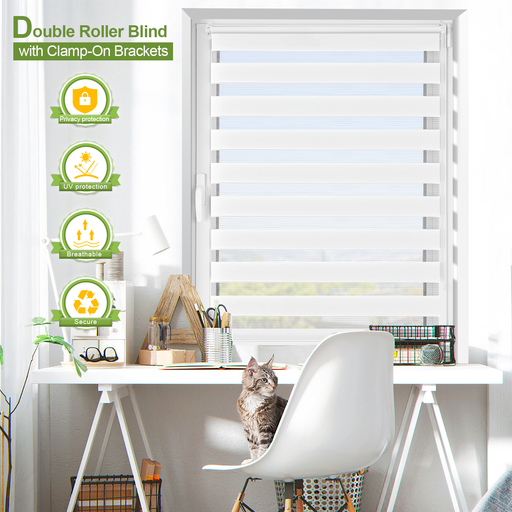
Why This Fits Their Persona: Ideal for renters looking for a functional and affordable starter solution for standard windows in living or work spaces. The simple design complements many interior styles.
The product comes with standard clamp brackets for common window sash thicknesses (15-23 mm), minimising the risk of incompatibility. The dual roller function prevents the "all-or-nothing" problem of simpler blinds.
Offers the flexible light control of a dual roller blind at an accessible price point. The chain hoist can be mounted on either the left or right side.

Why This Fits Their Persona: Perfect for bedrooms, nurseries, or home cinemas where a complete light blockade is required. The cordless design enhances safety in households with children or pets.
This blind features a silver coating on the back that, according to the manufacturer, ensures 100% blackout. This bypasses the issue of "room-darkening" fabrics being falsely advertised as a blackout solution.
Provides blackout and thermal insulation in one product. The cordless design is safe and allows for easy operation via the handle on the bottom rail.
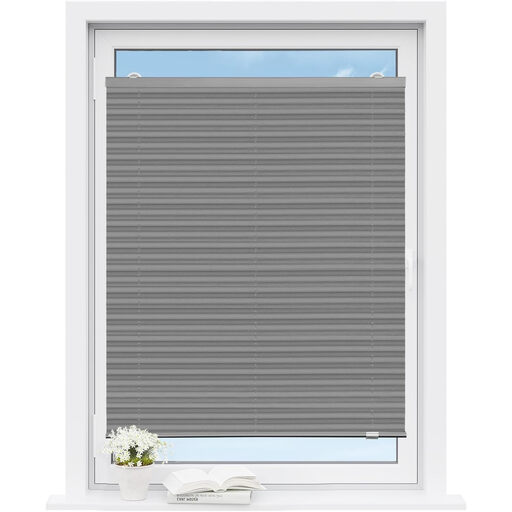
Why This Fits Their Persona: A solution for special installation scenarios like skylights, balcony doors, or fixed-pane windows where clamp mounting is not possible. Ideal for conservatories or bathrooms.
This pleated blind completely bypasses the problem of ill-fitting clamp brackets by using suction cups for mounting. This allows for installation on smooth glass surfaces without touching the frame.
Extremely flexible installation without damaging the frame or wall. The fabric filters sunlight and provides privacy without completely darkening the room.
We've compiled a complete, up-to-date list of products that fully meet these strict selection criteria and UK safety regulations.
First, measure the width of the window pane (glass width). To avoid light gaps on the sides, the fabric should be about 2 cm wider than the pane on each side. Therefore, add 4 cm to the glass width to get the ideal fabric width. Then, check the manufacturer's specification for the difference between fabric width and order width (usually 4 cm) to determine the correct order width. Also, measure the thickness of your window sash to ensure the clamp brackets are compatible.
With correct installation and high-quality clamp brackets, the risk is low. Ensure that the brackets are suitable for the thickness of your window sash and are not attached with excessive force. Low-quality or ill-fitting brackets can compress or deform the rubber seal over time. Choose models with sturdy yet slim brackets.
A dual roller blind (zebra blind) is primarily for flexible light control. With its alternating transparent and opaque stripes, you can seamlessly adjust the light from almost fully open to private, but it typically does not offer a complete blackout. A blackout blind has a single fabric panel coated with a special light-blocking layer. Its main purpose is to make a room as dark as possible, making it the ideal choice for bedrooms.