What should you look for when buying?
Fridge with no freezer compartment
A good fit if: you’ll mainly eat the soup you’ve cooked together over the next few days and don’t need a freezer compartment in the same appliance.
The trade-off: you can’t freeze leftovers in it. Check the fridge space, shelves and energy consumption for the size of appliance you need.
Fridge-freezer
A good fit if: you want to freeze portions for meals much further in the future.
The trade-off: freezer space doesn’t give you extra room for chilled containers. Compare fridge and freezer capacities separately, and check the defrosting requirements for the model you’re considering.
In a shared fridge, the fridge space you need for the next few days and the freezer space you need for future meals serve different purposes. The Verbraucherzentrale recommends comparing storage capacity and stated energy consumption for the size of appliance you need.
| What matters |
What to check before buying |
Who is it important to? |
| Space and visibility |
Compare fridge capacity separately from freezer capacity; check the height of your containers and whether the shelves are adjustable. |
If we’re storing several covered portions alongside our other shopping, we need easy-to-reach shelves and enough fridge space. Around 31% of consumers put space and organisation first. |
| Safe, chilled storage |
Check whether you can monitor the temperature in different parts of the fridge and leave space between containers. |
When I’m storing cooked soup, cooling it quickly and keeping it sufficiently cold matter more than an advertised freshness feature. Around 31% of consumers prioritise safe refrigeration. |
| Extra freezer space |
Check the stated freezer capacity separately and read the defrosting information for the model you’re considering. |
If there’s a long gap between our shared meals, we want to be able to freeze individual portions for later. Around 23% of consumers have this as their main priority. |
| Floor space and energy consumption |
Check the appliance dimensions and door clearance against the space available; compare annual energy consumption for suitable sizes. |
If the kitchen is short on space, the appliance needs to fit without taking up more room than necessary. Around 15% of consumers prioritise suitable dimensions and ongoing energy costs. |
Joybuy products for chilled portions and extra freezer space
These Joybuy products are fridge-freezers for households looking to store chilled portions and make room for extra freezer space in one appliance.
 No image available
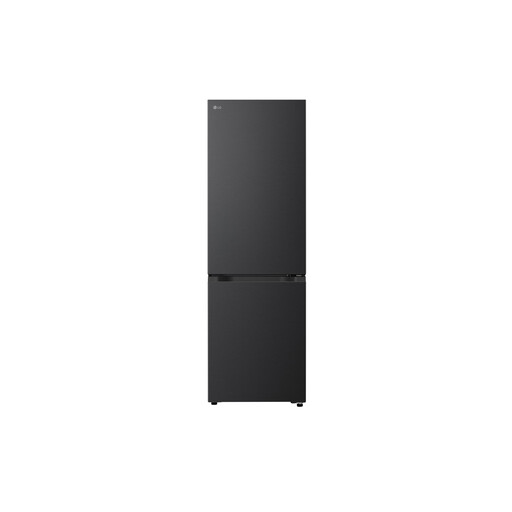
LG GBBS716AEV integrated fridge-freezer, 333 l
For households looking to store chilled portions and make room for extra freezer space in an integrated appliance.
Listed in the product name: 333 l total capacity, energy class A and FRESHConverter+ 0 °C zone.
A side clearance of at least 4 mm is required for the door to function.
View at Joybuy
 No image available
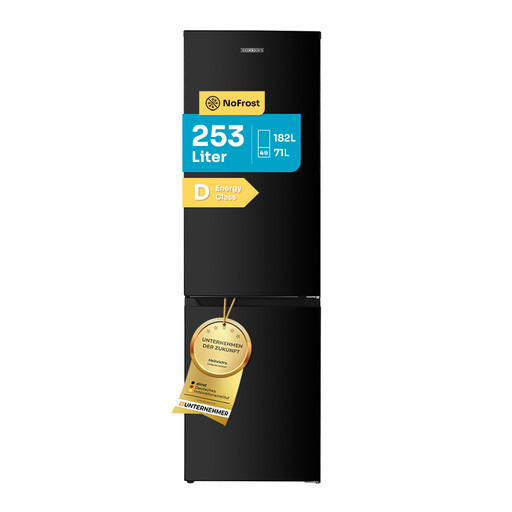
Heinrich’s fridge-freezer, 253 l, black
A combination appliance for households that need space for chilled portions as well as a separate freezer compartment.
Listed in the product name: 253 l total capacity, 182 l fridge capacity, 71 l freezer capacity and 39 dB; it also features No Frost and a reversible door.
View at Joybuy
 No image available
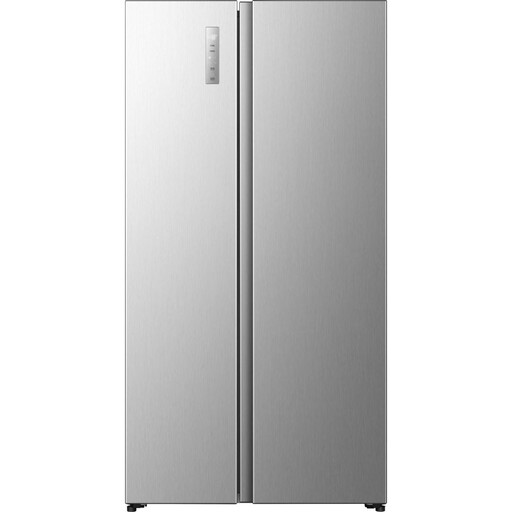
Hisense RS3P558NEIE, energy class E
This model may suit you if you’re looking for a fridge-freezer with space for chilled portions and extra freezer capacity.
Listed in the product name: energy class E.
View at Joybuy
 No image available
CHiQ JR263LGE fridge-freezer, 262 l
For households that want a separate freezer compartment as well as fridge space.
Listed in the product name: 262 l, 70/30 split, 54 cm wide, 176 cm high and Low Frost.
According to the product information, the freezer compartment needs to be manually defrosted approximately once or twice a year.
View at Joybuy
 No image available
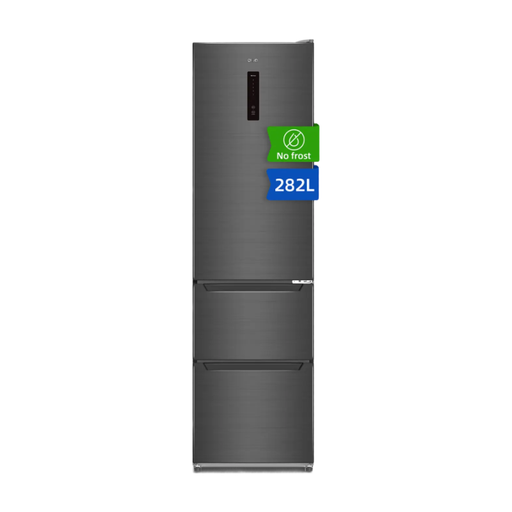
CHiQ CID282NEIBE multi-door fridge-freezer, 282 l
An option if you need space for chilled portions and separate freezer compartments in one appliance.
Listed in the product name: 282 l, 54 cm wide, 192 cm high, energy class E and No Frost.
According to the product information, you’ll need to allow extra space for ventilation and opening the door.
View at Joybuy
Frequently asked questions
How long can I keep leftover cooked soup in the fridge?
The German Federal Institute for Risk Assessment recommends keeping leftovers in the fridge and eating them within two to three days. To cool a large batch quickly, divide it between several shallow dishes; hot food should cool to below 7 °C within a few hours. These are food hygiene recommendations, not a guarantee of how long every recipe will keep.
What temperature and storage method are best for a shared fridge?
The German Federal Institute for Risk Assessment recommends keeping perishable foods at 2 °C to no more than 7 °C, and cooling hot food quickly to below 7 °C if you plan to store it for longer. Keep food covered and separate, and check the actual temperature in different parts of the fridge.
Does a fridge for leftover soup need NoFrost?
No. NoFrost isn’t essential for storing chilled soup. On the Liebherr fridge-freezer mentioned, the technology applies to the freezer compartment; what matters for soup is having enough fridge space and keeping it at a hygienic temperature. According to the manufacturer, LowFrost reduces ice build-up in the Siemens and Bosch models mentioned, but doesn’t eliminate the need to defrost.
How can I compare running costs before buying?
For appliances that fit your available space, compare the stated energy consumption in kWh/year and calculate the cost using your own electricity price per kWh. The Verbraucherzentrale also offers a calculator that takes both the purchase price and running costs into account.
Do fridges sold online in Germany need an energy label?
Yes. The EU energy label must be clearly visible online for new fridges that are required to carry one. Fridges and freezers use the rescaled A-to-G label. The European Union notes that the labelling rules don’t apply to second-hand products.


