
Lieferung heute & morgen

Qualitätsgarantie
App herunterladen
Kategorien
Choosing a refrigerator is based on an analysis of specific technical parameters and user requirements. The decision for a particular model depends on factors such as design type, net capacity, energy consumption, and noise emissions. This guide serves to structure the essential criteria for buying a refrigerator and to provide an informed basis for your decision.
Before purchasing a refrigerator, a thorough needs analysis is required. The following technical aspects are of central importance.
The most fundamental decision concerns the design of the appliance.
The required net capacity, measured in litres, depends on the household size. The following serves as a guideline:
A compact refrigerator is sufficient for single households or as a second appliance, while family households require models with 250 litres or more. It is also important to precisely match the external dimensions of the appliance with the available space.
The energy efficiency class, indicated on the EU energy label, is a decisive factor for long-term operating costs. The scale ranges from A (highest efficiency) to G (lowest efficiency). An appliance with a better class consumes fewer kilowatt-hours (kWh) per year in absolute terms, which has a direct impact on the electricity bill. The investment in a more efficient model can pay for itself over the lifespan of the appliance.
The noise level of a refrigerator is specified in decibels (dB). A quiet refrigerator is particularly advantageous in open-plan kitchens. Models with noise emissions below 38 dB are considered quiet, while appliances below 35 dB are considered very quiet. This value is noted on the energy label and should be taken into account during selection.
Mobile cooling units are suitable for use in vehicles or for camping. A compressor cool box offers high cooling performance that is independent of the ambient temperature and often reaches deep-freezing temperatures. Models like a 12V refrigerator for the car or a refrigerator for a motorhome are designed for operation via the vehicle's electrical system (12V/24V DC) and often additionally offer a connection for the regular power grid (230V AC).
The following products have been selected based on their technical specifications and intended application areas.
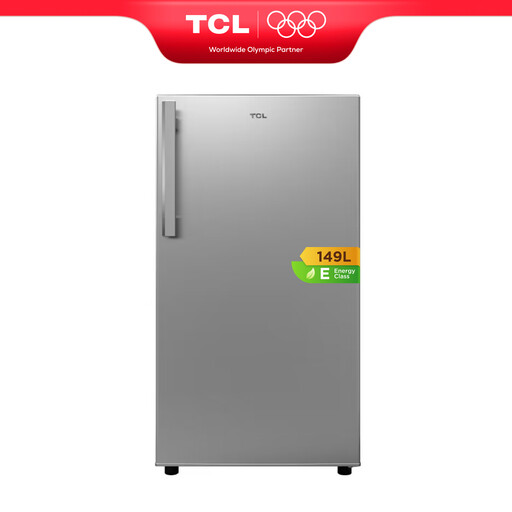
Why we recommend this product The TCL FC199FSE0NL is a compact freestanding unit that combines refrigeration and freezing functions in a small footprint. With a 122-litre cooling section and a 27-litre integrated ice compartment, it is suitable for specific spatial constraints. Practical features like the LED lighting and the XL bottle balcony are designed for everyday convenience.
Pros
Who it's for This model is a practical solution for individuals, students, or as a secondary appliance in offices or holiday homes. It addresses the need for a small refrigerator with a freezer compartment where space is limited.
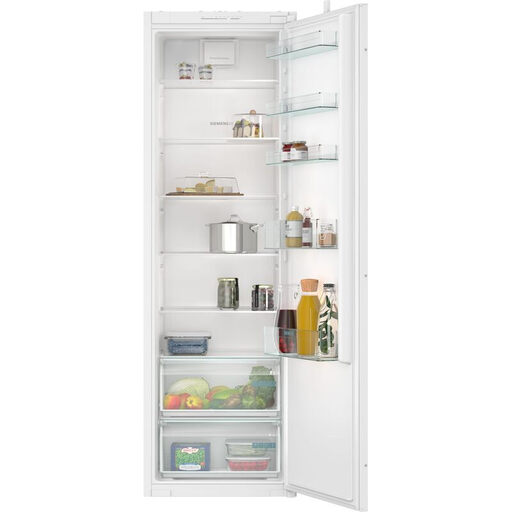
Why we recommend this product The Siemens KI81RNSE0 is a fully integrated built-in refrigerator without a freezer compartment, distinguished by its large 310-litre capacity and very low noise emission of just 35 dB. Features like the FreshBox and the Super-Cooling button are designed for the optimal storage of fresh food. Being made in Germany underscores its focus on material and manufacturing quality.
Pros
Who it's for This appliance is aimed at households looking for a spacious, quiet, and seamlessly integrated refrigerator. It is the right choice for users who value freshness, organisation, and a minimal noise level.
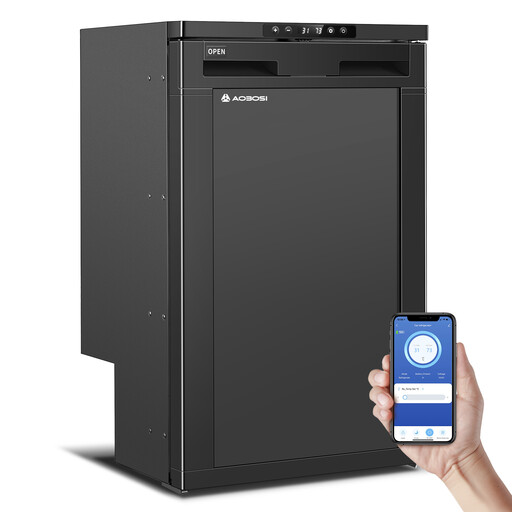
Why we recommend this product The AAOBOSI Cool Box is a highly versatile mobile cooling solution. Thanks to its compressor technology, it can reach temperatures as low as -20 °C. The dual power supply (12/24V DC and 100-240V AC) allows for use in a vehicle, on a boat, or at a stationary power outlet. Control via an app and the touch panel offer modern operating convenience.
Pros
Who it's for This product is designed for users who need powerful and mobile refrigeration. It is an ideal refrigerator for motorhomes, for truck drivers, boat owners, and for camping trips where a reliable cold chain is required.
While the primary function of a refrigerator is food preservation, aesthetic integration and lighting are becoming increasingly important in modern kitchens. For targeted illumination of work surfaces or the decorative presentation of objects, specialised lighting systems can be a sensible addition. One option for this are LED light boxes, which can be used for a variety of design purposes.
1. What should be considered regarding a refrigerator's energy efficiency class? The energy efficiency class indicates how economical an appliance is in relation to its size and features. The current scale ranges from A (very efficient) to G (less efficient). A class C appliance consumes significantly less electricity than a class F appliance, which substantially reduces operating costs over the years. The exact annual consumption in kWh is also stated on the EU energy label.
2. How quiet is a "quiet" refrigerator? A refrigerator is considered quiet if its noise emission is below 38 decibels (dB). Models with values around 35 dB or lower are perceived as very quiet and are barely audible. This value is particularly important if the appliance is placed in an open-plan kitchen or a combined living and dining area.
3. What capacity is sufficient for a single-person household? For one person who shops and cooks regularly, a net capacity of about 100 to 150 litres is generally sufficient. If you frequently buy in bulk or store larger quantities, a slightly larger model may be sensible. A compact refrigerator of this size offers enough space without unnecessarily consuming energy for unused volume.