
Lieferung heute & morgen

Qualitätsgarantie
App herunterladen
Kategorien
Selecting a new refrigerator comes down to an analysis of its capacity, energy efficiency, and design. These factors determine not only its suitability for a particular household but also its ongoing operating costs and user convenience. An informed decision requires a review of objective technical specifications to find an appliance that precisely meets individual requirements.
Before making a purchase, several technical parameters should be evaluated. These criteria help to systematically narrow down the options.
The form factor is the most fundamental distinguishing feature and depends on the available space and storage needs.
The usable capacity is specified in litres (L) and should be appropriate for the household size. A common rule of thumb is to allow for approximately 50 to 80 litres of cooling volume per person. For a two-person household, a refrigerator section with 100 to 160 litres would therefore be sufficient. For the freezer, plan for 50 to 80 litres per person for minimal stockpiling, and up to 130 litres for heavy use.
Since March 2021, a new EU energy label with a scale from A (very efficient) to G (less efficient) has been in effect. Appliances that were previously rated A+++ are now often found in classes C, D, or E. An Energy Efficiency Class E under the new standard therefore represents a solid benchmark and is not comparable to the old classification. The annual energy consumption in kilowatt-hours (kWh/a) is a more precise indicator of operating costs.
A refrigerator's noise level is measured in decibels (dB). A quiet appliance is particularly advantageous in open-plan kitchens. Models with a noise level below 40 dB are considered quiet. Units around 35 dB are virtually silent.
Manual defrosting is time-consuming and can increase energy consumption if there is significant ice build-up. Modern technologies reduce this effort.
Based on an analysis of technical specifications and practical usability, we present three models that cater to different needs.
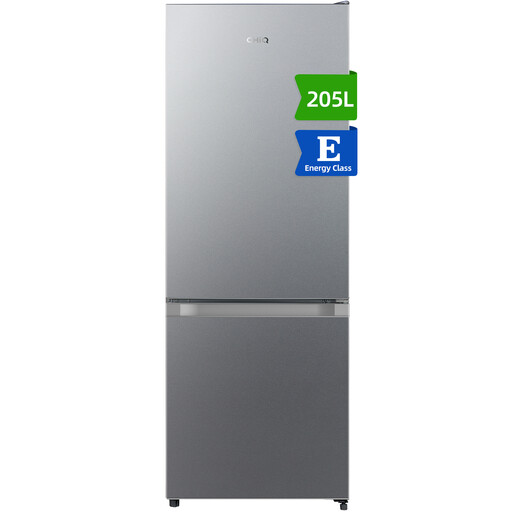
Why we recommend this product: The CHiQ JR205LSE is a fridge-freezer combination with a total capacity of 205 litres (153 L fridge, 52 L freezer). With a width of just 54 cm, it is designed for kitchens with limited space. The Low Frost technology minimises ice build-up and simplifies maintenance. Five adjustable cooling modes allow for customised food storage. The door hinge is reversible, making placement flexible.
Advantages:
Who it's for: This model is suitable for singles and couples in apartments with limited space who are looking for a balanced combination of fridge and freezer capacity in a compact unit.
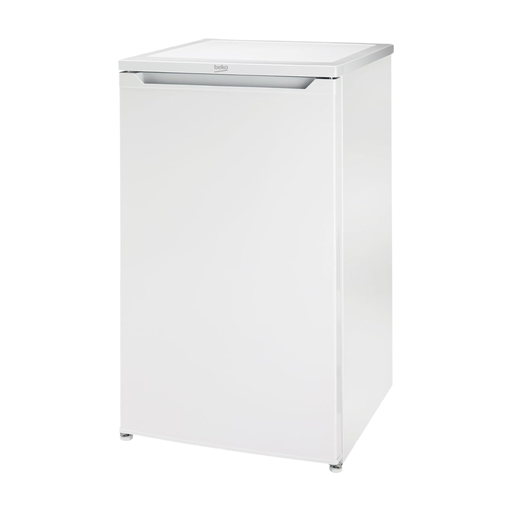
Why we recommend this product: The Beko TS190040N is a compact refrigerator without a freezer compartment, offering 88 litres of capacity. Its very slim design (47.5 cm width) makes it the ideal solution for the smallest kitchens, offices, or as a secondary appliance. The reversible door hinge adds flexibility during installation. With an operating noise of just 38 dB, the unit is very quiet. The automatic defrost function in the fridge section ensures low maintenance.
Advantages:
Who it's for: Ideal for single-person households, students, as an office fridge, or as a supplement to an existing freezer.
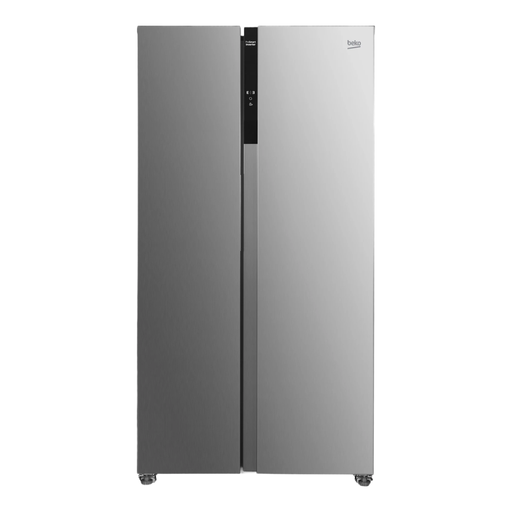
Why we recommend this product: The Beko GNO5322XPN is a side-by-side refrigerator with a generous total capacity of 532 litres (347 L fridge, 185 L freezer). It is equipped with No Frost technology, which eliminates the need for manual defrosting in both compartments. The ProSmart Inverter Compressor ensures efficient and quiet operation (39 dB). Other features include a 0°C zone for keeping delicate foods fresh for longer and an integrated water dispenser.
Advantages:
Who it's for: This appliance is designed for large families and shared homes that require high storage capacity for fresh and frozen foods and value modern convenience features.
Beyond the refrigerator's functionality, the design of the surrounding kitchen elements contributes to the overall aesthetic. A thoughtful selection of components, such as a modern door, can significantly influence the look of a room and support a harmonious overall concept.
1. What does Energy Efficiency Class E mean for a refrigerator? Energy Efficiency Class E on the new EU energy label (since March 2021) often corresponds to appliances that were previously rated in the highest classes, such as A++ or A+++. The rating criteria have been made significantly stricter. A Class E appliance therefore represents a solid standard of efficiency in the current market. The decisive factor for actual costs is the annual energy consumption in kWh shown on the label.
2. How many litres of capacity does a refrigerator need per person? As a general guideline, allow for about 50 to 80 litres of cooling volume per person in the household. For storing frozen goods, plan for 50 to 80 litres per person if you shop for fresh groceries regularly. For those who freeze larger quantities in bulk, you should plan for up to 130 litres per person.