
Lieferung heute & morgen

Qualitätsgarantie

Willkommens-Angebote freischalten: KOSTENLOSE Lieferung | Bis zu 80 % RABATT | Kostenlose 30-Tage-JoyPlus-Testphase
App herunterladen
A new fridge should store food reliably, fit into your kitchen and provide predictable running costs for many years. However, some common purchasing decisions can lead to unnecessary hassle later on: the appliance may not fit through the door, the noise may be distracting in an open-plan living area, or the actual storage capacity may not be sufficient for your household.
These pitfalls are particularly common:
For one person or an office, a mini fridge with around 80 to 100 litres may be sufficient. Households of two to three people often need a fridge-freezer with a capacity of around 200 to 300 litres. Families should look beyond the total capacity and consider the layout too: a large freezer compartment is of little use if you mainly store fresh food.
A fridge with a freezer compartment or a conventional fridge-freezer is more space-efficient for many homes than two separate appliances. However, anyone who regularly freezes large quantities may find an additional freezer useful.
The energy efficiency class is shown on the EU energy label. You should also compare the annual consumption in kWh. A simple guide to running costs is:
Annual consumption in kWh × your electricity price per kWh = approximate annual energy cost
Actual consumption depends on factors including room temperature, how full the appliance is and how often the door is opened. For open-plan kitchens and studio flats, the noise level in dB(A) is also important. Several appliances list figures of around 37 to 40 dB(A) in their product details, which may be suitable for open-plan layouts. However, how loud an appliance seems depends on its position and the acoustics of the room.
Do not just measure the alcove. Also check:
A side-by-side fridge or French-door fridge offers plenty of storage space, but usually requires more floor space. Also check whether the doors can be reversed. For a garage or cellar, the stated climate class or permitted ambient temperature range is also important. Not every appliance is suitable for unheated rooms.
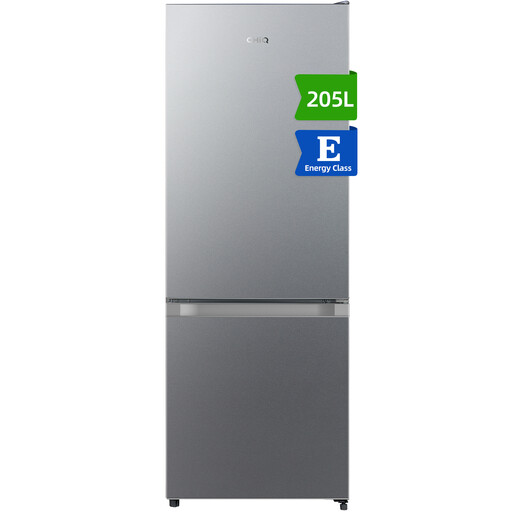
Why this product suits this profile: With 153 litres of fridge space and 52 litres of freezer space, this compact appliance is suitable for singles, couples and smaller kitchens. According to the product details, its dimensions are 54,0 × 55,0 × 144,0 cm.
The compact dimensions make it easier to plan installations in small flats. The reversible door hinge reduces the risk of the door hitting furniture or walls.
Energy efficiency class E, LED lighting, adjustable shelves and an operating noise level of 39 dB according to the product details.
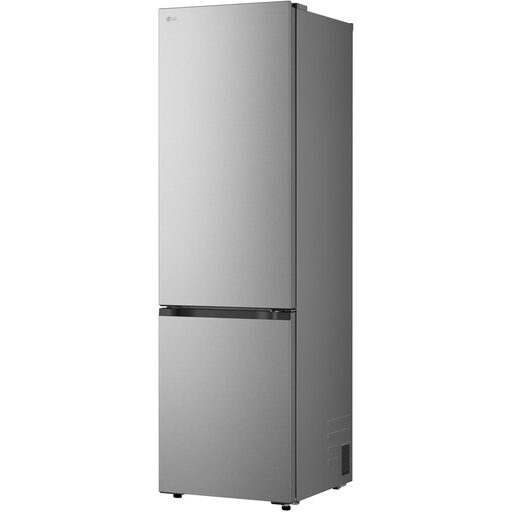
Why this product suits this profile: This freestanding model combines 262 litres of fridge space and 113 litres of freezer space with No Frost, app control and a stated noise level of 29 dB.
The zero-clearance design is intended for tight installations. Before buying, however, you should check the depth, door movement and ventilation requirements against the installation details.
Energy efficiency class A, annual consumption of 112 kWh according to the product details, No Frost, Multi-Airflow and 375 litres of total usable capacity.
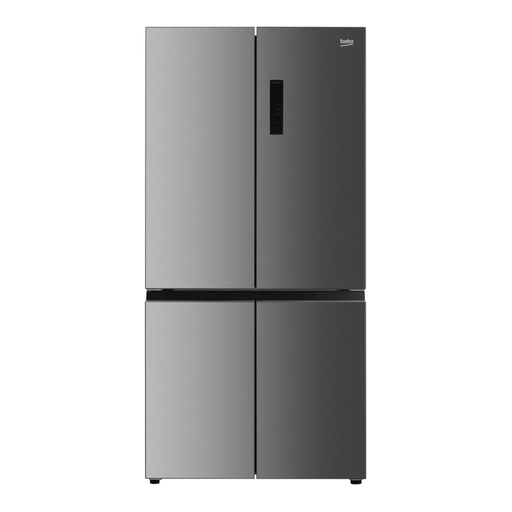
Why this product suits this profile: With 466 litres of usable capacity, including a 175-litre freezer compartment, this layout provides space for larger shops and a variety of provisions.
NoFrost Dual Cooling reduces the need for manual defrosting. The separate cooling circuits are designed to maintain separate temperature zones.
No Frost, multifunction display, reversible door installation and a stated noise level of 39 dBA.
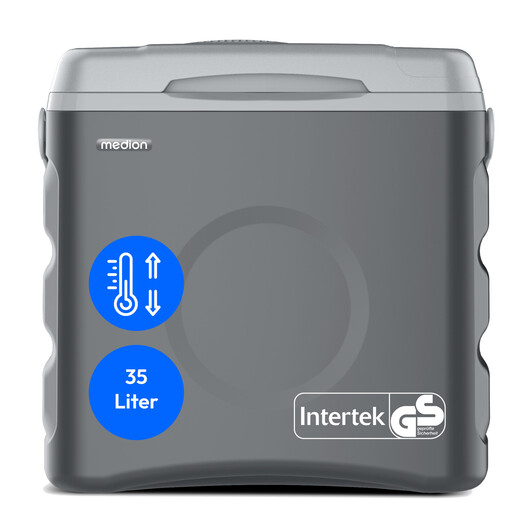
Why this product suits this profile: This portable cool box is designed for camping, cars, boats, offices and outdoor activities. It offers a 30-litre net capacity as well as cooling and warming functions.
Power via 12 V, 230 V or USB 5 V makes it more flexible than a stationary fridge. However, the box must not be exposed to rain or moisture.
Freestanding, portable design, 35-litre gross capacity and an additional warming function according to the product description.
We have put together a complete, regularly updated list of products that fully meet these strict selection criteria and the safety regulations applicable in the EU.
A wine fridge is designed for storing bottles at specific temperature ranges, but it cannot replace a fully equipped household fridge. A mini fridge may be sufficient for drinks in an office or guest room. If you need plenty of space, only choose a side-by-side fridge or French-door fridge if its footprint, door width and energy consumption suit your living situation.
For every model, focus on the product details rather than general marketing claims. Also consider whether you genuinely need a water connection, ice dispenser or app functions in everyday use. Extra features can make installation and cleaning more complicated.
There is no fixed rule. As a rough guide, singles may manage with a smaller appliance, while couples and families can benefit from a larger fridge-freezer. Shopping habits, how much food you keep in stock and the desired freezer capacity are the key factors.
Do not place the appliance next to a radiator or cooker, allow hot food to cool down first and keep the ventilation areas clear. Keeping the fridge appropriately filled helps maintain a stable temperature. When comparing appliances before purchase, the stated annual consumption in kWh is the decisive figure.
Its lifespan depends on how it is used, where it is installed, how well it is maintained and the type of appliance. Regular cleaning, unobstructed ventilation and following the instruction manual can help keep it running properly. If you notice unusual noises, damaged cables or problems with the cooling circuit, do not open the appliance yourself. Contact the responsible customer service team instead.