
Lieferung heute & morgen

Qualitätsgarantie

Willkommens-Angebote freischalten: KOSTENLOSE Lieferung | Bis zu 80 % RABATT | Kostenlose 30-Tage-JoyPlus-Testphase
App herunterladen
A fridge is one of those appliances that runs every day and is rarely replaced on a whim. That's why mistakes often only become apparent after purchase: the appliance doesn't fit through the kitchen door, the usable space isn't sufficient, or the noise level is disruptive in an open-plan living area. Even a large capacity can be impractical if the shelves and door compartments don't match your shopping habits.
Three typical buying mistakes occur particularly often:
The right size depends not only on your household size, but also on your shopping routine and the available installation space. A mini fridge with 43 to 45 litres is suitable for drinks, snacks, an office or a holiday home. A 88-litre fridge is more interesting as an under-counter or additional appliance for single people and small spaces, but usually doesn't offer a full-sized freezer compartment.
For a single-person household, a small fridge or a compact fridge-freezer with around 200 litres may be sufficient. Families often need significantly more volume. A 500-litre fridge or a side-by-side fridge usually distributes storage space across roughly 300 to 400 litres of fridge area and a large freezer compartment.
Before ordering, you should check the following measurements:
A fridge with a freezer compartment is practical if you regularly store frozen products. However, on small models the freezer compartment is often compact. The TCL RF60DWE0, for example, offers 42 litres of fridge volume and a 3-litre freezer compartment. This is suitable for ice cubes or small amounts of frozen food, but doesn't replace a separate freezer.
If you store larger quantities, you should look for a fridge-freezer with clearly separated areas. Low Frost can reduce the effort of defrosting, while Total No Frost, according to the product description, automatically prevents ice build-up in both the fridge and freezer compartments. Nevertheless, clean loading, free air circulation and intact door seals remain important.
The energy efficiency class is given on the EU scale from A to G. Several of the appliances listed here have energy efficiency class E. However, the class alone doesn't show how much electricity an appliance will consume in your home. What matters is the stated annual consumption in kWh.
For example: The COMFEE' RCD48WH2EUY(E) states an annual consumption of 110 kWh according to the product data. The Bomann KB 7245 is listed at 80 kWh per year. For a rough running cost calculation, multiply the annual consumption by your own electricity price per kWh.
Regarding noise levels, values around 37 to 40 dB(A) are a relevant benchmark for living kitchens, studies or sleeping areas. Figures come from the respective product information and can be perceived differently depending on the installation location, floor and operating phase. A quiet fridge should therefore not be placed directly against a thin wall adjoining a bedroom; distance and a level position help to limit vibrations.
The following recommendations classify specific appliances according to space requirements, layout and stated technical data.
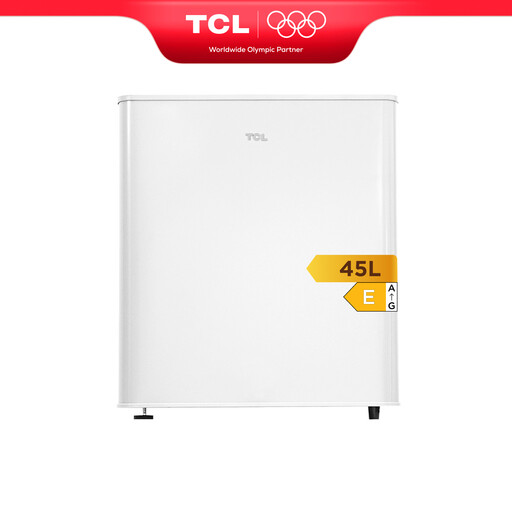
Why this product fits the profile: This compact mini fridge requires 449 × 485 × 512 mm of installation space according to the product data, and offers 45 litres of total volume for drinks, snacks or a small additional need.
The product data provides specific dimensions, 40 dB and a separate 3-litre freezer compartment rather than just general marketing claims.
Adjustable glass shelf, XL door storage and mechanical thermostat; energy efficiency class E.
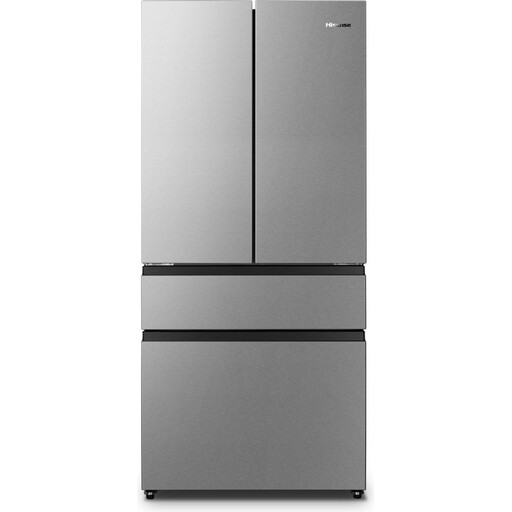
Why this product fits the profile: The French door design combines 302 litres of fridge and 178 litres of freezer volume. This suits households that need a separate and easily accessible layout.
NoFrost Plus and a stated noise level of 40 dB reduce manual defrosting effort and make location planning easier.
ConvertActive, Multiflow 360° air circulation, FreshZone and door alarm according to the product description.
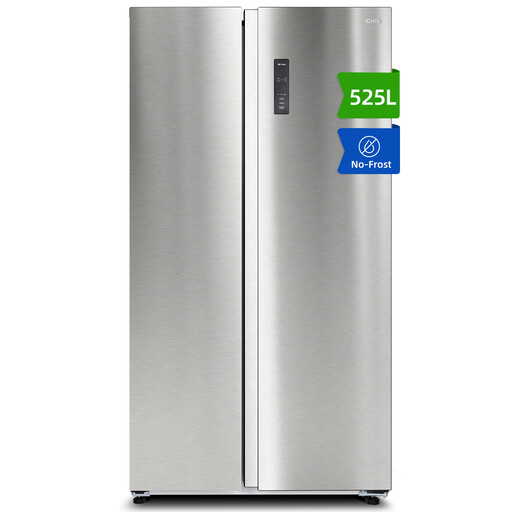
Why this product fits the profile: With 333 litres of fridge and 192 litres of freezer space, this appliance is aimed at families and households that do frequent large shops.
The product data states 37 dB, 525 litres total volume and Total No Frost. This allows you to compare noise level, capacity and maintenance effort in advance.
Inverter compressor, Multi-Airflow, touch control and reversible door according to the product description; energy efficiency class E.
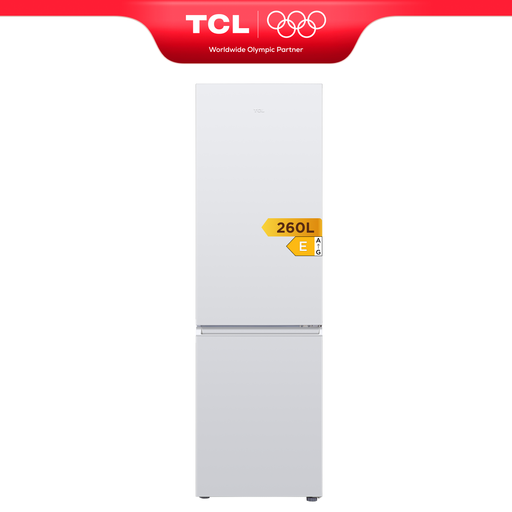
Why this product fits the profile: The 55 cm wide design offers 187 litres of fridge and 73 litres of freezer volume for flats with limited kitchen width.
The compact width is stated specifically. Adjustable feet and a reversible door hinge make it easier to adapt to the installation space.
Height-adjustable shelves, Fresh Zone, large drawer and LED interior lighting according to the product description.
We've put together a complete, regularly updated list of products that fully meet these strict selection criteria and the safety regulations in force in the EU.
A fridge should stand on a level, stable surface. On many models, the front feet allow you to compensate for small unevenness. Ventilation openings must not be covered. Hot food should be allowed to cool down before being placed inside. Door seals, shelves and the condensate drain should be checked and cleaned regularly.
For running costs, a simple calculation is sufficient:
The energy label is more meaningful than a blanket statement like "energy-saving". For a frequently used side-by-side fridge, the ratio of fridge to freezer volume in relation to your actual needs also matters.
As a rough guide, single people can manage with around 100 to 150 litres of fridge volume, provided they shop regularly. Couples often need more, and families require additional capacity accordingly. Freezer requirements, shopping habits and existing storage options influence the choice more than a fixed litre figure.
For noise-sensitive rooms, the manufacturer's figures in dB(A) are crucial. Models with around 37 to 40 dB(A) can be suitable for many living areas. However, start-up noises, vibrations and room acoustics remain noticeable. A level position with sufficient clearance from the wall is therefore just as important.
The lifespan depends on factors including usage, ventilation, cleaning, door seals and the compressor. A general durability statement is not reliable. Before buying, you should therefore check the availability of spare parts, warranty conditions, manufacturer information and the correct disposal of your old appliance.