
Lieferung heute & morgen

Qualitätsgarantie

Willkommens-Angebote freischalten: KOSTENLOSE Lieferung | Bis zu 80 % RABATT | Kostenlose 30-Tage-JoyPlus-Testphase
App herunterladen
A fridge is one of the appliances that runs every day. That is precisely why small mistakes can lead to unnecessary costs, space problems or awkward everyday use in the long term. Anyone who focuses solely on modern design or a large capacity often overlooks important details.
Three common buying pitfalls occur particularly often:
Do not just measure the available recess. Also check the route for delivery, the door width and the space needed when the door is open. With a freestanding appliance, you must also allow for the clearances from the wall and sides specified by the manufacturer.
The litre capacity should be considered separately for the fridge and freezer compartments. A fridge freezer with a capacity of 300 litres may be sufficient for a smaller household, while families or larger households may prefer to consider a model with 450 to 650 litres. With a side-by-side fridge, the freezer and fridge compartments are usually positioned next to each other. A French-door fridge or multi-door fridge, on the other hand, provides several doors and drawers, which can make it easier to organise large quantities of food.
The EU energy label shows the efficiency class from A to G, as well as annual consumption in kWh. Wherever possible, compare appliances with a similar usable capacity. An energy-efficient fridge can help to limit running costs when used frequently. However, actual consumption also depends on room temperature, how full the appliance is, how often the door is opened and where it is installed.
For example, the Hisense RS3P558NEFE is listed with 317 kWh per year and energy efficiency class E. The Hisense RQ5P470SAFD, on the other hand, has energy efficiency class D. The classification alone does not replace checking the capacity and annual consumption.
The noise level is important for open-plan kitchens or smaller homes. Models producing around 35 to 40 dB may be perceived differently depending on the acoustics of the room. A quiet fridge should therefore be assessed not only by its marketing claims, but also by its stated dB value.
A No Frost fridge uses circulating air to prevent ice from forming in the freezer compartment and reduces the need for manual defrosting. Also check whether the interior air circulation, adjustable glass shelves, door racks and salad drawers suit the way you store food. A traditional fridge with freezer compartment is often easier to organise for smaller households than a large multi-door model.
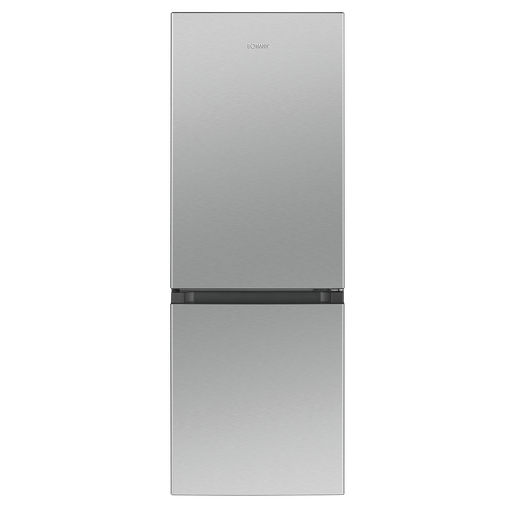
Why this product suits the profile: This appliance offers 175 litres of usable capacity, including 122 litres of fridge space and 53 litres of freezer space, with a width of 49,5 cm. This makes it suitable for smaller kitchens and modest food stocks.
The separate compartments make the usable capacity easy to understand. Annual consumption is listed as 156 kWh; the freezer compartment must be defrosted manually.
Reversible door, operating noise of 39 dB, three glass shelves and three freezer drawers.
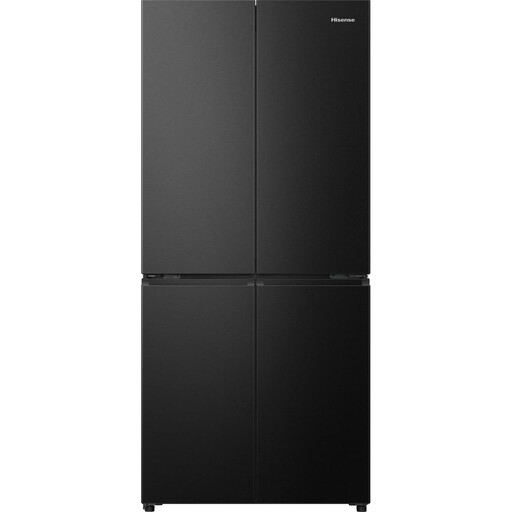
Why this product suits the profile: This cross-door model combines 483 litres of usable capacity with separate fridge, freezer and variable-temperature compartments. Its design makes it easier to organise different types of food.
Total No Frost reduces the need for manual defrosting. Before ordering, check the dimensions of approximately 79,4 cm wide and 69,8 cm deep.
Energy efficiency class D, approximately 35 dB, inverter compressor and a convertible zone ranging from −18 °C to +5 °C.
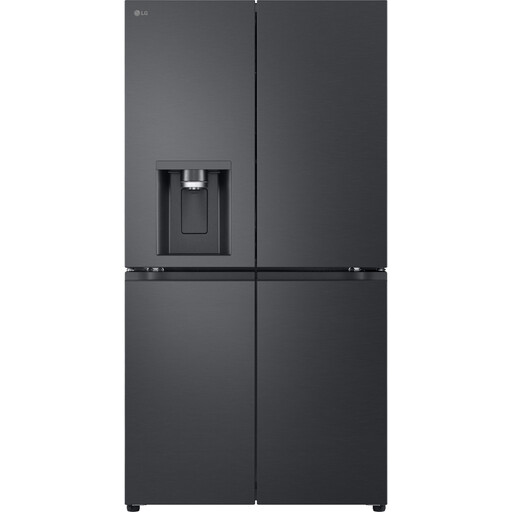
Why this product suits the profile: With a total capacity of 645 litres, this FoodCenter is designed for large households, frequent shopping and substantial drinks supplies.
The four doors keep the compartments clearly separated. Before buying, allow for the width of 91,4 cm, depth of 72,9 cm and additional space for the doors to open.
No Frost, 384 litres of fridge space, 261 litres of freezer space, plus an integrated water and ice dispenser.
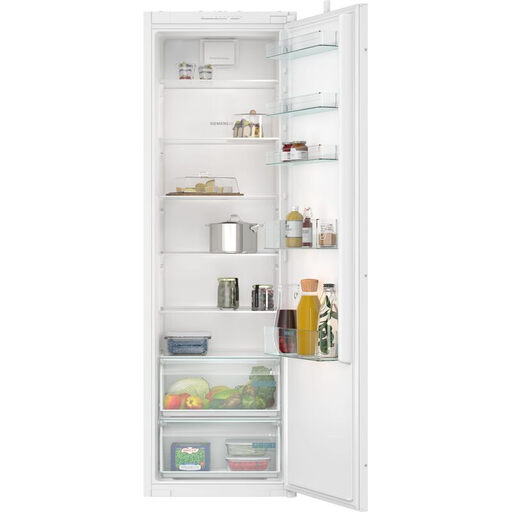
Why this product suits the profile: This fully integrated fridge offers 310 litres of dedicated fridge space and is designed for an installation recess approximately 177,5 cm high and 56 cm wide.
The required installation dimensions are clearly stated. As there is no freezer compartment, the entire interior can be used for fresh food.
35 dB, seven safety-glass shelves, two freshness drawers, automatic defrosting and annual consumption of 114 kWh according to the product details.
We have put together a complete, regularly updated list of products that fully meet these strict selection criteria and the safety regulations applicable in the EU.
This depends on the size of your household, how often you shop and how much freezer space you need. A compact appliance may be sufficient for one person or a couple. Families often consider fridge freezers from around 300 litres, while larger households may benefit from 450 litres or more. The separate fridge and freezer capacities are the key figures to check.
For living kitchens, models producing around 35 to 40 dB are considered relatively quiet. However, this value does not mean the appliance will be completely silent. Compressor start-up, room acoustics and the installation position all affect how the noise is perceived.
Its service life depends on the compressor, maintenance, ventilation, door seals and operating conditions. Regular cleaning, correct levelling and sufficient clearance from the wall can reduce the strain on the appliance. When choosing a model, you should also consider the warranty terms, availability of spare parts and repair service.