
Lieferung heute & morgen

Qualitätsgarantie

Willkommens-Angebote freischalten: KOSTENLOSE Lieferung | Bis zu 80 % RABATT | Kostenlose 30-Tage-JoyPlus-Testphase
App herunterladen
A fridge is one of those appliances that runs every day, so it should suit your home, household and shopping habits. Poor purchases are often not caused by the purchase price, but by unsuitable dimensions, incorrectly estimated storage space or ongoing electricity costs.
Three common pitfalls are particularly important:
Do not just measure the available space. Also check the route through doors, hallways and staircases. The following are important:
A slim appliance measuring 47 to 54 cm wide may be more suitable for singles, couples, offices or small kitchens than a standard model. Families often benefit from a fridge freezer with around 250 to 330 litres of usable capacity. For significantly higher storage needs, larger French-door or side-by-side appliances may be suitable.
The litre capacity alone does not indicate how easy the interior will be to organise in everyday use. Pay attention to how the space is divided:
A fridge with a freezer compartment is sufficient for people who only occasionally store frozen food. Anyone who regularly batch-cooks or freezes larger quantities is more likely to need a fridge freezer or a separate freezer.
The energy efficiency classes on the EU label range from A to G. Also compare the stated annual consumption in kilowatt hours. An energy-efficient fridge with a higher purchase price may be more economical over the long term, provided its size and features are genuinely required.
The noise level in dB(A) is also relevant. Models producing around 35 to 40 dB(A) may be more comfortable in open-plan kitchens, studio flats and offices. However, how loud an appliance seems in practice depends on the room acoustics, flooring and installation. A level appliance with sufficient clearance from the walls can reduce vibrations.
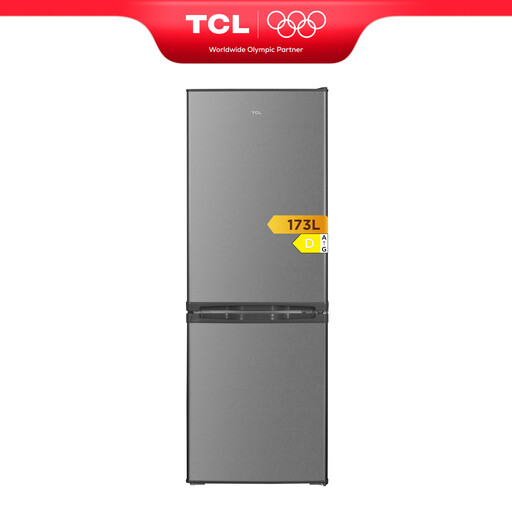
Why this product suits this profile: With 121 litres of fridge space and 52 litres of freezer space, this combination is suitable for smaller households with regular but manageable shopping needs.
Adjustable shelves and a salad drawer make it easy to use, while energy efficiency class D provides a clear benchmark for comparison.
LED interior lighting, adjustable shelves and a separate fresh-food compartment.
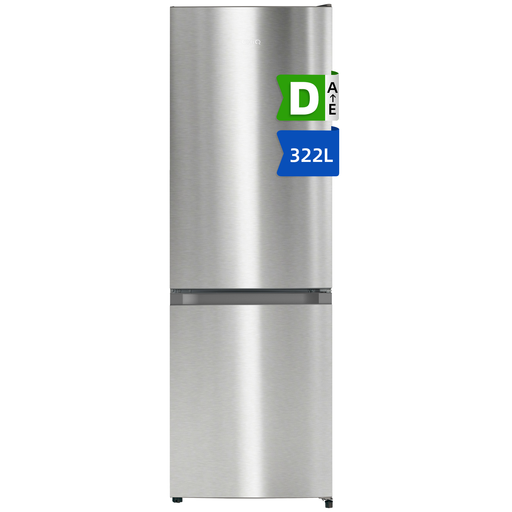
Why this product suits this profile: With 226 litres of fridge space and 96 litres of freezer space, it offers families additional room. The appliance is 59.5 cm wide, 185.5 cm high and 63.5 cm deep.
The Total No Frost system prevents ice from building up in the freezer section. Its greater depth should be measured before purchase.
Energy efficiency class D, annual consumption of 196 kWh, 37 dB(A), and climate classes N, SN, ST and T.
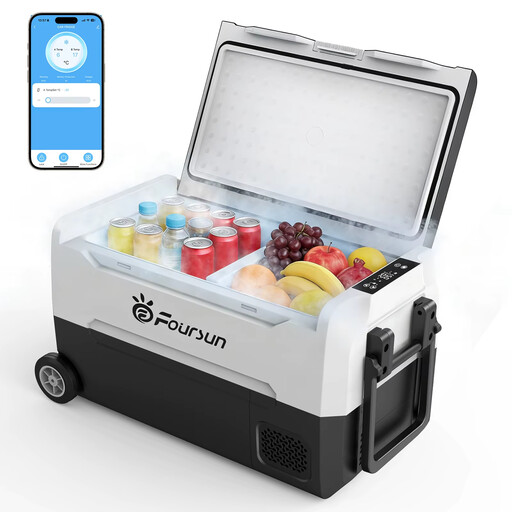
Why this product suits this profile: For a motorhome, camping, car or boat, a portable compressor fridge with 35 litres of usable capacity is more flexible than a fixed appliance.
Unlike a purely thermoelectric cool box, it has a stated temperature range of −20 to +20 °C and can be operated using 12/24-V and 100–240-V connections.
App control, ECO mode, wheels and stated power consumption of 0.18 kWh per day in ECO mode.
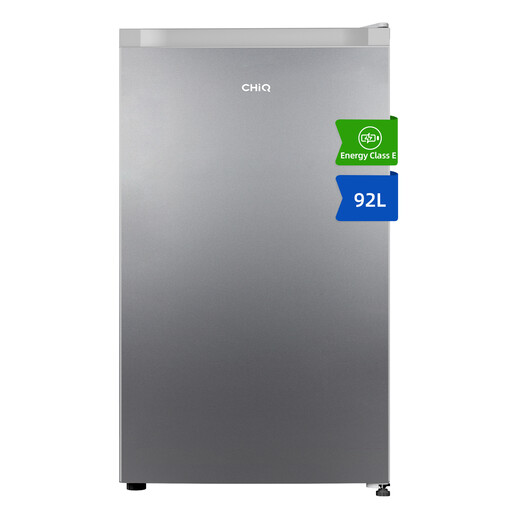
Why this product suits this profile: Measuring 47 cm wide and offering 92 litres of capacity, this appliance is suitable for student flats, offices, guest rooms or as an additional fridge.
The seven-stage temperature control, reversible door and adjustable glass shelves make it easier to adapt the appliance to small spaces.
Energy efficiency class E, annual consumption of 84 kWh, salad drawer and separate fridge compartment.
We have put together a complete, regularly updated list of products that fully meet these strict selection criteria and the safety regulations applicable in the EU.
For two people, a total usable capacity of around 150 to 250 litres may be suitable. Your shopping habits are the deciding factor. Anyone who shops for fresh food and freezes very little will need a different layout from a household that stores provisions.
Multiply the stated annual consumption in kWh by your electricity price per kWh. For example, with annual consumption of 200 kWh and an electricity price of 0.35 euros per kWh, the cost would be around 70 euros per year. Actual consumption depends on factors including room temperature, how full the appliance is, how often the door is opened and the settings used.
Its lifespan depends on its design, usage, maintenance and location. Look for clear information about the warranty or statutory guarantee, the availability of spare parts and the manufacturer's care instructions. Regularly cleaning the seals and ensuring adequate ventilation can help support trouble-free operation.