
Lieferung heute & morgen

Qualitätsgarantie

Willkommens-Angebote freischalten: KOSTENLOSE Lieferung | Bis zu 80 % RABATT | Kostenlose 30-Tage-JoyPlus-Testphase
App herunterladen
A fridge is one of the appliances that runs every day. That means poor choices quickly become noticeable: an unsuitable door opening makes access more difficult, insufficient ventilation clearance can affect cooling performance, and a seemingly cheap fridge with high annual consumption creates ongoing costs. Long feature lists are not automatically helpful either if the interior, noise level or installation dimensions do not suit your household.
The appliance width alone is not enough for planning. Many models also need clearance from the wall and neighbouring furniture so that heat can escape. You should therefore check:
A fridge for small kitchens may look compact, but it might not fit beneath a worktop if it is a few centimetres too tall.
The EU energy label ranges from A to G. However, the energy class should be considered alongside the stated consumption in kilowatt-hours per year (kWh/year). A larger appliance may use more electricity than a smaller model despite having the same energy class. You should therefore compare appliances with a similar usable capacity.
With a fridge-freezer combination, you should also consider the separate capacities of the fridge and freezer compartments. An appliance with a large freezer compartment is not automatically the right choice if you mainly store fresh food in everyday use.
No Frost, rapid cooling, LED lighting and adjustable glass shelves can all be useful. What matters is whether they suit your usage requirements. A fridge with a freezer compartment is often sufficient for single people and couples. If you need to store larger quantities, a fridge-freezer combination with separate drawers may be more practical.
You should also look beyond the marketing terms:
For one person or a studio flat, a mini fridge with around 80 to 100 litres may be sufficient. Couples often need more fridge space, while small families can benefit from a fridge-freezer combination with separate compartments. The stated usable capacity is more informative than the external dimensions alone.
Models producing around 38 to 40 dB are often perceived as comparatively quiet in living and working areas. This figure comes from standardised product information; actual perceived noise can be affected by the flooring, distance from the wall and room acoustics. You should pay particular attention to this parameter when choosing a fridge for a bedroom or open-plan kitchen.
A fridge with LED lighting improves visibility inside, but says nothing about cooling performance or electricity consumption. Adjustable glass shelves are useful if you regularly store packages of different sizes. With an under-counter fridge, the height and ventilation must match the kitchen unit precisely. A freestanding fridge, on the other hand, gives you more flexibility when choosing where to place it.
Before ordering, it is worth running through this quick checklist:
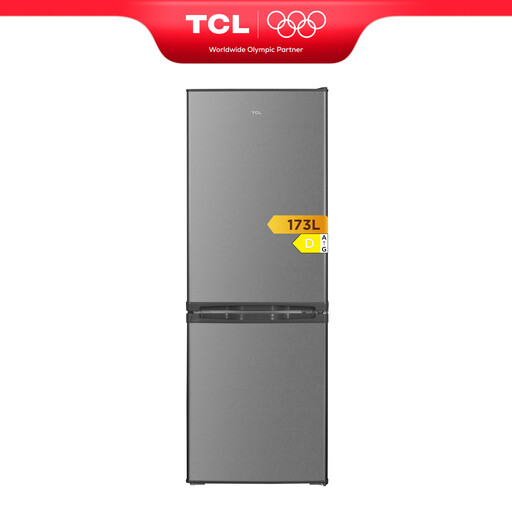
Why this product suits the profile: The combination offers 121 litres of fridge capacity and 52 litres of freezer capacity, making it suitable for single people or couples who regularly need to store frozen food.
The separate capacity figures make the available storage space easy to understand. Height-adjustable shelves help you adapt the interior to different containers.
Energy efficiency class D, LED lighting and adjustable shelves; the product description also mentions a Fresh Zone.
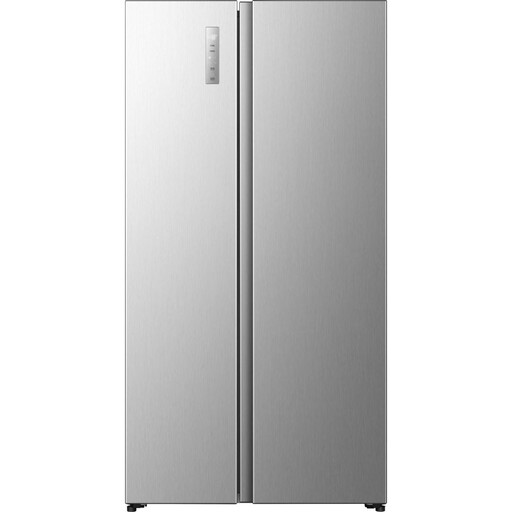
Why this product suits the profile: With 347 litres of fridge space and 197 litres of freezer space, this side-by-side appliance is designed for larger households that need plenty of storage.
The stated total usable capacity of 544 litres, together with the separate compartments, prevents any uncertainty when assessing storage space. The dimensions of 178.6 × 91.1 × 61.5 cm should be measured before purchase.
Total No Frost, inverter compressor, Multi-Airflow, LED display and adjustable glass shelves; the stated noise level is around 39 dB(A).
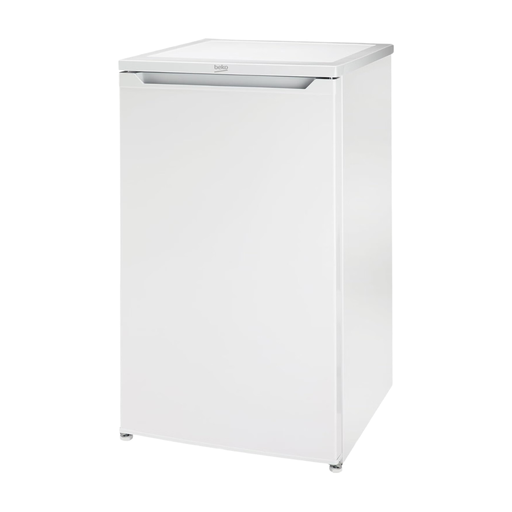
Why this product suits the profile: The 88-litre freestanding fridge is suitable as a second appliance for an office, bedroom, holiday flat or small kitchen.
The width of 47.5 cm and height of 81.8 cm make it easier to plan your space. The reversible door prevents you from being restricted to a single opening direction.
88 litres of usable capacity, a noise level of 38 dB, automatic defrosting, LED interior lighting and three glass shelves.
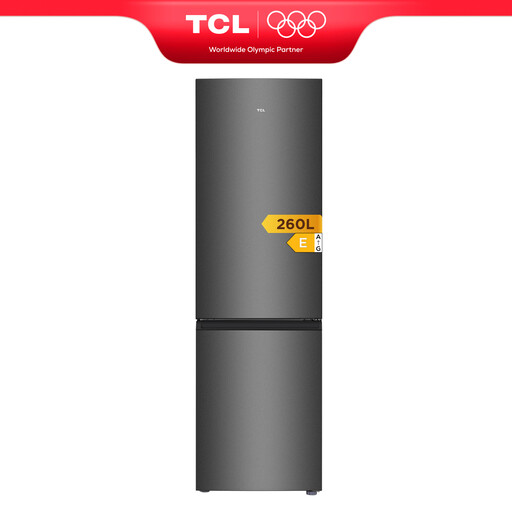
Why this product suits the profile: With a total capacity of 260 litres and a width of 55 cm, this appliance combines a separate freezer compartment with a space-saving footprint.
The product details specify the dimensions, fridge and freezer capacities, as well as the noise level of 40 dB. The reversible door makes it easier to adapt the appliance to different kitchen layouts.
187 litres of fridge space, 73 litres of freezer space, LED lighting, three freezer drawers and height-adjustable feet.
We have put together a complete, regularly updated list of products that fully meet these strict selection criteria and the safety regulations applicable in the EU.
That depends on the model. A clearance of at least a few centimetres at the rear and sides is often recommended. The instructions for use provide the definitive guidance. Ventilation openings must not be covered, and the appliance should stand on a stable, level surface.
Its lifespan depends on usage, ambient temperature, care and maintenance. Regularly cleaning the door seal, ensuring adequate ventilation and avoiding unnecessarily long periods with the door open can help support reliable operation. If you notice unusual noises or visible damage, stop using the appliance and contact customer services.
Use the stated annual consumption in kWh and multiply it by your electricity price per kWh. For a fair comparison, appliances should have a similar size and range of features. An energy-efficient fridge should therefore not be assessed on its energy class alone, but on the combination of its class, usable capacity and annual consumption.