
Lieferung heute & morgen

Qualitätsgarantie

Willkommens-Angebote freischalten: KOSTENLOSE Lieferung | Bis zu 80 % RABATT | Kostenlose 30-Tage-JoyPlus-Testphase
App herunterladen
A fridge is one of the appliances that runs every day for many years. Choosing one that suits your kitchen, household size and shopping habits is therefore particularly important. Marketing terms such as “large”, “quiet” or “energy-efficient” do not tell you much on their own. The key factors are usable capacity, energy consumption, noise level, dimensions and features.
A large fridge can take up a lot of space without making the best use of the available interior. So, do not just check the width. Also look at the usable capacity in litres and how the space is divided between the fridge and freezer compartments. A fridge freezer with a capacity of 250 litres may be sufficient for a couple, while families will often need at least 300 litres or more.
Depth is also important: the CHiQ JR318WSD model is 63.5 cm deep, for example, allowing it to stand in front of a kitchen unit run. You must also take the door opening radius and ventilation clearances into account.
The EU energy label ranges from A to G. The energy efficiency class should always be considered alongside the annual consumption in kWh. A larger class C appliance may use more electricity than a smaller class E fridge, but it also offers considerably more usable capacity.
Examples from the product data: the homeX CFSN2531C-S is specified at 141 kWh per year, while the Gorenje NRK620CA2XL4 is rated at 158 kWh. For large appliances such as the LG GMF961EV6C, the stated figure is 230 kWh per year with 645 litres of usable capacity. Actual costs depend on your electricity tariff and how the appliance is used.
According to the product information, a No Frost fridge prevents ice from forming in the freezer compartment, reducing the need for manual defrosting. However, this does not mean that cleaning, caring for the seals and checking the ventilation can be neglected.
A fridge with a water dispenser or ice dispenser requires additional care. Water tanks, dispensing areas and, where applicable, filters must be cleaned or replaced in accordance with the instruction manual. Also check whether a mains water connection is required or whether a tank needs to be filled manually.
As a general guide, the required usable capacity can be estimated based on household size:
The layout is just as important. A 70/30 fridge freezer provides more space for fresh food, while a model with a large freezer compartment is suitable for storing larger quantities. French-door fridges and multi-door models make it easier to organise the interior, but require more floor space.
Noise levels are given in dB(A). Even a difference of just a few decibels can be noticeable in an open-plan living area. The product data lists, for example, 35 dB for the Gorenje NRK620CA2XL4, 37 dB for the CHiQ JR318WSD and 39 dB for the homeX CFSN2531C-S.
Noise emissions also depend on the installation, the floor and the operating phase. A freestanding fridge should be level and positioned with sufficient clearance from the wall to prevent vibrations from being amplified.
Before buying, measure:
A reversible door hinge is practical in small kitchens. With an American-style fridge freezer or French-door fridge, both doors should be able to open fully. Appliances with a water dispenser also require you to consider installation and cleaning.
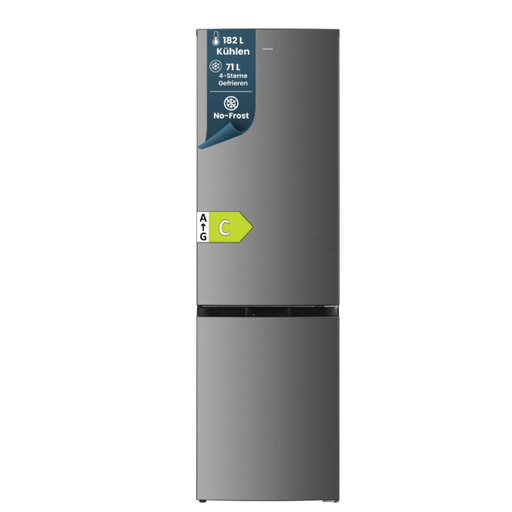
Why this product suits this profile: With 253 litres of usable capacity, a width of 54.5 cm and a reversible door, this model is ideal for smaller kitchens and everyday shopping.
The stated dimensions and separate usable capacities of 182 litres for the fridge and 71 litres for the freezer make it easier to plan your available space realistically.
No Frost, energy efficiency class C, 141 kWh per year and 39 dB(A), according to the product data.
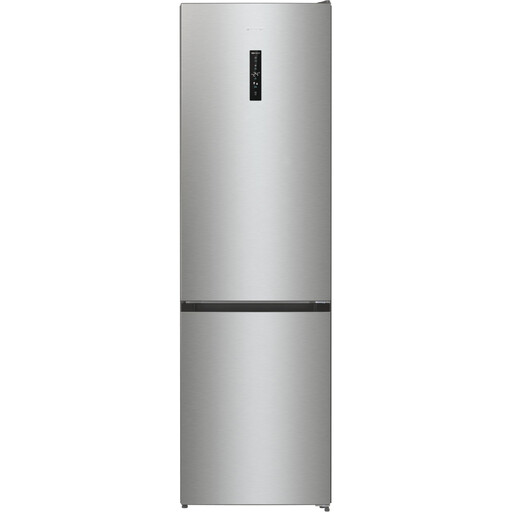
Why this product suits this profile: The combination of 331 litres, No Frost and separate Super Cool and Fast Freeze functions supports well-organised food storage.
No Frost reduces the need for manual defrosting, while the temperature and door alarms help prevent doors being left open accidentally.
Energy efficiency class C, 158 kWh per year, 35 dB and reversible doors, according to the manufacturer’s information.
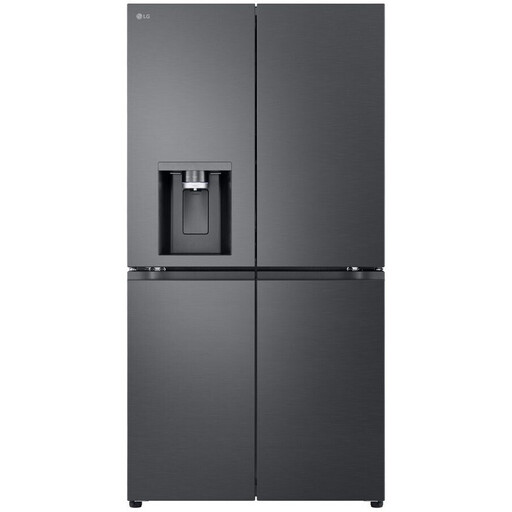
Why this product suits this profile: With a total capacity of 645 litres and an integrated water and ice dispenser, it is designed for large households that shop frequently and need plenty of freezer space.
The split between 384 litres of fridge space and 261 litres of freezer space is clearly stated, while the installation width is 91.4 cm.
No Frost, 34 dB(A), energy efficiency class C and smart functions, according to the product description.
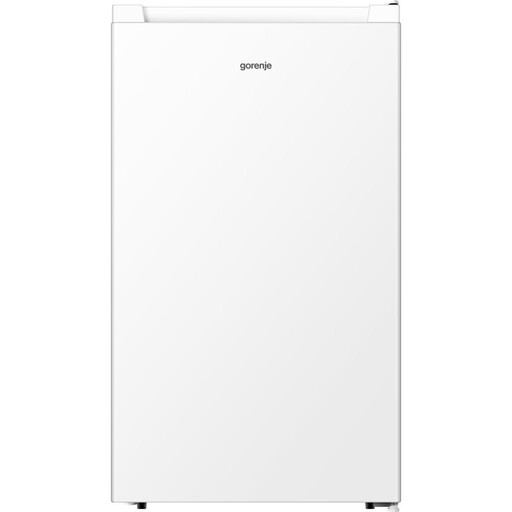
Why this product suits this profile: With 82 litres of capacity and a height of 84.2 cm, this appliance is suitable for single-person households, offices, guest rooms or use as an additional fridge.
Its compact dimensions prevent an oversized appliance from taking up unnecessary floor space, while the 7-litre freezer compartment is listed separately.
38 dB(A), LED lighting and a manually fillable water dispenser, according to the product data.
We have put together a complete, regularly updated list of products that fully meet these strict selection criteria and the safety regulations applicable in the EU.
Consumption depends on the size, energy efficiency class, ambient temperature and how the appliance is used. For a fair comparison, use the kWh per year figure shown on the energy label. Multiply it by your electricity price per kilowatt-hour to calculate the approximate annual running costs.
A specific service life cannot be guaranteed. It is influenced by factors including the compressor, seals, usage, cleaning and installation conditions. Regular cleaning, unobstructed ventilation openings and a suitable temperature help reduce avoidable strain. Warranty and service conditions should be checked before buying.
The required clearance is specified in the relevant installation instructions. In general, the compressor and heat exchanger need sufficient space for air to circulate. Doors and drawers must also be able to open fully. In a small kitchen, it is therefore not just the appliance dimensions that matter, but also the actual space needed to move around it.