Households with different mealtimes
If people eat at different times, separate, easy-to-reach containers help keep the remaining portions covered. The BfR recommends storing cooked leftovers in the fridge.


If you eat at different times, it makes sense to choose a fridge with room for covered individual portions. If you’ll be eating some portions after the recommended refrigerated storage period, you’ll also need freezer space. The German Federal Institute for Risk Assessment (BfR) recommends eating cooked leftovers within two to three days and cooling larger quantities to below +7 °C within a few hours. A freshness compartment doesn’t replace this advice.
If people eat at different times, separate, easy-to-reach containers help keep the remaining portions covered. The BfR recommends storing cooked leftovers in the fridge.
Before buying, check that there’s room for shallow, covered containers alongside your other food, and that the fridge will fit in your kitchen. The BfR advises allowing enough space for batch cooking; the consumer advice centre recommends considering the fridge’s size and energy consumption when comparing models.
If you won’t need some portions straight away, extra freezer capacity could be useful for planning ahead. The BfR recommends checking in advance that you have enough space in your fridge or freezer.
The BfR recommends dividing large quantities of cooked food into shallow portions and cooling them to below +7 °C within a few hours. So choose a fridge based on its usable capacity and how you plan meals for later, rather than on extra features alone.
A good choice if: you’ll eat the portions within the recommended refrigerated storage period and don’t need freezer space.
Keep in mind: you can’t freeze portions for later in this type of fridge. A freshness drawer doesn’t mean cooked leftovers can be stored for longer.
A good choice if: you have a suitable cabinet space and want to freeze a portion now and then.
Keep in mind: compare the fridge and freezer capacities separately, and check the cabinet dimensions and door fitting.
A good choice if: you regularly want to freeze portions for later in the week and have enough floor space.
Keep in mind: weigh usable fridge capacity and annual energy consumption against the space available. Separate cooling circuits don’t replace sealed containers.
| Priority | What to check when buying | Who is this important to? |
|---|---|---|
| Cooling and hygienic access | Temperature settings and a way to check the actual temperature; easy-to-reach, easy-to-clean shelves | When I’m chilling cooked chicken for different mealtimes, controllable cooling and hygienic access matter to me. That’s why around 33% of consumers prioritise cooling and food hygiene. |
| Space for portions and easy access | Usable fridge capacity; shelf height to suit your containers | If I want to store several covered portions at once and take them out individually, I look for enough fridge space and easy-to-reach shelves. Around 27% of consumers prioritise space for individual portions and easy access. |
| Freezer space for later meals | Separately listed freezer capacity; overall design and enough room for the portions that need chilling at the same time | If I plan to eat some portions on later days, I make sure there’s freezer space as well as fridge space. Around 20% of consumers prioritise freezing portions for later. |
| Space and energy consumption | Appliance and cabinet dimensions; annual consumption in kWh for a comparable design | I want an appliance that fits the space I have without being unnecessarily large, so I compare dimensions and energy consumption. Around 20% of consumers focus first on the space it takes up and the ongoing electricity costs. |
Freshness systems may be designed for certain foods. That doesn’t mean cooked leftovers can be kept for longer than the recommended storage period.
Follow the BfR’s advice on cooling and storage times. Assess an extra compartment only by the function described for that specific model.
Fridge and freezer space serve different purposes. The consumer advice centre notes that larger appliances can use more electricity.
Compare usable fridge capacity, shelf space and annual consumption in kWh. Also check that the appliance will actually fit in your kitchen.
An oversized appliance can take up unnecessary space and use more electricity.
Built-in appliances need to fit the cabinet space and have a suitable door fitting; freestanding models have different space requirements.
First decide on the design and check the available dimensions. Then compare your fridge and freezer needs and the features on offer.
A built-in appliance that doesn’t fit the cabinet space can mean extra planning and installation work.
The KI31RADD1 built-in fridge has no freezer compartment and could suit you if you’ll be eating portions soon and have a suitable cabinet space.
The KIL42ADD1 built-in fridge is an example of a model with an integrated freezer compartment for portions you want to freeze occasionally.
The integrated IRBbi 5151 Prime BioFresh is a larger model for households with a suitably tall cabinet space.
The freestanding B7RCNE367HG fridge freezer, with the freezer at the bottom, is an example of a design with separate fridge and freezer sections.
The freestanding RB38C7B5AB1/EF is a larger fridge freezer that needs plenty of space.
This selection includes freestanding fridges and fridge freezers for chilled individual portions, as well as models with freezer space for meals planned for later.
 No image available
This freestanding fridge freezer could suit you if you need freezer space for later meals as well as room for chilled portions.
375 l; energy efficiency class A; freestanding; black.
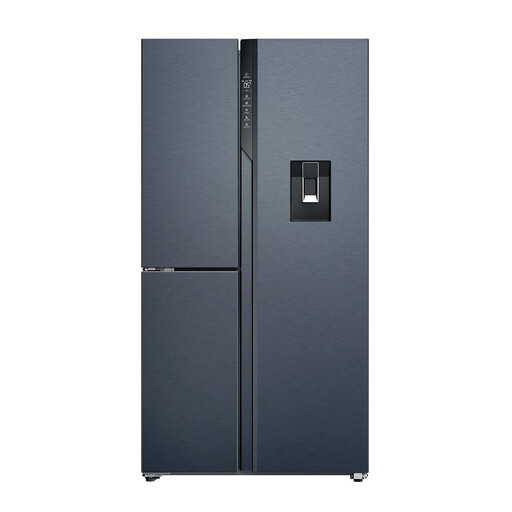 No image available
This freestanding side-by-side model has separate fridge and freezer sections. Before buying, check that its dimensions will fit the space you have available.
No Frost; LED lighting; energy efficiency class E; brushed black.
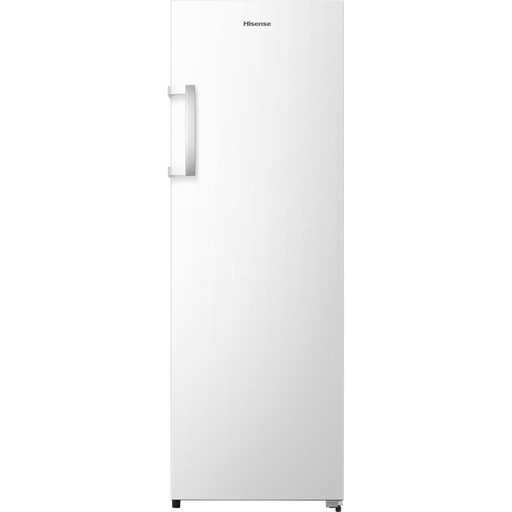 No image available
A fridge without a freezer compartment could suit you if you’ll be chilling portions to eat soon and don’t need freezer space for later meals.
Energy efficiency class C.
 No image available
This freestanding fridge freezer could work for chilled portions and meals you want to freeze occasionally.
262 l; Low Frost; 70/30 split; 54 cm wide and 176 cm high; black.
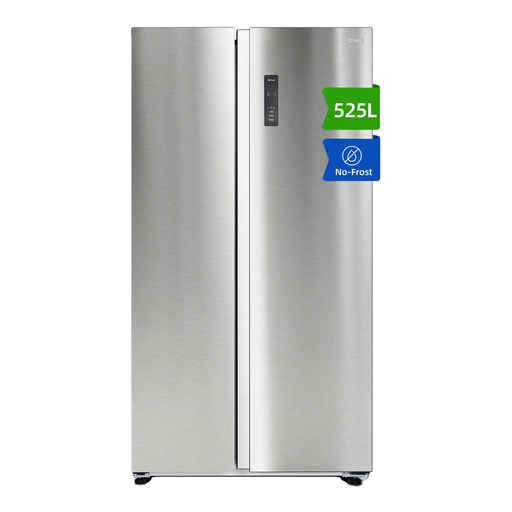 No image available
This side-by-side model has separate fridge and freezer sections. Check that you have enough space in your kitchen before choosing it.
525 l total capacity; 333 l fridge and 192 l freezer; No Frost; Multi-Airflow; energy efficiency class E.
The BfR recommends keeping cooked leftovers in the fridge and eating them within two to three days. Divide larger quantities into shallow portions and cool them to below +7 °C within a few hours. This food safety advice isn’t a guaranteed storage period for any particular fridge model.
If you eat at different times, it makes sense to prepare separate, sealed portions from the outset. This keeps the remaining portions covered and chilled. Also keep cooked food separate from raw poultry and from any unwashed containers used for it.
Before ordering, compare the appliance dimensions. For a built-in model, also check the cabinet dimensions and the door fitting for that specific model. For example, Siemens lists a cabinet height of 1025 mm for the KI31RADD1; Liebherr gives 177,2–178,8 cm for the IRBbi 5151. These dimensions apply to the models named.
For appliances with a suitable design, compare the annual consumption in kWh shown on the EU energy label. The consumer advice centre recommends taking energy consumption and appliance size into account when choosing. Your ongoing costs will also depend on your electricity tariff.
Yes. Under EU energy labelling rules, the label must also be clearly visible in online shops. It helps you compare the information shown for each appliance, but doesn’t require you to buy a particular energy efficiency class.