If your current fridge keeps the cream chilled in line with the pack instructions and has room for a sealed container, making a single batch to freeze is no reason on its own to buy a new appliance. When choosing a fridge, the right amount of refrigeration space comes first; you only need a freezer compartment as well if you actually plan to freeze the portions for later. Compare fridge and freezer capacity separately, along with the appliance dimensions and annual energy use, rather than treating a freshness feature as a promise of longer shelf life.
Which solution is right for you?
Batch preppers
You keep opened cream until you’re ready to use it soon and want to check that the temperature where it’s stored is suitable, and that there’s room for a sealed container. The Verbraucherzentrale recommends storing cream on the middle shelf of the fridge.
Regular freezers
You genuinely need space for portions to freeze as well as chilled ingredients, so you’ll need to plan for fridge and freezer space separately. The Verbraucherzentrale treats the amount of freezer space you need as a separate factor when choosing an appliance.
Households short on space
You need to balance the appliance dimensions with the usable fridge space, rather than comparing only the total capacity. The Verbraucherzentrale recommends considering both the space available and the storage you need when choosing an appliance.
What should you look for when buying?
Keep using your current fridge
A good fit if: The storage area meets the pack instructions and has room for a sealed container.
Bear in mind: You may need separate freezer space for portions you plan to freeze later.
Fridge without a freezer compartment
A good fit if: You mainly need fridge space and already have freezer space elsewhere, or don’t need any.
Bear in mind: You won’t be able to store portions for your batch in the freezer.
Fridge freezer
A good fit if: You regularly freeze food and don’t have suitable freezer space already.
Bear in mind: Fridge and freezer capacity, appliance dimensions, annual energy use and defrosting method all need to suit the model you choose.
| What to consider |
What to check before buying |
Who is this particularly important for? |
| Chilling opened cream |
Follow the pack instructions and check whether the container will fit on a suitable shelf; measure the temperature where you’ll actually store it. |
If I’m keeping opened cream until I use it, I want to be able to assess the storage area against the pack instructions. Around 36 % of consumers prioritise keeping opened cream reliably chilled. |
| Freezer space for portions |
Check freezer capacity separately from fridge capacity and look at the defrosting method for the specific model. |
If I want to freeze portions after preparing them, I need enough space without confusing freezer capacity with fridge space. Around 29 % of consumers prioritise having enough freezer space for prepared portions. |
| Fridge space and available room |
Measure the floor space and clearance needed to open the appliance; compare the model’s fridge capacity, shelf layout and external dimensions. |
If my kitchen has limited space, I want to fit in my containers and other food without choosing an appliance that’s too large. Around 21 % of consumers focus above all on finding the right fridge capacity and fitting the appliance into their available space. |
| Energy use and noise |
Compare the specific model’s annual consumption in kWh and noise emissions in dB(A); your actual electricity costs also depend on your own tariff and how you use the appliance. |
If the appliance is near a living area, noise matters to me as well as running costs. Around 14 % of consumers put running costs and keeping the appliance quiet in its location first. |
Which buying misconceptions should you avoid?
-
Counting freezer capacity as fridge space
Freezer space is for portions you plan to freeze later; until you use it, opened cream needs a suitable place in the fridge.
Compare fridge and freezer capacity separately against what you actually need.
An additional appliance takes up space and adds to your ongoing electricity use.
-
Assuming a freshness feature guarantees a longer shelf life
A freshness drawer doesn’t prove that an opened pack of cream will stay usable for longer.
Give the instructions on the specific pack and the temperature where it’s stored more weight than general claims about freshness.
-
Confusing LowFrost with no-frost
Siemens does not explicitly state that the KG39EAICA fridge freezer never needs defrosting.
If you’re buying freezer space, check the defrosting method for the exact model.
If the model isn’t frost-free, you may need to defrost it later.
Relevant brands and model examples
Bosch
The Bosch KSV36VWEP is a freestanding fridge without a freezer compartment, showing how you can opt for fridge space instead of an integrated freezer.
- Bosch lists this model as having 346 l of fridge capacity, annual energy consumption of 116 kWh and dimensions of 1860 × 600 × 650 mm.
- This model has no freezer compartment. The VitaFresh feature doesn’t prove that opened cream will keep for longer.
Siemens
The Siemens KG39EAICA is a freestanding fridge freezer for households that need both fridge and freezer space in one appliance.
- Siemens lists this model as having 249 l of fridge capacity, 94 l of freezer capacity and annual energy consumption of 149 kWh.
- According to Siemens, lowFrost on this model doesn’t mean that it never needs defrosting.
Liebherr
The Liebherr Re 1000 Pure is an under-counter fridge, an option if you have limited space and need extra refrigeration.
- Liebherr lists a total capacity of 92 l and external dimensions of 68 × 55 × 60,7 cm.
- The adjustable +2 to +8 °C range doesn’t prove that this temperature is reached in every storage area. No freezer compartment is listed for this model.
Beko
The Beko B7RCNE367HG is a fridge freezer with a bottom freezer compartment, for when your freezer needs and available space match.
- Beko lists this model as having No Frost, a height of 186,5 cm and a width of 59,5 cm.
- The manufacturer’s HarvestFresh feature is for fruit and vegetables; it doesn’t prove that opened cream will keep for longer.
Joybuy products for chilling and freezing
This selection includes fridge freezers for extra freezer space and fridges for households whose priority is fridge capacity.
 No image available
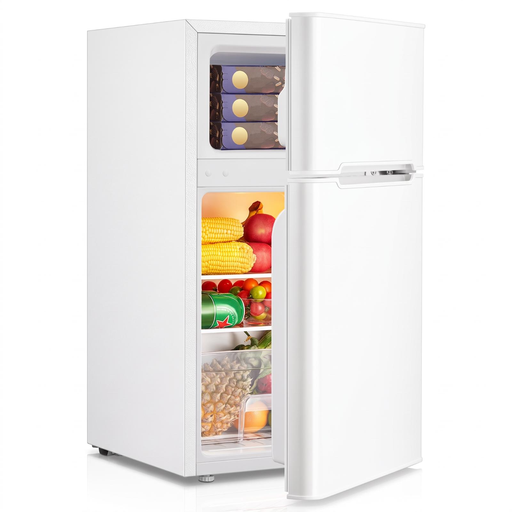
FOHERE 90 l mini fridge with freezer compartment, 2 doors
For limited space and a need for both fridge and freezer capacity in one appliance.
90 l; 7 temperature settings; 2 doors; 43 dB according to the product name.
View at Joybuy
 No image available
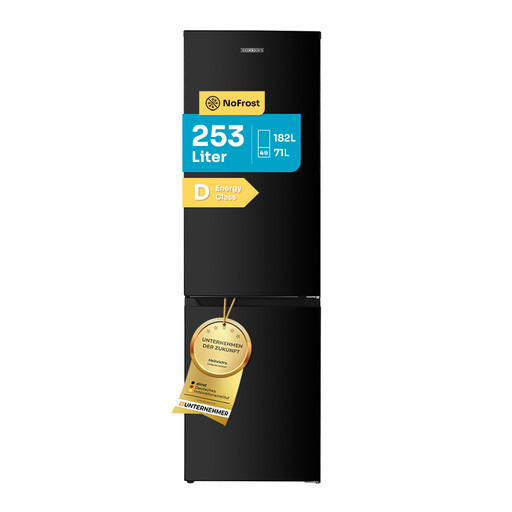
Heinrich’s fridge freezer, 253 l, Black Inox
For households that need a separate freezer compartment as well as fridge space.
182 l fridge capacity and 71 l freezer capacity; No Frost; 39 dB according to the product name.
View at Joybuy
 No image available
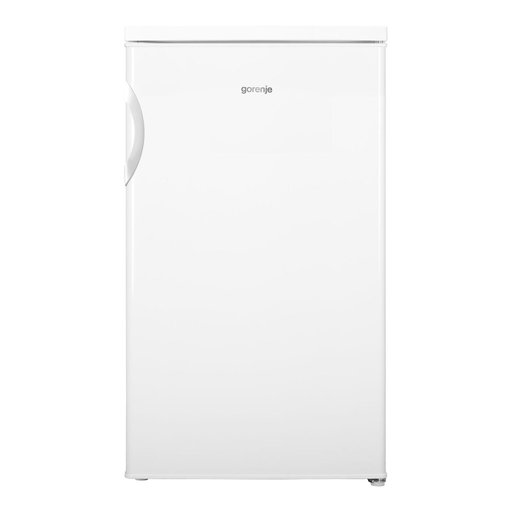
Gorenje G200 R49DPW Freestanding Fridge, 133 l
An option if you mainly need fridge space and want to choose an appliance to suit your available space.
133 l; energy rating D according to the product name.
View at Joybuy
 No image available
Sonlu CS-100L Single-Door Fridge, 82 l
For extra fridge space, if a single-door fridge suits your available space.
82 l; energy rating E according to the product name.
View at Joybuy
 No image available
TCL RF120DWE0 Fridge, 90 l, with Chiller Box
A compact fridge option if you’re looking for extra storage with a Chiller Box.
90 l according to the product name.
View at Joybuy
Frequently asked questions
Where should I keep opened cream until I use it?
Always check the instructions on the specific pack first. The Verbraucherzentrale recommends keeping cream on the middle shelf of the fridge at 5 to 7 °C; the German Federal Institute for Risk Assessment recommends 2 to a maximum of 7 °C for easily perishable foods in general. These recommendations don’t set a universal shelf life for every opened pack of cream.
Can I keep cream in the fridge for longer and then make it safe again by freezing it?
No. Freezing is no substitute for keeping cream properly chilled and using it in good time. Follow the storage and use instructions on the specific pack; they don’t provide a single time limit that applies to every opened pack of cream. The Verbraucherzentrale also notes that sour cream and crème fraîche may curdle after thawing.
How can I check whether a fridge will fit in my available space?
Compare the dimensions of the specific appliance with the space you have and allow room for the door to open. Check fridge and freezer capacity separately; for cream, what matters is a usable shelf in the fridge, not just the total capacity.
What does the EU energy label tell me about running costs?
For refrigeration appliances, the EU energy label shows information including the energy efficiency class, annual consumption in kWh, compartment capacity and noise emissions. The European Commission lists these as comparison figures; your actual electricity costs also depend on how you use the appliance and your own tariff.
What are the rules in Germany on statutory rights and disposing of an old appliance?
Statutory rights are separate from a voluntary guarantee, as the Verbraucherzentrale explains. Old electrical appliances must not go in household waste: the German Environment Agency sets out how they should be collected separately and notes that local collection points generally accept them free of charge. Check separately whether your purchase includes an installation or old-appliance collection service.


