Preparing cut herbs
If you buy or pick fresh herbs and turn them into frozen portions within a few days, you’ll need a practical way to store them in the meantime. The BZfE recommends using the fridge’s salad drawer.


If you’re not going to use freshly cut herbs for a few days, a usable salad drawer and suitable storage matter more than broad claims about freshness. The Federal Centre for Nutrition (BZfE) recommends keeping cut herbs in the salad drawer for only a few days. If you already have a suitable freezer, you can choose a new appliance mainly by its fridge capacity, dimensions and annual energy consumption. If you also want to freeze portions of herbs in it, you’ll need to consider the freezer capacity and whether the freezer compartment is suitable.
If you buy or pick fresh herbs and turn them into frozen portions within a few days, you’ll need a practical way to store them in the meantime. The BZfE recommends using the fridge’s salad drawer.
If you plan to chill fresh herbs first and freeze them later, the fridge and freezer capacities need to suit the quantities you have in mind. Guidance from the BZfE and the consumer advice centre can help you consider these two stages separately.
If you’re planning for a small kitchen or want to keep electricity use in mind, compare the dimensions, usable capacity and energy consumption of the specific model. The consumer advice centre recommends considering size and energy use together.
First check whether you already have suitable freezer space. Then consider the salad drawer and the space the whole appliance will take up.
| What you need | What to check before buying | Who is this relevant to? |
|---|---|---|
| Keeping cut herbs fresh | The size and practicality of the salad drawer, and whether there’s room to store herbs in a protected way. | If I won’t use my cut herbs for a few days, I want to store them properly in the salad drawer. Around 33% of consumers prioritise having somewhere to store fresh herbs in the meantime. |
| Freezing portions of herbs | Check whether you already have freezer space; if not, check the freezer capacity and look for a four-star rating. | If I want to freeze the portions in the same appliance, I need enough suitable freezer space. Around 27% of consumers prioritise being able to freeze portions of herbs. |
| Space for the appliance and usable capacity | Check the external dimensions and compare the stated fridge and freezer capacities separately with the space available. | If my kitchen is short on space, I want an appliance that will fit and still offer enough room inside for my food. Around 20% of consumers prioritise suitable dimensions and usable capacity. |
| Energy consumption | Compare the EU energy label and annual kWh consumption of appliances with similar capacities. | If running costs matter to me, I compare the annual energy use of appliances that are the right size for my needs. Around 20% of consumers prioritise energy consumption. |
Manufacturers usually describe these compartments as being for fruit and vegetables. For cut herbs, the BZfE also recommends suitable storage and keeping them in the fridge for only a few days.
Check the compartment’s size and how practical it is to use, rather than assuming its name guarantees a particular shelf life.
An ice box isn’t automatically designed for freezing fresh food.
If you want the appliance to freeze food, the consumer advice centre recommends looking for a four-star rating. Also check that there’s enough space for your portions.
On the Bosch and Siemens models mentioned here, LowFrost means less ice builds up, not that defrosting is no longer needed.
Compare the freezer technology of the specific model with the level of maintenance you’re happy to take on.
Depending on the model, you may still need to set aside time to defrost it.
A larger appliance can take up more space and use more electricity. The consumer advice centre recommends considering appliance size and energy consumption together.
First check whether you already have suitable freezer space. Then compare appliances that meet your needs by their usable capacity and annual energy consumption in kWh.
Higher running costs can make the appliance more expensive to use.
The fridge-freezers mentioned combine VitaFresh with different freezer technologies.
According to Siemens, the KG39EAICA combines hyperFresh with a separate freezer compartment.
The CBNdgc 5723 Plus combines a BioFresh Fruit & Vegetable-Safe with NoFrost.
According to Haier, the three-door HTW5620DNPT fridge-freezer features a Humidity Zone, freezer drawers and NoFrost.
The RCNE366E70ZXBRN features EverFresh+, HarvestFresh and NoFrost Dual Cooling.
The following fridge-freezers combine a fridge compartment for short-term storage with a separate freezer compartment for portions of herbs.
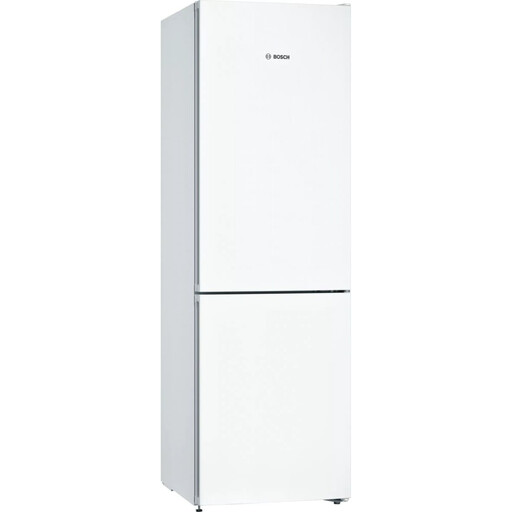 No image available
A good choice if you want to store cut herbs in the salad drawer before freezing portions in the same appliance.
237 l of fridge capacity and 89 l of freezer capacity; VitaFresh with adjustable humidity, a four-star freezer compartment and NoFrost.
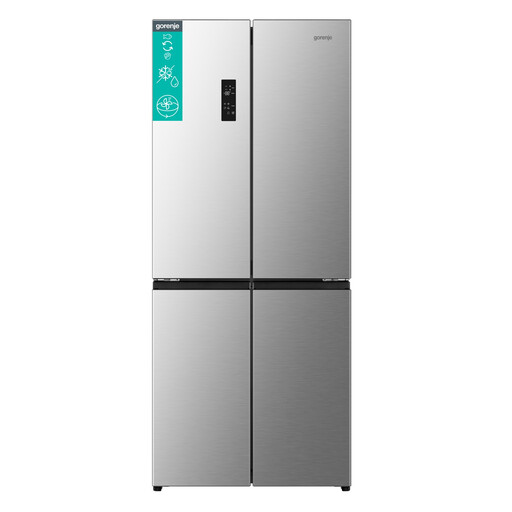 No image available
A good choice if you need a larger freezer compartment for portions as well as space to store herbs in the fridge.
286 l of fridge capacity and 149 l of freezer capacity; CrispZone with HumidityControl, NoFrost Plus and FastFreeze. The stated width is 79,4 cm.
 No image available
A good choice if you want to chill herbs first, then divide them into portions and freeze them in the separate freezer compartment.
220 l of fridge capacity and 113 l of freezer capacity; FRESHConverter+, a four-star freezer compartment and Fast Freezing. The stated energy consumption is 169 kWh per year and the energy class is C; the dimensions are 597 × 1860 × 674 mm.
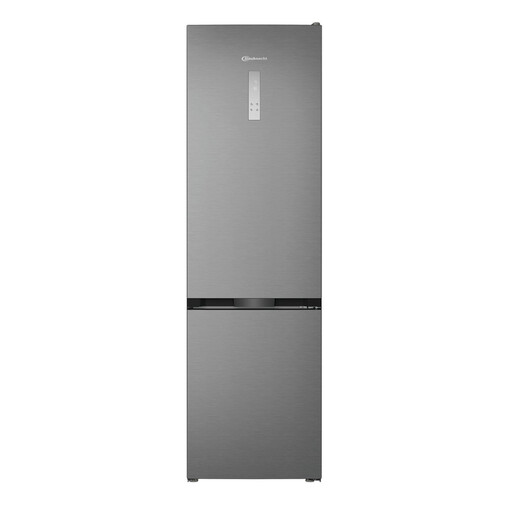 No image available
A good choice if you want to store herbs in the fridge and keep frozen portions in the same appliance.
297 l of fridge capacity and 118 l of freezer capacity; FreshShield, Total NoFrost and Fast Freeze. The stated energy consumption is 214 kWh per year; the dimensions are 67,3 × 59,5 × 204 cm.
 No image available
A good choice if you want to store smaller amounts of herbs in the fridge and freeze them in the same appliance.
187 l of fridge capacity and 75 l of freezer capacity; salad and vegetable drawer, plus a four-star freezer compartment. The dimensions are 176 × 54 × 55 cm. The freezer compartment uses Low Frost; according to the product description, it should be manually defrosted around once or twice a year.
The BZfE recommends storing cut herbs in the salad drawer for only a few days, for example wrapped in a damp cloth or in a food storage container. For freezing, it suggests finely chopped herbs with a little water in ice-cube trays. This does not guarantee a specific shelf life.
No. The BZfE recommends keeping potted basil in a sunny spot and watering it sparingly. For basil leaves that are sensitive to the cold, it describes freezing them finely chopped and moistened with water in ice-cube trays.
If you want to freeze fresh food in it, the consumer advice centre recommends looking for a four-star rating. Also check that there’s enough space for your portions of herbs.
For appliances of a suitable size, compare the stated energy consumption in kWh per year and multiply the difference by your electricity price per kWh. The consumer advice centre points out that larger appliances tend to use more electricity.
According to the European Commission, the EU energy label for household fridges and freezers uses a scale from A to G. It shows information including annual energy consumption and fridge and freezer capacities. The label alone won’t tell you which appliance size is right for your needs.