To store leftover soup after your weekly shop, you need enough usable fridge space for shallow, covered containers. A freezer compartment is particularly useful if you want to keep portions for longer. The German Federal Institute for Risk Assessment recommends cooling larger quantities to below +7 °C within a few hours and eating leftovers within two to three days. So compare fridge and freezer capacities separately, check the internal layout and installation dimensions, and remember: a larger appliance is no substitute for cooling food promptly.
Who is this guide for?
Households with leftover soup
If you batch-cook soup, you’ll need room for several shallow, covered containers and should keep an eye on the actual fridge temperature. The German Federal Institute for Risk Assessment recommends dividing larger quantities of food into smaller portions to cool.
Weekly shoppers with a full fridge
If you need to store portions of soup alongside fresh groceries, usable fridge space and shelf layout matter more than the total capacity alone. The German consumer advice centre recommends considering both size and energy consumption when choosing an appliance.
Households that freeze food
If you regularly freeze portions of soup for later, check the stated freezer capacity as well as the fridge space. The German consumer advice centre cites freezing larger quantities as one possible reason to choose extra freezer space.
What should you look for when buying?
Fridge without a freezer compartment
A good fit if: you’ll eat the leftovers soon and have freezer space elsewhere, or don’t need any.
Bear in mind: you can’t freeze portions in the appliance, so shelf layout and dimensions remain important.
Compact appliance with a small freezer compartment
A good fit if: space is limited and you’d like to freeze a portion now and then.
Bear in mind: the freezer compartment takes up space that could otherwise be used to chill your weekly shop.
Fridge-freezer
A good fit if: you regularly freeze larger quantities and also need space to chill your groceries.
Bear in mind: total capacity alone won’t tell you how much room there’ll be for soup containers or how much energy the appliance will use.
| Priority |
What to check before buying |
Who is it important to? |
| Chilling soup safely |
Allow space for several shallow, covered containers and make sure you can check the fridge temperature. The German Federal Institute for Risk Assessment recommends cooling larger quantities to below +7 °C within a few hours. |
When I put cooked soup away, I want to portion it promptly and be able to check that it’s chilling properly. Around 29% of consumers prioritise safe storage of leftovers. |
| Fridge space for groceries and soup |
Consider fridge capacity separately from freezer capacity, and compare the internal layout with your container sizes. |
If I need to fit fresh groceries and portions of soup in the fridge after shopping, accessible shelves matter most. Around 23% of consumers have this need. |
| Freezing portions |
Check the separate freezer capacity and make sure there’s room for the containers you plan to use. |
If I regularly want to freeze soup for later, I need suitable freezer space rather than extra fridge capacity. Around 18% of consumers prioritise this. |
| Ongoing energy use |
For appliances with enough capacity, compare annual energy consumption in kWh and the EU energy label. The German consumer advice centre notes that larger appliances can use more electricity. |
If I’m choosing an appliance that will be running all the time, I want to compare the energy use of suitable models. Around 18% of consumers prioritise ongoing energy consumption. |
| Available space and appliance style |
Check the appliance or recess dimensions, door clearance and intended installation type against your kitchen. |
If available space limits my choice, the appliance needs to fit the space first. Around 12% of consumers prioritise fitting a specific space. |
Common buying mistakes
-
Assuming total capacity equals space for soup
Total capacity may include freezer space. The shelf layout also affects whether your containers will fit comfortably.
Check fridge and freezer capacities separately, then compare your container dimensions with the internal layout.
-
Planning to store a large pot of hot soup
According to the German Federal Institute for Risk Assessment, larger quantities of food cool more slowly if they aren’t divided between several shallow dishes.
Make room for portioned, covered containers. A larger fridge is no substitute for cooling food promptly.
-
Choosing by energy rating alone
The energy rating alone doesn’t tell you an appliance’s absolute annual energy consumption.
For appliances of a suitable size, compare the stated kWh per year. To estimate your own costs, you’ll also need to consider how you use the appliance and your electricity tariff.
Brands to consider
Liebherr
Liebherr offers the freestanding Rdgd 1401 Pure under-counter fridge, with a total capacity of 111 l and external dimensions of 85 × 55 × 60,7 cm.
- This model has a compact design for spaces where room is limited.
- Total capacity alone doesn’t show whether it will fit both your weekly shop and soup containers.
Samsung
Samsung offers the RB38C607AS9/EF fridge-freezer, with a stated total capacity of 387 l and No Frost+.
- The model has separate fridge and freezer compartments to meet different storage needs.
- Total capacity isn’t the same as usable fridge space for soup. Claims about AI Energy Mode come from the manufacturer and apply only under the conditions it specifies.
Amica
Amica offers the UKSD 361 951 under-counter fridge, with a low-temperature compartment and dimensions of 49,5 × 81,5 × 55,5 cm.
- Its under-counter design could suit a kitchen designed for this type of appliance.
- The manufacturer gives it an energy rating of E. The external dimensions don’t tell you whether it will fit specific soup containers.
Fridge-freezers at Joybuy
The freestanding fridge-freezers below offer stated fridge capacity for soup and your weekly shop, as well as freezer space for portions you’d like to keep for later.
 No image available
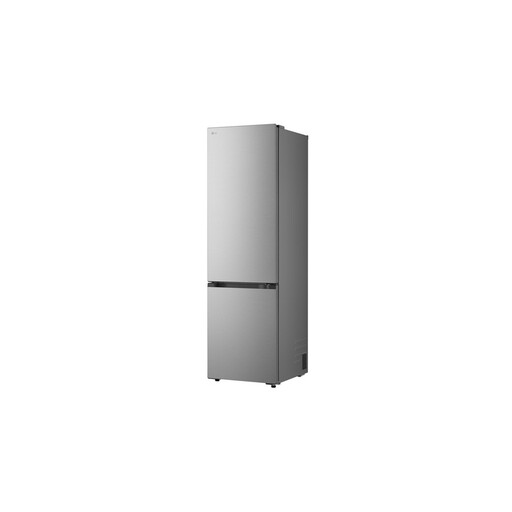
LG GBBSJ2CCPY, fridge-freezer, 375 l, energy rating C
For households that want to chill soup portions alongside their groceries and have extra freezer space.
The stated capacities are 262 l for the fridge and 113 l for the freezer. Features include four glass shelves, three of which are height-adjustable, as well as electronic controls, a temperature display and No Frost. Dimensions are 597 × 2030 × 674 mm.
View at Joybuy
 No image available
CHiQ JR263LGE, fridge-freezer, 262 l, Low Frost, black
For households looking for separate fridge and freezer compartments in a freestanding appliance that’s 54 cm wide.
The stated capacities are 187 l for the fridge and 75 l for the freezer. Features include Low Frost, electronic temperature control with a stated fridge range of 2–8 °C, and three height-adjustable glass shelves. The appliance is 176 cm tall.
View at Joybuy
 No image available
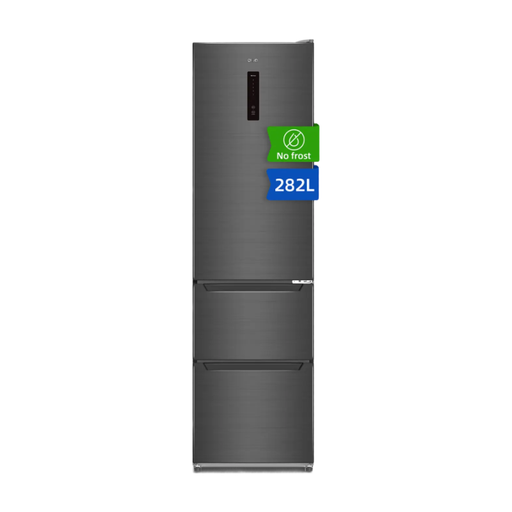
CHiQ CID282NEIBE, multi-door fridge-freezer, 282 l, energy rating E
For households comparing a multi-door design with a stated fresh food compartment.
The fresh food compartment is listed as 197 l, with a total capacity of 282 l. Other stated features include No Frost, Multi-Air-Flow and touch controls. The appliance is 54 cm wide and 192 cm tall.
View at Joybuy
 No image available
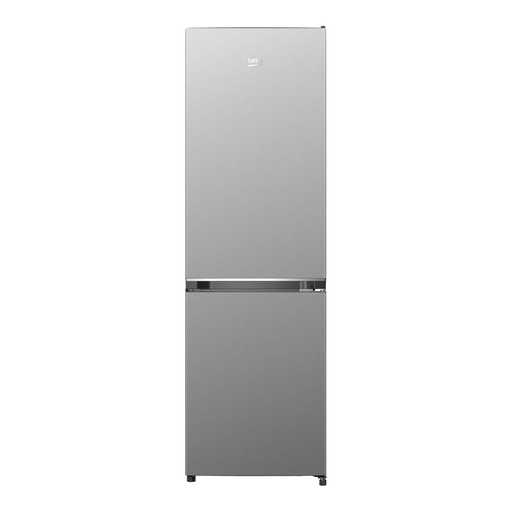
Beko B3RCNO255XB, fridge-freezer, 250 l, No Frost, Inox, energy rating D
For households comparing fridge and freezer space in a freestanding appliance that’s 54 cm wide.
The stated capacities are 180 l for the fridge and 70 l for the freezer. Features include No Frost, four adjustable glass shelves and a reversible door.
View at Joybuy
 No image available
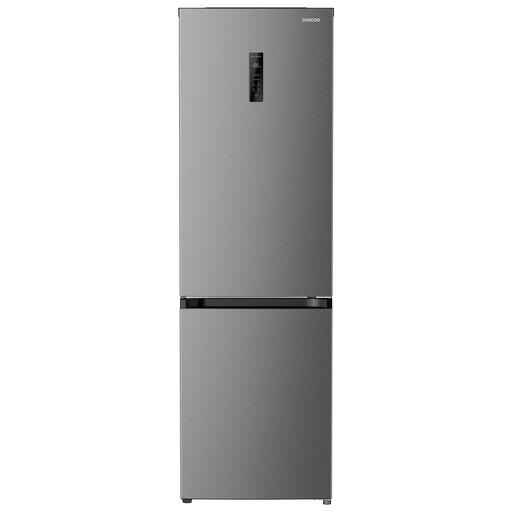
coocaa SRD-489CBEP, fridge-freezer, 344 l, Total No Frost, energy rating E
For households comparing stated fridge space with a separate freezer compartment for frozen food.
The stated capacities are 235 l for the fridge and 109 l for the freezer. Features include Total No Frost, Multi-Air-Flow and electronic temperature control. Dimensions are 600 × 658 × 1950 mm.
View at Joybuy
Frequently asked questions
How long can I keep leftover soup in the fridge?
The German Federal Institute for Risk Assessment recommends keeping leftovers in the fridge and eating them within two to three days. Larger quantities should be cooled to below +7 °C within a few hours; dividing them between several shallow dishes can help. This is a food hygiene recommendation, not a guarantee of how long every recipe will keep.
Is a fridge without a freezer compartment enough?
Yes, if you don’t need freezer space in the appliance and there’s enough room in the fridge for soup portions and groceries. If you regularly want to freeze food, also compare models with a suitably sized freezer compartment.
What should I check before installing it?
Compare the dimensions of the specific appliance with the space you have available. For under-counter or built-in models, your kitchen needs to be suitable for that type of appliance. External dimensions also won’t tell you whether your containers will fit inside.
How do I compare energy consumption?
For appliances of a suitable size, compare the annual energy consumption in kWh shown on the EU energy label. The energy rating is another useful guide, but it doesn’t replace comparing the consumption figures.
Is A+++ still the right energy label for new fridges?
No. The current EU energy label for household refrigeration appliances uses a rescaled A to G energy efficiency scale. The European Union lists the current labelling requirements; also compare each model’s annual energy consumption.


