Keep desserts fresh
If you mainly store desserts that need to be chilled, the right temperature and storage instructions matter more than extra freezer space.


If you live alone and mainly store chilled desserts, choose a fridge based on its usable fridge space and where you’ll put it. A freezer compartment is most worthwhile if you also keep frozen desserts or freeze portions yourself. Compare the fridge and freezer capacities separately, as well as the stated annual energy consumption. For perishable foods, the Federal Institute for Risk Assessment recommends 2 °C to no more than 7 °C as a general food hygiene guideline. Always follow the storage instructions for the dessert in question, too.
If you mainly store desserts that need to be chilled, the right temperature and storage instructions matter more than extra freezer space.
If space is tight, compare the separate fridge and freezer capacities, the appliance’s external dimensions and the clearance needed to open the door.
If you freeze portions yourself or stock up on frozen desserts, check the freezer function and the actual usable freezer capacity.
Best if: You mainly need fridge space and only occasionally freeze small amounts.
The trade-off: The freezer compartment takes up space that would otherwise be available for chilled food. Compare the two capacity figures separately.
Best if: You regularly store frozen desserts or freeze larger portions, and have enough space for the appliance.
The trade-off: More freezer space doesn’t automatically mean lower energy consumption. Compare the annual consumption and size of the specific model.
Best if: You only store chilled desserts and other fresh foods, and don’t need a freezer function.
The trade-off: You can’t store frozen food in it. Still, check the annual energy consumption of the specific model.
| What matters | What to check before buying | Who is this important to? |
|---|---|---|
| Fridge temperature and storage | Follow the dessert’s storage instructions and check that you can set the temperature to suit. | If I store perishable desserts, I want to follow the instructions on the packaging and set the temperature appropriately. This is a priority for around 33% of consumers. |
| Fridge space and where it will go | Compare the fridge capacity with the containers you use, as well as the external dimensions, door clearance and installation requirements. | When space is limited, the appliance and dessert containers need to fit without blocking access. Around 27% of consumers prioritise this need for space and fridge capacity. |
| Freezer function and capacity | If you want to freeze food yourself, check for a four-star rating and compare freezer capacity in litres. | If I freeze portions or stock up on frozen desserts, I need a suitable freezer function and enough storage space. Around 20% of consumers value this most. |
| Annual energy consumption and noise | Compare the stated kWh per year. If the appliance will be near your living space, check its noise rating as well. | If ongoing electricity use and having an appliance close to my living area matter to me, I compare these figures for each model. Around 20% of consumers prioritise energy use and comfort at home. |
With a fridge-freezer, the total capacity is split between the fridge and freezer sections. So a high total figure alone won’t tell you how much room there is for dessert containers.
Compare the fridge and freezer capacities separately with the food you actually store.
Having a compartment doesn’t automatically mean it has the function you need to freeze food yourself.
Check the rating of the specific compartment. If you want to freeze food yourself, look for four stars. For shop-bought frozen desserts, follow the instructions on the packaging, too.
The energy rating alone doesn’t tell you the specific appliance’s annual energy consumption or how much it will cost on your electricity tariff.
Compare the stated kWh per year for appliances that meet your space and freezer needs.
The space you need depends on more than the appliance’s external dimensions when the door is closed. Check how far the door swings open and the installation requirements, too.
Check the confirmed dimensions for the specific model. If the figures differ, check with the manufacturer before deciding to buy.
Compact table-top fridges with a small freezer compartment. For the KS16-4-HE-040E inoxlook model, the manufacturer lists 95 l of fridge capacity and 14 l of freezer capacity.
Table-top appliances for shoppers deciding between fridge space with a freezer compartment and a model without one. For the TSE1284N, Beko lists 101 l of fridge capacity and a width of 54 cm.
Table-top fridges without a freezer compartment are an option if you only need to store chilled desserts and other fresh foods.
The KS 15614 S is a fridge with a low-temperature compartment. Whether it has a suitable freezer function depends on the specific compartment.
The selection ranges from table-top appliances with a small freezer compartment to fridge-freezers with a larger freezer section. Compare the separate fridge and freezer capacities with what you actually need.
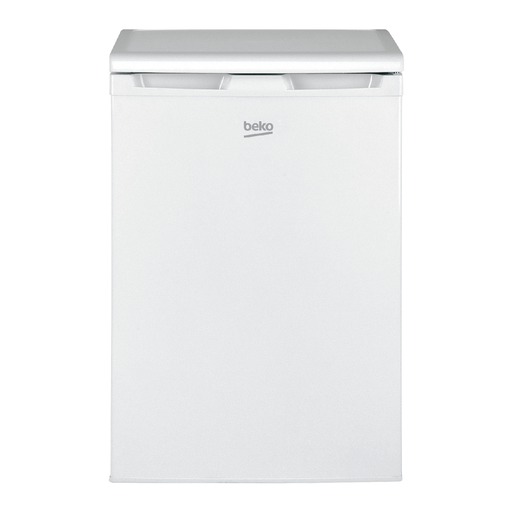 No image available
This table-top appliance combines a separately listed fridge section with a small freezer compartment for occasional freezing or frozen desserts.
Fridge capacity: 101 l; freezer capacity: 13 l; four-star freezer compartment; dimensions: 54 × 59 × 84 cm.
Freezer space is limited. MinFrost reduces ice build-up, but the compartment still needs to be defrosted manually.
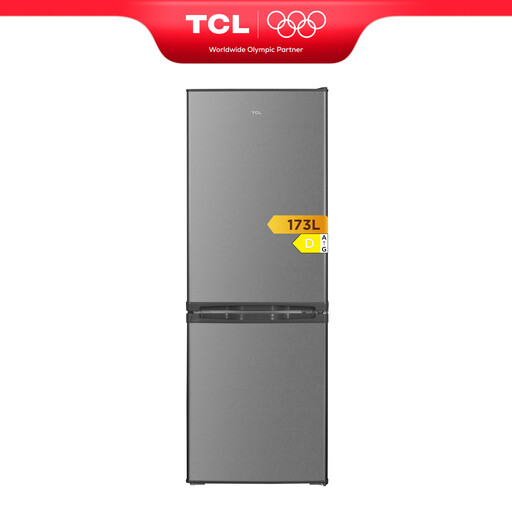
 No image available
The separate fridge and freezer sections are a good fit if you want to store frozen food regularly as well as chilled desserts.
Fridge capacity: 121 l; freezer capacity: 52 l; four-star freezer compartment; annual energy consumption: 124 kWh; reversible door.
If you only store chilled desserts, the extra freezer space may take up more room than you need.
 No image available
The separate compartments are an option if you want to store chilled desserts as well as frozen food.
Fridge capacity: 121 l; freezer capacity: 52 l; energy rating D; adjustable shelves.
The freezer compartment takes up extra space if you don’t need a freezer function.
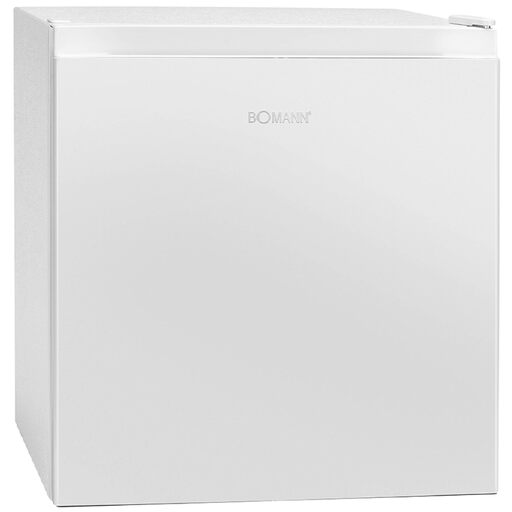 No image available
This very small appliance is worth considering if you have limited space and don’t need much fridge capacity.
Net capacity: 45 l; freezer compartment: 4 l; temperature range: 0 °C to +8 °C; annual energy consumption: 80 kWh; dimensions: 46,8 × 44,5 × 50 cm.
The stated fridge capacity is below the 100 to 150 l guide given by the consumer advice centre for one- to two-person households. The freezer compartment needs to be defrosted manually.
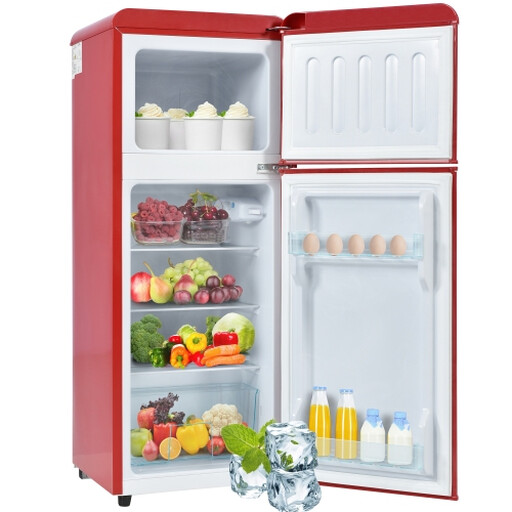 No image available
This appliance combines fridge and freezer space if you want to store frozen food as well as chilled desserts.
Fridge capacity: 64 l; freezer capacity: 28 l; four-star freezer compartment; seven temperature settings.
The fridge capacity is below the 100 to 150 l guide given by the consumer advice centre for one- to two-person households. If you only store chilled desserts, the freezer compartment may take up more space than you need.
For perishable foods, the Federal Institute for Risk Assessment recommends 2 °C to no more than 7 °C as a general food hygiene guideline. Also follow the storage instructions for the dessert in question. This isn’t a blanket legal household temperature for every food.
If you want to freeze desserts yourself, check whether the specific compartment has a four-star rating. The consumer advice centre distinguishes this freezing function from that of a compartment without the relevant rating. For shop-bought frozen desserts, follow the instructions on the packaging, too.
The consumer advice centre generally recommends 100 to 150 l of usable capacity as a guide for one- to two-person households. For chilled desserts, also check how much of that capacity is actually fridge space and whether your containers will fit.
Fridges use the EU scale from A to G. The old plus-rated classes have not been used for these appliances since 2021. Compare the current label for the specific model and check its stated annual energy consumption in kWh.