Preparing lunches regularly
If you prepare portions of pasta in advance, you’ll need room for the covered containers alongside your other food. The German Federal Institute for Risk Assessment recommends chilling cooked food once it has cooled.


Choose an appliance with enough fridge space for your covered portions of pasta alongside your other food. A freezer compartment is most useful if you also want to freeze meals. Compare fridge and freezer capacity separately, along with the appliance’s dimensions and stated annual energy consumption. The Verbraucherzentrale and the German Federal Institute for Risk Assessment also stress that cooked food should be chilled once cooled – the appliance itself doesn’t replace safe food handling.
If you prepare portions of pasta in advance, you’ll need room for the covered containers alongside your other food. The German Federal Institute for Risk Assessment recommends chilling cooked food once it has cooled.
Your appliance should offer enough fridge space for your lunch containers without taking up more floor space than necessary. The Verbraucherzentrale recommends checking what size you need before you buy.
If you also want to freeze meals or other food, compare the freezer capacity separately from the fridge space. The European Commission lists both capacities on the energy label.
A good fit if: You mainly need fridge space for lunch portions and have freezer space elsewhere, or don’t want to freeze anything.
The trade-off: Check the usable fridge capacity and the space it will take up; you won’t be able to freeze portions in this appliance.
A good fit if: You regularly want to freeze food or meals as well as keeping lunches chilled.
The trade-off: A large total capacity doesn’t tell you how much room will be left for containers in the fridge. Compare fridge and freezer capacity, as well as the dimensions, separately.
A good fit if: Your portions fit inside and you can keep them properly chilled as part of your daily routine.
The trade-off: The Verbraucherzentrale recommends measuring the energy use of your old appliance and comparing it with new models. You don’t automatically need to buy a new one just because you’re preparing meals in advance.
| What matters | What to check when buying | Who this matters most to |
|---|---|---|
| Keeping prepared food chilled | Room for covered portions; check the temperature controls and the actual cooling performance in the area you’ll use. | If I prepare several portions of pasta, I want to store them chilled once they’ve cooled, without cramming them in alongside other food. Around 36% of consumers put reliable cooling first. |
| Space and appliance size | Check the usable fridge capacity and shelf layout against your containers and kitchen space. | If my kitchen has limited space, I still want my lunch containers to fit comfortably in the fridge. Around 29% of consumers prioritise storage space and a good fit. |
| Energy use | Compare the stated kWh per year for models with enough usable capacity; energy efficiency ratings alone aren’t enough to compare models. | If the fridge is running all the time, I want to keep energy use in mind without choosing more fridge space than I need. Around 21% of consumers put energy use first. |
| Extra freezer space | Check the freezer and fridge capacities separately to make sure there’s enough room for your lunch containers. | If I also want to freeze meals as well as chill portions, I need space in both compartments. Around 14% of consumers prioritise extra freezer space. |
In a fridge-freezer, capacity is split between two compartments. So a large total capacity doesn’t tell you how much usable fridge space will actually be left for your containers.
Compare fridge capacity, shelf layout and container dimensions separately against your needs. Factor in the space the appliance will take up, too; larger models can use more electricity.
The German Federal Institute for Risk Assessment explains that heating does not inactivate cereulide, a toxin produced by certain Bacillus cereus bacteria. Reheating therefore won’t undo the effects of possible improper storage.
Cool cooked portions properly and keep them chilled; don’t rely on reheating later to put things right if food hasn’t been stored correctly.
According to the Verbraucherzentrale, appliances with the same energy efficiency rating can still differ in how much electricity they use.
Compare the stated kWh per year for models that meet your space requirements. If you already have an appliance, include an energy-use measurement in your decision.
The ratings mentioned relate to the KFN 4795 AD fridge-freezer.
The KG39NAIAU iQ500 fridge-freezer is a model for households that need both fridge and freezer space.
The features mentioned relate to the KGN39AIAU fridge-freezer.
The CBNdgc 5723 fridge-freezer is a specific model for households that need both fridge and freezer space.
The Joybuy models below are fridge-freezers. Compare the stated fridge capacity, appliance dimensions and annual energy use with your needs; total capacity doesn’t tell you how much room will be available for lunch containers.
 No image available
An option if you’re looking for a freestanding appliance with both fridge and freezer space; check whether the stated total capacity meets your needs.
333 l total capacity; No Frost; energy efficiency class C.
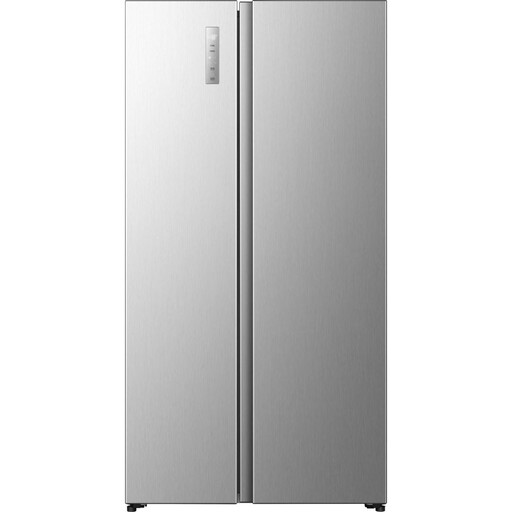 No image available
An option if you’re considering a model with both fridge and freezer compartments; check the available space against the dimensions of your lunch containers.
Energy efficiency class E.
 No image available
An option if the stated width suits your kitchen; also check that the layout leaves enough room for your containers.
262 l; Low Frost; 70/30; 54 cm wide and 176 cm high.
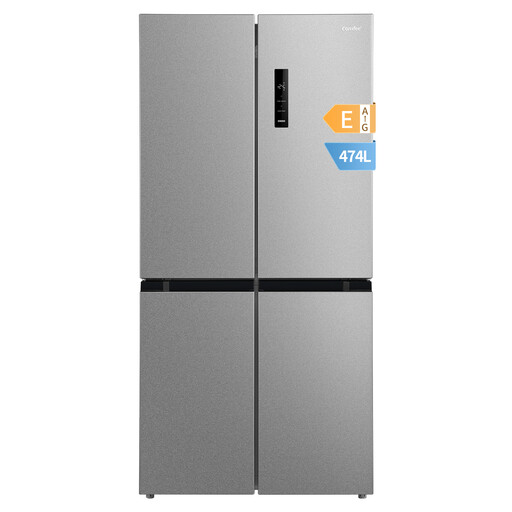 No image available
An option if you’re looking for an appliance with separate compartments; compare its dimensions with the space available in your kitchen.
474 l total capacity; vegetable compartment with three temperature settings; energy efficiency class E; 838 × 653 × 1775 mm.
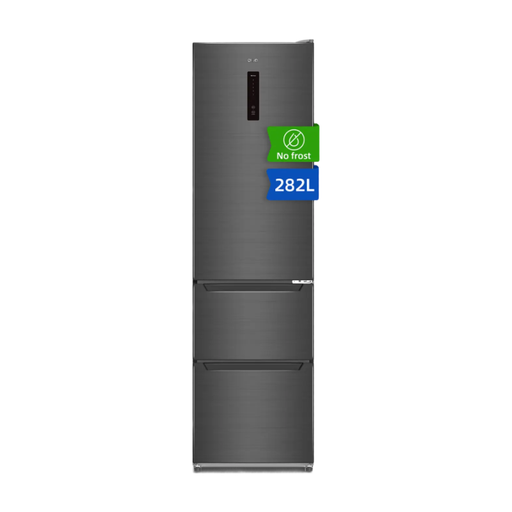 No image available
An option if a width of 54 cm works for your kitchen; also check the height and depth, as well as the space for lunch containers in the fridge compartment.
282 l; 54 cm wide, 192 cm high and 58,6 cm deep; energy efficiency class E; No Frost.
No. You can’t work out a safe storage time from an appliance feature name alone. The German Federal Institute for Risk Assessment recommends keeping cooked food chilled once it has cooled, and warns about Bacillus cereus in cooked pasta that has been stored improperly.
Your fridge at home won’t keep your portion chilled while you’re on the move. For food that needs to be kept cold, the Verbraucherzentrale recommends using an insulated or cool bag, or ice packs, and keeping the time out of the fridge as short as possible. No way of transporting food can guarantee a particular temperature in all conditions.
Compare the annual energy consumption in kWh shown on the EU energy label for the specific models. Appliances in the same efficiency class can use different amounts of energy, so make sure the fridge capacity also meets your needs.
For household refrigeration appliances covered by the label, the EU energy label shows information including the energy efficiency class on a scale from A to G, annual energy consumption, fridge and freezer capacities, and noise emissions, explains the European Commission. The label provides information about the appliance; it doesn’t tell you which efficiency class you have to buy.